Tuesday
08 September, 2026
News Flash
News Flash
By Ridwan Ahmed
CHITTAGONG UNIVERSITY, Mar 26, 2026 (BSS)- The history of Bangladesh’s independence is written in the blood and sacrifice of countless people. In the country’s glorious Liberation War, teachers, students, officers and employees of the University of Chittagong (CU) also made significant contributions.
Sixteen brave members of the CU family laid down their lives in the struggle that led to the dawn of independence.
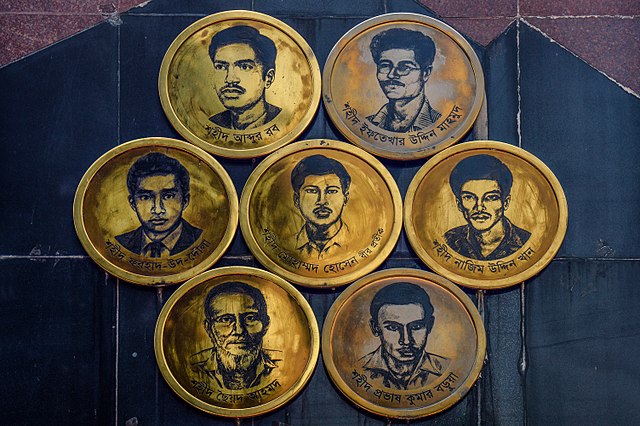
During the 1971 Liberation War, a total of 16 members of the university community were martyred— including one teacher, twelve students and three officers and employees. Among them, one was posthumously awarded the state gallantry title Bir Protik for his valour in the war.
The only Bir Protik recipient from the university was Mohammad Hossain, a chainman at the university’s engineering office. He fought as a naval commando under the Gana Bahini (Sector-1). On May 16, 1971, he embraced martyrdom during a mission to destroy a Pakistani ship in the Karnaphuli River by strapping a limpet mine to his body.
Records preserved at the Chittagong University Museum tell the stories of the bravery and sacrifices of these martyred freedom fighters.
Shahid Abdur Rab, a student of the Department of History and the then general secretary (GS) of CUCSU (Chittagong University Central Students’ Union) is recognised as the first martyr from the university.
Following the historic March 7 speech of Sheikh Mujibur Rahman, he took responsibility for escorting aspiring freedom fighters to India for training. On April 13, 1971, he was killed in an ambush by Pakistani forces while taking a group of trainees to Ramgarh.
The only teacher of the university martyred during the war was Avani Mohan Dutta, a part-time lecturer of the Department of Philosophy. He supported freedom fighters by supplying them with food from his home and sharing intelligence about enemy positions. Pakistani forces killed him on May 8, 1971.
Farhad Ud-Doula, a student of the Department of History, fought in Sector-1 under Major Ziaur Rahman. He was later captured by the Al-Badr militia, subjected to brutal torture and eventually martyred.
Khondkar Ehsanul Haque Ansari, a meritorious student of the Faculty of Commerce, also actively took part in the Liberation War. Pakistani forces arrested him during a raid at his house and later killed him.
Abul Monsur, a student of the Department of Political Science, was associated with the Mukti Bahini organisation. On November 23, 1971, members of the Al-Badr militia picked him up from his residence and brutally killed him.
Other CU students who were martyred during the war including Monirul Islam Khoka, Mohammad Hossain and Mostafa Kamal of the Department of Bangla; Nazim Uddin Khan and Abdul Mannan of the Department of Economics; Ashutosh Chakraborty of the Department of English; Iftekhar Uddin Mahmud of the Department of Sociology; and Bhuban of the Department of Mathematics.
Among the university’s officers and employees who were martyred were Prabhash Kumar Barua, sub-assistant engineer of the university’s engineering office, and Saiyed Ahmed, a guard of Alawal Hall.
The sacrifices of these 16 martyrs remain a glorious chapter in the history of Chittagong University. To preserve their memory, the university established the “Smaran” memorial monument at the Zero Point entrance of the campus in 2009 and built the Independence Memorial Mural in front of the Faculty of Arts and Humanities in 2010.
Chittagong University Vice-Chancellor (VC) Prof. Dr. Mohammad Al-Forkan has said the university will take special initiatives to more widely highlight the valour, sacrifice and contributions of its martyred freedom fighters among teachers, students, officers and employees.
He said, “Martyrs of the Liberation War from the University of Chittagong are a source of pride for us. People from different backgrounds of the university- teachers, students, officers and employees took part in the Liberation War and many sacrificed their lives for the country. But the stories of these martyrs who gave their lives in the war are gradually fading from our collective memory.”
He added that after the university reopens, he would specially invite teachers of the History Department to discuss ways to work more effectively on documenting and promoting the history and contributions of the martyred freedom fighters of the university.
According to information from the university archives, a Chittagong University Sangram Parishad was formed on March 8, 1971, under the chairmanship of the then vice-chancellor Azizur Rahman Mallick (A. R. Mallick) to organise resistance against possible attacks by Pakistani forces.
On March 24, a mass musical programme in support of the independence movement was held at the university’s central field under the initiative of the Alumni Association. Pakistani troops occupied the campus on March 26 and used it as a military base for the next nine months, even turning parts of it into a concentration camp.
Later, on December 14, 1971, freedom fighters led by Jafar Imam launched an operation at the campus. Nine days after the Pakistani forces surrendered in Dhaka on December 16, the University of Chittagong was finally freed from enemy control on December 25.