Thursday
21 May, 2026
News Flash
News Flash
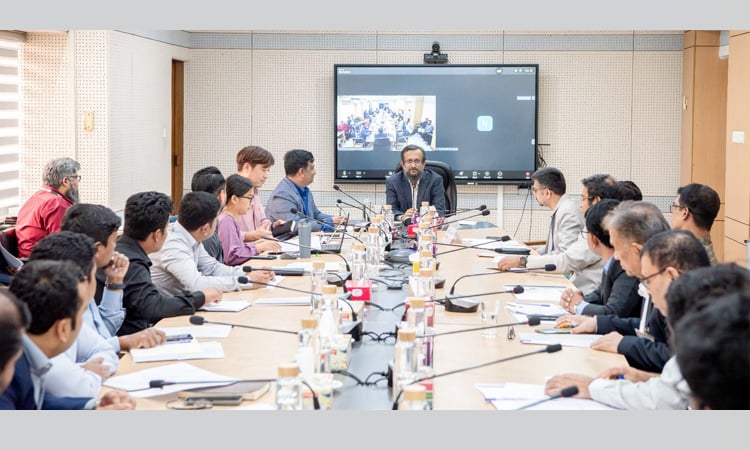
DHAKA, Dec 2, 2025 (BSS) - Improving community safety in Bangladesh requires community-based and environment-oriented crime prevention strategies along with traditional policing, experts noted at an international seminar in Dhaka.
Speakers argued that crime prevention should begin with enhancing surveillance and territoriality, and designing environments that discourage criminal opportunities. The seminar highlighted the importance of community participation, daily monitoring, and digital tools to create safer neighborhoods and strengthen long-term crime prevention efforts.
The international seminar titled 'Building Resilient Communities and Improving Living Environment in Bangladesh' was held today at PKSF Bhaban-1 in the capital's Agargaon area, said a press release.
Managing Director (MD) of Palli Karma-Sahayak Foundation (PKSF) Md. Fazlul Kader delivered the welcome speech at the event while Professor Dr Md. Taufiqul Islam, governing body member of PKSF, gave the vote of thanks.
Keynote presentations were delivered by Dr Tomoo Okubo and Dr. Shiho Tanaka of Kagawa University, and Dr Naonori Kusakabe of Rikkyo University on ICT-based crime prevention education and community support models in Bangladesh.
Dr BM Sajjad Hossain, associate professor of Faculty of Social Science, American International University-Bangladesh (AIUB), Ruhi Das, executive director of BASTOB; Mifta Naim Huda, executive director of CDIP; Md. Sohrab Ali Khan, deputy executive director-03 of TMSS; and Tarik Sayed Harun, director (MF) of RDRS-Bangladesh also spoke at the event.
Speakers presented a comprehensive framework rooted in crime opportunity theory, which argues that crime is influenced more by environmental conditions than by individual behavior. Communities can deter opportunistic crimes by creating environments that are visible, actively used, and discouraging concealed or unmonitored activity, they said.
The seminar also underscored the need for community strength, shared responsibility and social interaction to maintain public safety.
Participants highlighted the role of youth engagement and university-level patrol teams in hotspot monitoring, improving school route safety, and raising awareness through digital platforms and field workshops. Such initiatives are helping address declining volunteer participation and building long-term community networks.
Experts further discussed the differences between crime cause theory, which focuses on offenders, and crime opportunity theory, which examines environmental vulnerabilities that make crime possible.
The seminar illustrated how parks, walkways, unattended spaces and poorly maintained urban areas often become crime hotspots when they are "easy to enter and difficult to see."A major focus of the event was the use of ICT-based tools in crime prevention.
The seminar showcased the "Miimai" crime prevention walking app, which allows residents to mark safe and unsafe areas, report concerns in real time, and navigate high-risk routes. The tool promotes the concept of "watching while walking" and provides a digital extension to traditional community safety maps.