Wednesday
09 September, 2026
News Flash
News Flash
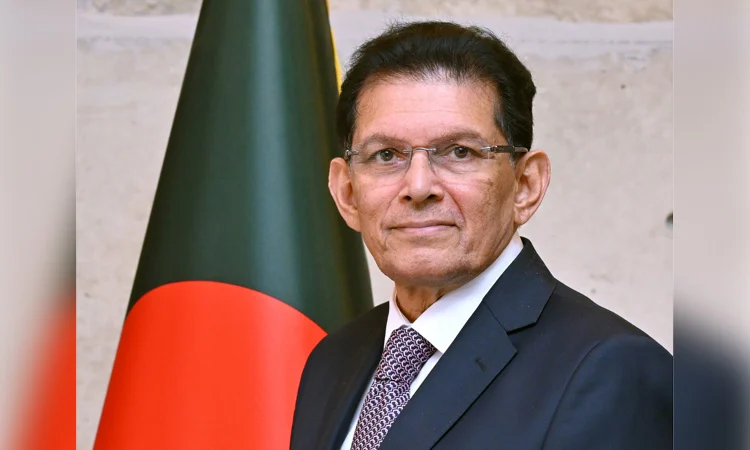
DHAKA, Sept 8, 2026 (BSS) - The 80th session of the United Nations General Assembly (UNGA)
concluded at UN Headquarters in New York Tuesday night, followed by the formal swearing-in of
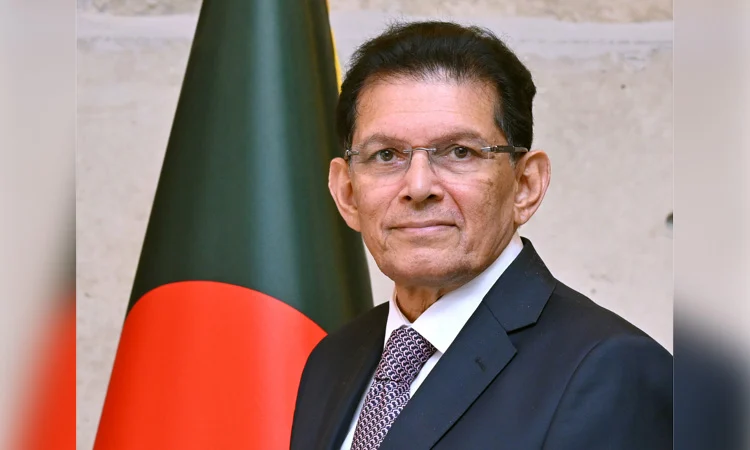
Bangladesh Foreign Minister Dr Khalilur Rahman as president of its 81st session.
The transition marked a defining moment for Bangladesh's diplomacy as Khalilur became the second
Bangladeshi to assume the presidency of the UN's most representative organ, returning the country
to the prestigious position after four decades.
Following his swearing-in, Khalilur is set to preside over the first plenary meeting of the 81st
session, formally beginning his year-long stewardship of the 193-member General Assembly.
He succeeds Germany's former foreign minister Annalena Baerbock as president of the UNGA.
Ahead of the swearing-in ceremony, Khalilur attended a media briefing where he outlined his vision
and priorities for conducting the work of the General Assembly during the upcoming session,
according to the UN headquarters.
The 81st session will be held under the theme, "Restoring trust, managing transformation: A United
Nations that delivers for all."
The presidency places the Bangladeshi diplomat at the helm of the UN's principal deliberative and
most representative body at a critical juncture when conflicts, climate emergencies, development
setbacks and declining confidence in multilateralism are posing formidable challenges to the
international system.
World leaders, including Prime Minister Tarique Rahman, are expected to gather at UN Headquarters
later this month for the annual high-level General Debate, scheduled for September 22-28.
The session will provide Bangladesh with an important opportunity to highlight its national
interests, economic potential and development priorities on the global stage while contributing to
international efforts to strengthen cooperation, advance the Sustainable Development Goals and
promote peace, dignity and equality.
During the General Debate, heads of state and government and other senior representatives of UN
member states will outline their positions and priorities against the backdrop of complex and
interconnected global challenges.
Ahead of the opening of the 81st session, UN Secretary-General Ant¢nio Guterres met Khalilur in New
York on Monday.
The United Nations in Bangladesh also extended its "warmest congratulations and best wishes" to
Khalilur as he assumed the global leadership role.
Khalilur was elected president of the 81st UNGA on June 2 at UN Headquarters through a secret
ballot, securing 99 votes against 91 received by Cyprus' candidate Andreas S Kakouris.
The election was held in accordance with Rule 30 of the General Assembly's Rules of Procedure, with
the presidency allocated to the Asia-Pacific Group under the UN's established regional rotation
system.
His assumption of the presidency brings Bangladesh back to the helm of the General Assembly four
decades after former foreign minister Humayun Rasheed Choudhury became the first Bangladeshi to
hold the position, presiding over its 41st session in 1986-87.
State Minister for Foreign Affairs Shama Obaed Islam described Khalilur's election as an "immensely
proud moment" and a significant diplomatic achievement reflecting Bangladesh's renewed
international standing.
"The election of our Foreign Minister, Dr Khalilur Rahman, as President of the United Nations
General Assembly is a significant diplomatic achievement for the country," she told BSS on Monday.
Shama attributed the success partly to what she described as growing international confidence in
Bangladesh following its return to elected democratic governance.
"I believe one of the key factors behind this success was the international community's recognition
of Bangladesh's return to stable, democratic governance," she said.
The state minister said Prime Minister Tarique Rahman's nomination of Khalilur had also sent a
strong message to the international community about Bangladesh's political stability and democratic
credentials.
"The world saw that Bangladesh has a stable, democratically elected government with a clear mandate
from the people. I believe that confidence was reflected in the outcome of the election," she said.
Shama also credited Khalilur's diplomatic credentials and broad acceptability among UN member
states, alongside the collective efforts of officials at Bangladesh's 81 diplomatic missions during
the campaign.
The UNGA presidency is expected to significantly enhance Bangladesh's diplomatic visibility as
Khalilur guides deliberations of the world body's universal membership on some of the most pressing
challenges facing the international community.