Sunday
30 August, 2026
News Flash
News Flash
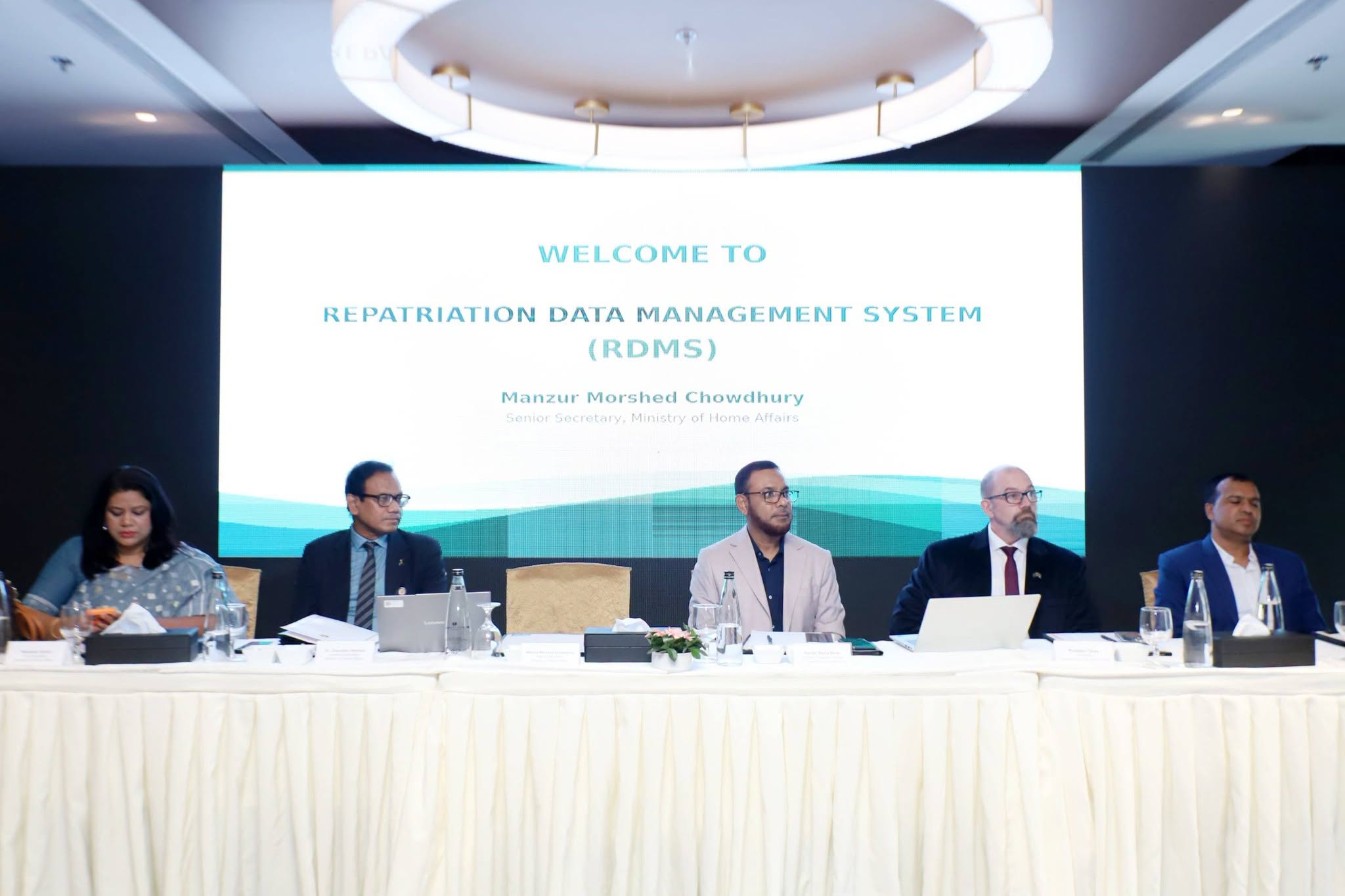
DHAKA, Aug 30, 2026 (BSS) — The Ministry of Home Affairs today launched a Repatriation Data Management System (RDMS) to make the process of bringing Bangladeshi nationals, who fall victim to human trafficking and irregular migration back home, more efficient and coordinated.
The system was inaugurated at a programme held at the Board Room of Hotel InterContinental in the capital this morning, organised by the Ministry of Home Affairs in collaboration with Justice and Care Bangladesh, according to a ministry press release.
Additional Secretary (Political and Immigration) Dr Ziauddin Ahmed chaired the programme.
Special Branch (SB) chief and Additional Inspector General of Police Sardar Nurul Amin, SB DIG SCO Jahangir Hossain and Australian High Commission Counsellor Ruben Grey attended the programme as special guests.
Joint Secretary of the Political-1 wing of the Home Ministry Rebeka Khan delivered the welcome address, while Justice and Care Bangladesh Country Director Tariqul Islam highlighted the objectives and benefits of the RDMS.
In his remarks, Dr Ziauddin stressed the importance of incorporating the RDMS into the Home Ministry's domain to accelerate efforts to prevent human trafficking and facilitate the reintegration of rescued victims.
He said the platform has already been linked with the National Identity Card (NID) database to maintain comprehensive information on returnees and survivors.
Work is also underway to integrate the system with birth and death registration and passport services to ensure accurate identification of children, he added.
Dr Ziauddin praised the efforts of the Home Ministry, Foreign Ministry and Special Branch in preventing irregular migration and expressed hope that the inter-agency initiative would help protect survivors and curb illegal migration.
The RDMS has been developed by the Home Ministry with technical assistance from Justice and Care Bangladesh, while the Australian government supported its development and upgrading.
The centralised digital platform will facilitate the management of information related to the repatriation of Bangladeshi nationals from abroad and improve coordination among the agencies involved in the process.
Several government agencies are involved in repatriation, including nationality verification, police record checks, preparation of necessary documents and communication with authorities in destination countries.
As many of these procedures have traditionally been handled through paper-based documents and correspondence, repatriation can often be delayed.
A presentation at the programme highlighted that the RDMS would enable centralised storage and management of repatriation case information, faster nationality and police record verification, and improved coordination among government agencies.
The system will also allow authorities to access repatriation-related information quickly, monitor progress in real time and generate reports, the presentation said.
Through the RDMS, Bangladeshi missions abroad and other relevant agencies will be able to submit repatriation applications in a more structured and coordinated manner.
It will also facilitate the exchange of information required for nationality verification while ensuring secure management and storage of personal and sensitive data.
The Home Ministry expressed hope that the new system would strengthen information management, improve inter-agency coordination and make repatriation faster, safer and more dignified for Bangladeshi nationals returning from abroad.
The ministry thanked the Special Branch of Bangladesh Police, Justice and Care Bangladesh, the Australian government and other stakeholders for their contributions to developing and strengthening the RDMS.
Representatives from the embassies and high commissions of the United States, India and Thailand, among others, as well as officials from the Home Ministry, Foreign Ministry, Bangladesh Police and other relevant government agencies attended the programme.