Thursday
13 August, 2026
News Flash
News Flash
DHAKA, Aug 13, 2026 (BSS) – Bangladesh and Saudi Arabia have agreed to increase direct flight frequency between the two countries by about 71 percent, raising weekly flights to 84 from the existing 49 under a new aviation arrangement.
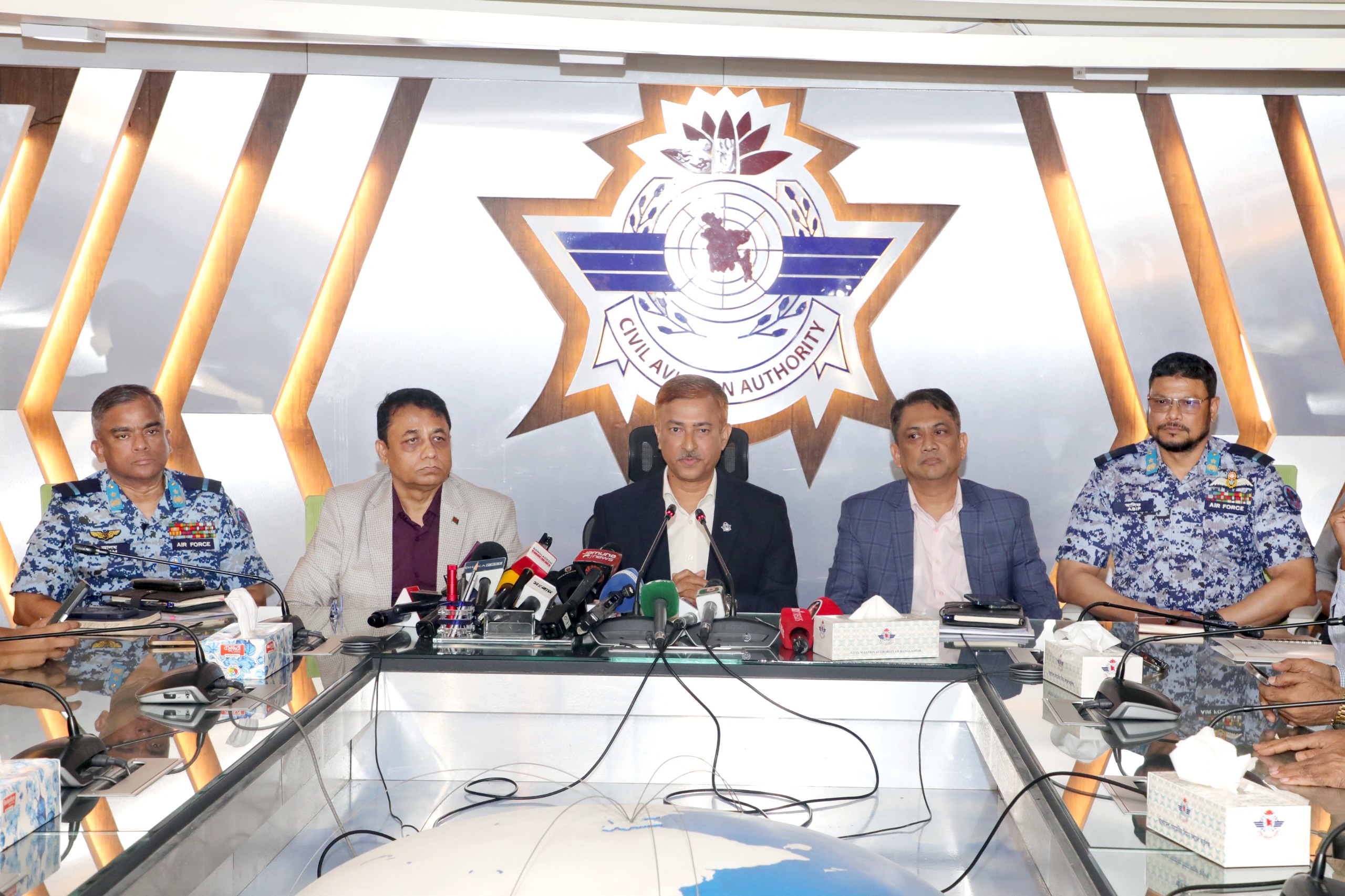
The agreement was reached through a Memorandum of Understanding (MoU) between the Civil Aviation Authority of Bangladesh (CAAB) and Saudi Arabia's General Authority of Civil Aviation (GACA), CAAB Chairman Air Vice Marshal Md Mostafa Mahmood Siddiq said today.
Briefing journalists at the CAAB headquarters in the capital following a visit to Saudi Arabia by a four-member Bangladesh delegation, Siddiq said the new arrangement is expected to take effect on March 5.
The CAAB chairman said that the enhanced flight entitlement would help address persistent pressure on air travel between the two countries, particularly during the Hajj season.
“This increase will make Hajj operations significantly smoother,” he said, noting that around 78,000 Bangladeshis performed Hajj this year.
The CAAB chairman said the expanded frequencies would also create opportunities to accommodate a large number of Bangladeshi passengers who currently travel to Saudi Arabia through third countries.
Around 1.1 million Bangladeshi passengers currently travel to Saudi Arabia via indirect routes, he said, adding that increased direct connectivity would save both travel time and costs.
Under the MoU, Bangladesh has also secured “Fifth Freedom” traffic rights for cargo operations, opening up new opportunities for Bangladeshi carriers to transport goods through Saudi Arabia to major European destinations.
Bangladeshi airlines will be able to carry cargo via Saudi Arabia to Zaragoza in Spain and Frankfurt in Germany, while Saudi Arabia has received corresponding cargo rights to two destinations in China.
Siddiq said the arrangement could provide a significant boost to Bangladesh's export-oriented industries, particularly the ready-made garment (RMG) sector, by providing more efficient air cargo connectivity with European markets.
He described the reciprocal cargo arrangement as an important development for strengthening Bangladesh's logistics network and supporting the country's export economy.
Turning to growing passenger pressure at Hazrat Shahjalal International Airport (HSIA), the CAAB chairman said the country's main international gateway currently handles around 13 million passengers annually despite having a capacity of about 8 million.
He urged airlines to make greater use of the country's international airports in Chattogram and Sylhet to help ease pressure on HSIA and ensure better utilisation of existing aviation infrastructure.
On the operationalisation of HSIA's Third Terminal, Siddiq said that they have been put their highest efforts to make it operatrional by December 16.
Once the Third Terminal becomes operational, CAAB plans to dedicate Terminals 1 and 2 to Hajj operations, which is expected to substantially improve passenger management during the annual pilgrimage season.
Responding to journalists' questions regarding a recent security breach involving ammunition at the airport, Siddiq said departmental investigations were underway to determine the circumstances surrounding the incident.
He also responded to concerns over cargo reportedly being exposed to rain because of open-air storage and acknowledged the need for improvements in cargo management.
The CAAB chairman said 11 new guidelines have already been issued to relevant agencies to address storage and handling problems and improve services for importers.