Wednesday
20 May, 2026
News Flash
News Flash
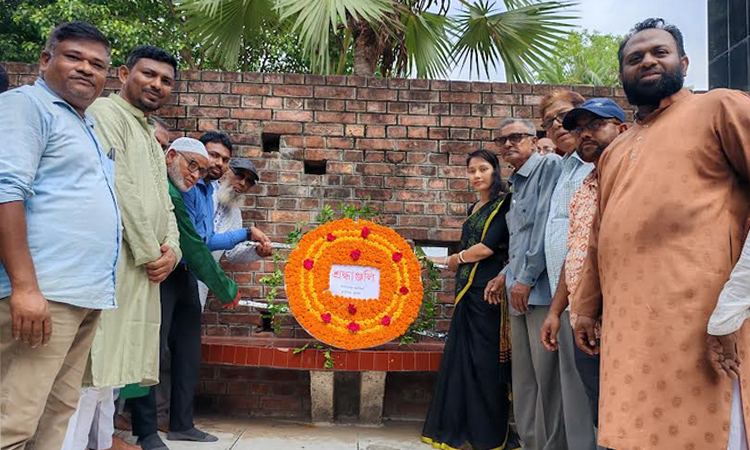
KHULNA, May 20, 2026 (BSS) – Different socio-cultural and political organisations observed the Chuknagar Genocide Day in Dumuria upazila today with daylong programmes commemorating the martyrs of the 1971 Liberation War.
The programmes included placing wreaths at the memorial monument, mourning rallies, discussion meetings and candlelight vigils in memory of those killed in the massacre.
Marking the day, Dumuria upazila administration organised a discussion meeting on Wednesday morning.
Dumuria UNO Ms Sabita Sarkar presided over the memorial meeting.
Among others, Dumuria Assistant Commissioner (Land) Amit Kumar Biswas, freedom fighter commander Nurul Islam Manik, former principal of Chuknagar Degree College ABM Shafiqul Islam, acting principal Hafiz Mahmud, chairman Sheikh Helal Uddin, freedom fighters Nurun Nabi Khoka and Abul Kalam Mohiuddin, Dumuria Press Club general secretary Sheikh Mahtab Hossain, Chuknagar Press Club president MA Ruhul Amin, former general secretary of union BNP Sardar Daulat Hossain, poet Ibrahim Reza, Sheikh Selim Akter Swapan and Chuknagar Bazar Committee general secretary Sardar Billal Hossain spoke at the function.
Speakers at the meeting demanded state recognition of the Chuknagar Genocide Day as a “National Mourning Day” or “National Genocide Day”.

Before the discussion, the national flag was hoisted with the playing of the national anthem followed by one minute of silence in honour of the martyrs.
The Chuknagar genocide is considered one of the most tragic and gruesome chapters in Bangladesh’s War of Independence.
On May 20, 1971, Pakistani occupation forces along with their local collaborators carried out indiscriminate firing on unarmed civilians at Chuknagar under Atlia union of Dumuria upazila in Khulna district.
According to historians and researchers, it was one of the single largest massacres during the Liberation War.
In mid-May 1971, thousands of people from Khulna, Bagerhat, Barishal, Faridpur and other southern districts started moving towards India to escape atrocities by the Pakistani army.
Due to its geographical location, Chuknagar, situated at the junction of Jashore, Khulna and Satkhira districts, became a major transit point for refugees seeking safe passage.
On May 18 and 19, lakhs of people gathered at Patkhola Beel, Chuknagar Bazar, the local football field and Kali temple premises.
On May 20, around 11 am, a contingent of Pakistani soldiers arriving from Satkhira suddenly took position at Jhautala on the western side of Chuknagar Bazar and opened indiscriminate brushfire with light machine guns and semi-automatic rifles on the helpless civilians, causing one of the deadliest massacres of the Liberation War.