Saturday
12 September, 2026
News Flash
News Flash

DHAKA, Jan 27, 2026 (BSS) – The National Taskforce on Restructuring the Tax System today submitted its report to Chief Adviser Professor Muhammad Yunus, outlining specific short-and long-term recommendations aimed at raising Bangladesh’s tax-to-GDP ratio to the desired level.
The report proposed necessary restructuring of the tax system to support overall economic development and to formulate tax policies conducive to both domestic and foreign trade.
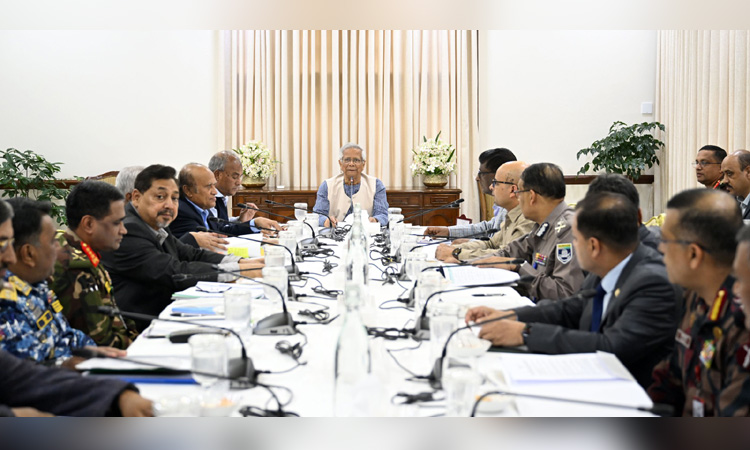
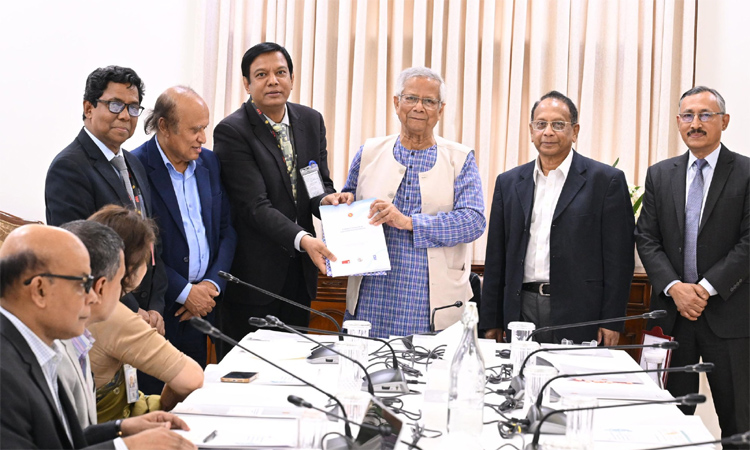
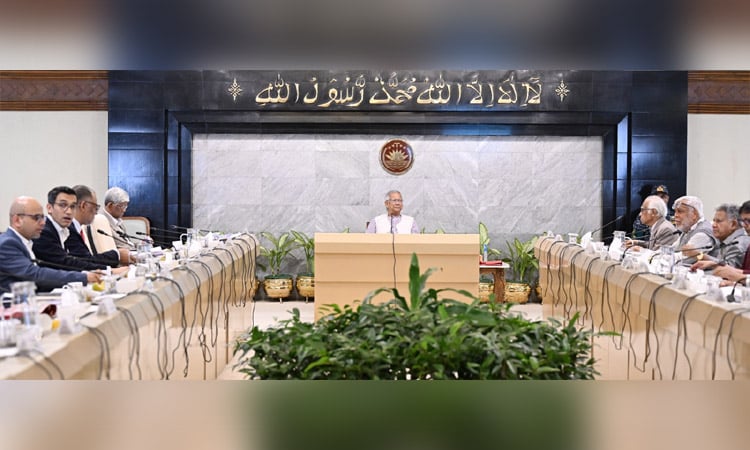
An eleven-member taskforce led by its head and Policy Research Institute of Bangladesh (PRI) Chairman Dr Zaidi Sattar handed over the report to the Chief Adviser at the State Guest House Jamuna here, said the Chief Adviser’s Press Wing this evening.
Finance Adviser Dr Salehuddin Ahmed, Economic Relations Division (ERD) Secretary Md Shahriar Kader Siddiky, Finance Division Secretary Dr Md Khairuzzaman Mozumder, Financial Institutions Division Secretary Nazma Mobarek and Internal Resources Division Secretary Md Abdur Rahman Khan were present on the occasion.
As a developing country, it is essential for Bangladesh to increase the government's own revenue to make the country’s economic progress faster and sustainable. The tax system is the most important element in this regard.
However, the existing tax structure of Bangladesh is constrained by numerous limitations. Against this backdrop, the 11-member National Taskforce was formed on October 6, 2025, under the leadership of Dr Zaidi Sattar to recommend measures to enhance revenue collection and raise the tax-to-GDP ratio to an acceptable level.
The taskforce was given a deadline to submit its report containing specific recommendations on restructuring the tax system and identifying short- and long-term actions by January 31, 2026.
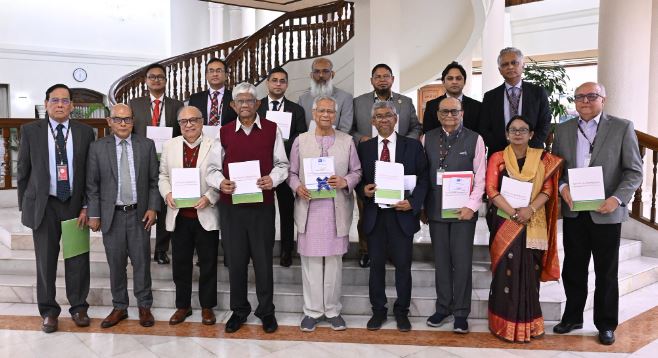
The report described Bangladesh’s tax system as unnecessarily complex, inefficient, and excessively dependent on indirect taxes. It noted that instead of minor reforms or fragmented changes, fundamental and structural reforms are required to ensure long-term economic prosperity.
The report titled “Tax Policy for Development: A Reform Agenda for Restructuring the Tax System,” identified a total of 55 policy issues and provided recommendations for each.
It highlighted seven priority policy areas and presented a roadmap to increase the tax-to-GDP ratio from 10 percent to 12 percent by 2030, and from 15 percent to 20 percent by 2035.
The report also proposed restructuring the tax system to change the ratio of direct to indirect taxes from the current 30:70 to 50:50.
In addition, the report recommended digitalisation, automation, artificial intelligence-based risk analysis, simplification of the tax structure, restructuring of incentives, risk-based audits, and a strategic shift away from trade taxes toward domestic taxes.
For modernising the tariff structure, it suggested ensuring equal effective protection for export and import substitute products.
The report further stated that a separate valuation database is not required for goods clearance and recommended the introduction of post-clearance audits instead of valuation at ports.
It also recommended moving toward a single VAT rate instead of multiple rates in the value-added tax system.
After receiving the report, Chief Adviser Prof Yunus thanked the taskforce members and said, “The interim government has very limited time. We want to begin the journey of implementing these policies.”
If these policies are implemented, he said, the sectors and methods of revenue collection will become clearer, and this will bring a major policy shift in the country’s economic development and revenue management.
Speaking on the occasion, Finance Adviser Dr Salehuddin Ahmed said, “This report will serve as a guideline for us. As a result, it will be possible to ensure good governance in this sector along with increasing revenue collection”.
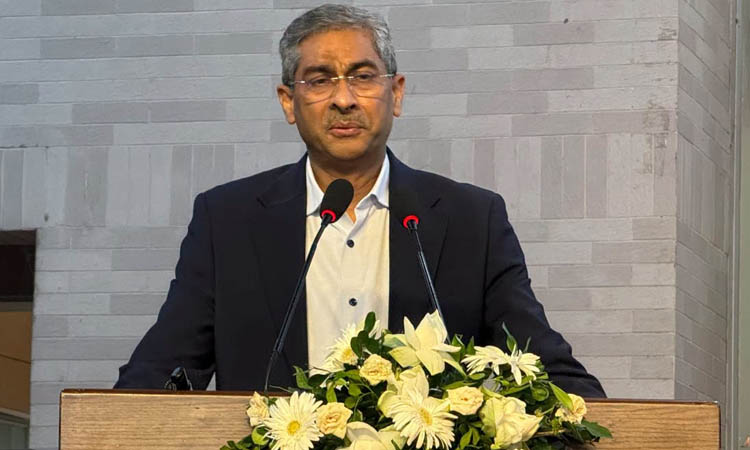
Taskforce head Dr Zaidi Sattar said, “Over the past decade, our revenue collection methods have become extremely complex. Without reforming these methods, it will be difficult to expand the scope for revenue collection.”
He added that swift reforms of these methods would have far-reaching positive impacts on the economy.
Internal Resources Division Secretary Md Abdur Rahman Khan said the report clearly identified the challenges and outlined pathways for addressing them.