Saturday
22 August, 2026
DHAKA, Dec 9, 2025 (BSS) - Law, Justice and Parliamentary Affairs Adviser Dr. Asif Nazrul today said that the National Prevention Mechanism against torture will soon be constituted while the National Human Rights Commission (NHRC) Ordinance 2025 has been gazetted.
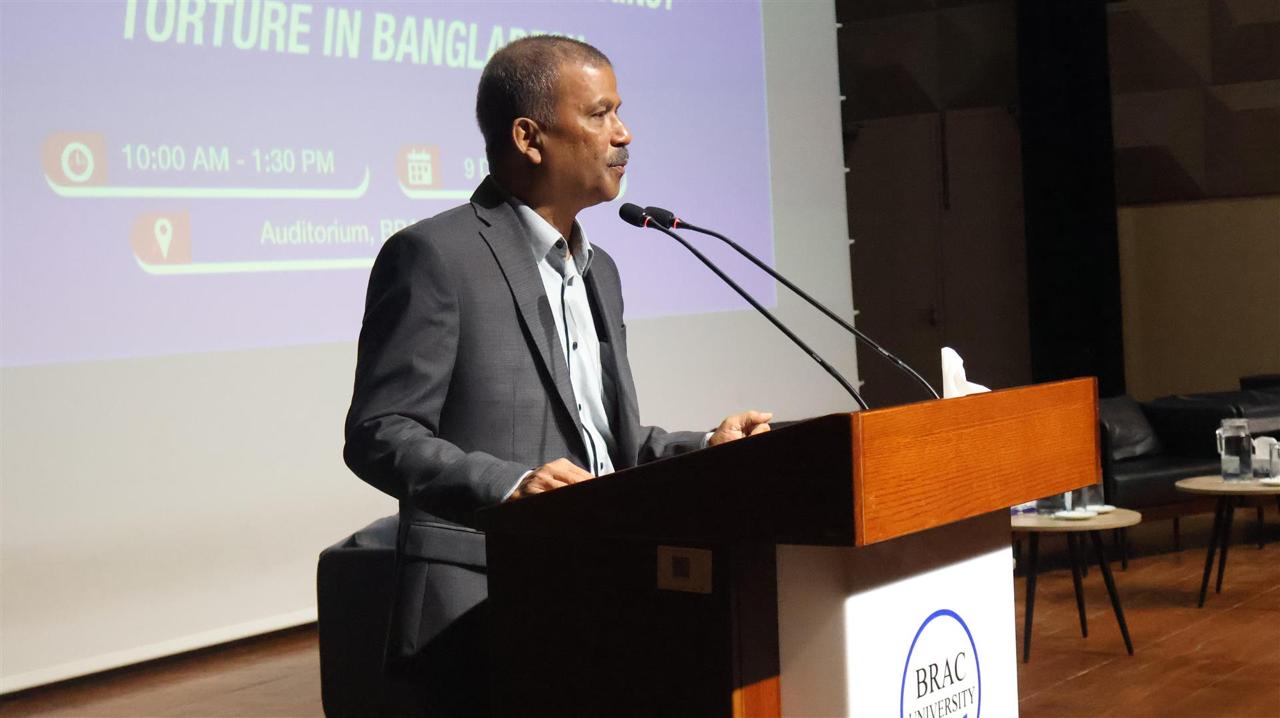
He made the announcement a seminar on the “Operationalisation of the Optional Protocol to the Convention against Torture (OPCAT) in Bangladesh” at the BRAC University auditorium, said a press release here.
As Bangladesh ratified the OPCAT earlier this year, the seminar brought together key stakeholders, including representatives from the government, the UN, civil society, NGOs, development partners and young participants to discuss practical steps for the implementation of this key international human rights instrument.
Dr Nazrul, speaking as the chief guest, said that the ratification of the OPCAT is not the end but the beginning of justice.
Swiss Embassy, the United Nations High Commissioner for Human Rights (OHCHR) mission in Dhaka and the School of Law at BRAC University jointly organised the event.
Congratulating the Bangladesh government for ratifying the OPCAT, Swiss ambassador Reto Renggli said that this year Switzerland has joined the UN Human Rights Council, while Bangladesh is concluding its three-year term.
This overlap offers an opportunity to reaffirm strong commitment to human rights, not only at the Human Rights Council in Geneva but also here in Bangladesh to ensure that international standards and commitments translate into actionable and sustainable outcomes, he observed.
Professor Arshad Mahmud Chowdhury, Pro Vice Chancellor at BRAC University, observed that the dignity of every individual must be protected in practice and not just in principle.
In his welcome remarks, Professor K. Shamsuddin Mahmood, Dean of the School of Law at BRAC University, emphasized the importance of strengthening human rights protection and accountability mechanisms in Bangladesh.
Ben Buckland, Senior Adviser at the Association for the Prevention of Torture (APT), which is a Geneva based organization, delivered keynote address.
He shared regional experiences on National Preventive Mechanisms (NPMs) for torture and how they have been effective in other countries.
Afterward, eminent panellists at a panel discussion brought the wider discussions on torture prevention into the Bangladesh context.
Huma Khan, Head of Mission at the Office of the High Commissioner for Human Rights in Bangladesh, highlighted that an independent, effective and accountable National Preventive Mechanism is crucial in the fight against torture.
Dr. Saira Rahman Khan, Professor at the School of Law, BRAC University, and Secretary of human rights NGO Odhikar, said that having a national human rights commission and national preventive mechanisms is useless unless they are truly independent and can work without fear of persecution.
She added that without genuine political will from the government to prevent torture, no amount of preventive mechanisms will ever be effective.
Md. Abdul Wadud Akanda, Director at the United Nations Wing in the Ministry of Foreign Affairs of Bangladesh, highlighted Bangladesh’s commitment to international human rights obligations.
Sazzad Hussain, member of the Commission of Inquiry on Enforced Disappearance, observed that victims of enforced disappearance had also been victims of various kinds of torture. He stressed that the operationalisation of OPCAT must be done in its full essence and implemented properly.
A video message from Victor Zaharia, a member of the UN Subcommittee on the Prevention of Torture, was shown at the seminar.
The panel discussion was moderated by Md. Mostafa Hosain, Assistant Professor, School of Law, BRAC University and this interactive segmentwas followed by a lively question-answer session with the audience.