Thursday
20 August, 2026
News Flash
News Flash
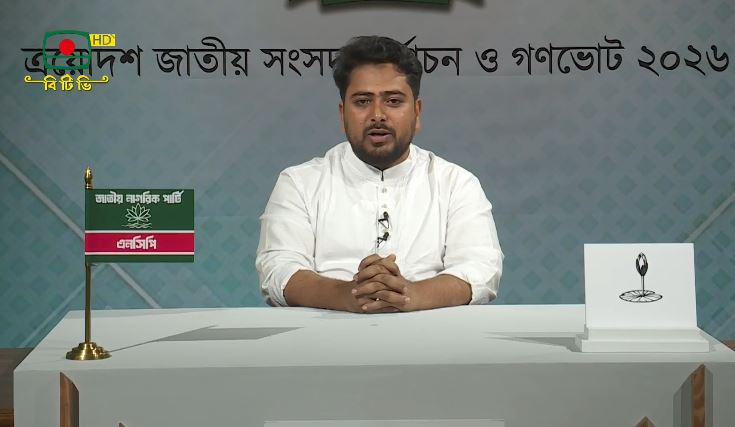
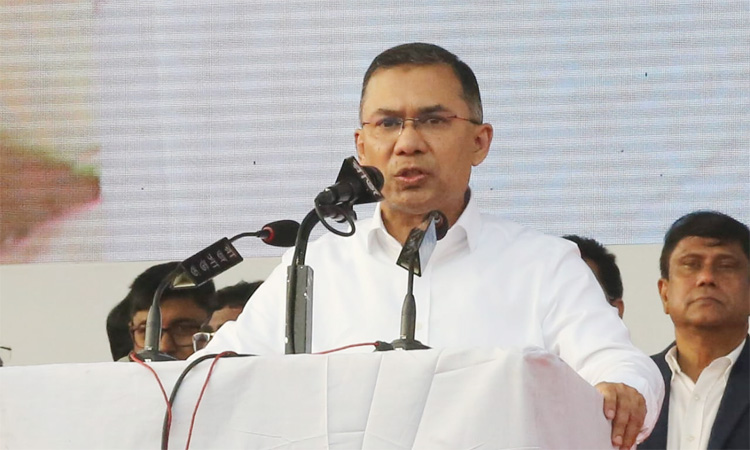
DHAKA, Feb 8, 2026 (BSS) - National Citizen Party (NCP) Convener Nahid Islam, in a televised address this evening, outlined a sweeping reform agenda emphasizing social justice, economic fairness and accountable governance while sharply criticizing past governments for discrimination and neglect.
"For too long, ordinary citizens have been denied dignity and fairness," he said, adding, "Discrimination has been the hallmark of governance. We will replace it with justice," Nahid, also former adviser to the Interim government, told the address broadcasted by Bangladesh Television (BTV) this evening.
Islam, who was a key coordinator of Anti-Discrimination Student Movement that toppled fascist Sheikh Hasina in 2024, pledged to dismantle structures of privilege and ensure equal opportunities for all. "No one should feel like a second-class citizen in their own country," he said, adding, "Our mission is to heal divisions and build a society where compassion is policy, not charity."
A major portion of the speech was devoted to social welfare. Islam promised to expand pensions, improve education, and guarantee healthcare.
"We'll ensure pensions for workers, quality education for children, and healthcare for every family. These are not luxuries-they are rights," he said.
He criticized past governments for neglecting these areas. "Students were left without proper facilities, workers without pensions, and families without support. That negligence was not just incompetence-it was discrimination against the majority," he said.
NCP Convener vowed to strengthen safety nets for the poor and vulnerable. "We will not allow hunger, unemployment, or illness to define the lives of our people," he said.
Turning to economic issues, Nahid pledged transparent fiscal management and investment in infrastructure, agriculture, and industry. "Budgets must serve the people, not the pockets of the powerful," he said, adding, "We will create jobs not by slogans but by action-through investment in skills, technology, and rural industries."
He promised to modernize agriculture, support small businesses, and expand employment opportunities. "Economic growth must be inclusive. It must benefit all citizens, not just a privileged few," he added.
Nahid underscored the need for clean governance and accountability. He pledged to root out corruption and strengthen institutions. "We will not tolerate the misuse of power. Every taka must be accounted for, every official held responsible," he said.
He also emphasized decentralization. "Development cannot be dictated from the capital alone. Local communities must have a voice in shaping their future," he said.
A recurring theme was unity across divides. Nahid called for bridging gaps between classes, regions, and communities. "We must heal the wounds of division. Our strength lies in unity, not exclusion," he said.
He pledged to protect minority rights and ensure equal opportunities. "Our vision is a Bangladesh where every citizen matters, regardless of background," he added.
Nahid outlined specific areas of focus in detail. On education, he said, "We will invest in schools, teachers, and technology to ensure every child receives quality learning."
On healthcare, he promised, "Hospitals must serve the people, not just the wealthy. We will expand facilities and make medicines affordable."
On agriculture, he said, "Farmers are the backbone of our nation. We will modernize agriculture and guarantee fair prices."
On infrastructure, Nahid said, "Roads, bridges, and energy projects must connect communities and drive growth."
And on youth, he pledged, "Our young people deserve opportunities. We will create jobs through skills training and innovation."
Centering his message on discrimination and pledging inclusive development, Nahid sought to position himself as the voice of the marginalized and the architect of a fairer society.
Commenting on election Nahid said, "This is not just an election. It is a choice between injustice and justice, between exclusion and inclusion. Together, we can build a Bangladesh where every citizen matters."