Thursday
20 August, 2026
News Flash
News Flash
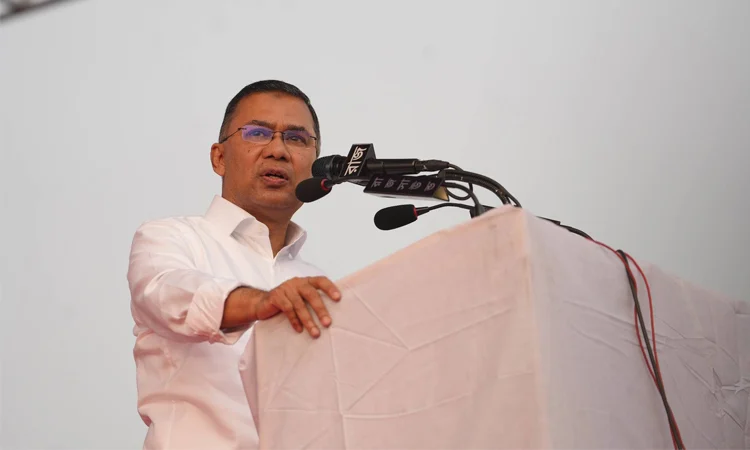
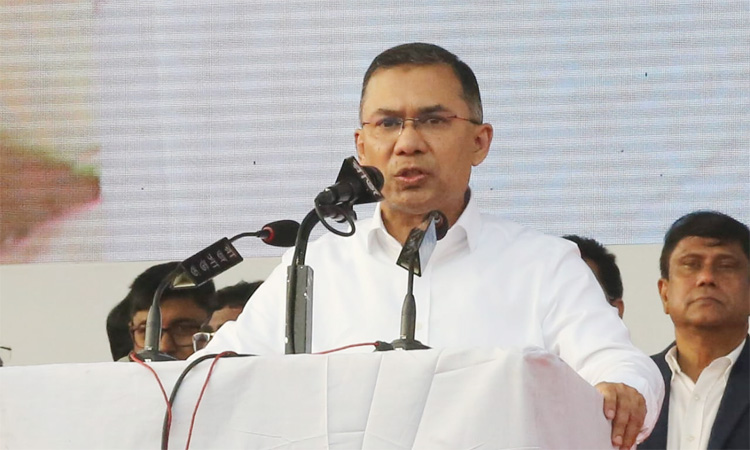
DHAKA, Feb 3, 2026 (BSS) - UK-based The Economist weekly has dubbed BNP Chairman Tarique Rahman as the front-runner to become Bangladesh's prime minister as the country is set to hold its general elections on February 12.
"Mr Rahman-the 60-year-old scion of a famous political family-is the front-runner to become Bangladesh's prime minister after a general election on February 12th," reads an analysis carried by the weekly in its latest edition published on February 2.
It said that poll will be the first since a revolution 18 months ago, when "Gen Z protesters ended the murderous and venal 15-year rule of fascist Sheikh Hasina's Awami League".
"The return to democracy should improve law and order, reassure investors, and begin repairing Bangladesh's fraught ties with India," the analysis said.
The Economist prediction came after several other international outlets like the US-based Time magazine and the Bloomberg made identical predictions on Rahman's prospect of being Bangladesh's next premier in their recent analyses.
The UK-based news outlet sketched the scene of Rahman's return on December 25 saying excited supporters dashed into the road as the bullet-proof bus carrying him rolled "slowing every couple of miles to give waiting fans a good look".
The Economist observed Bangladesh did not run a proper election since the one in 2008 while some 40 percent of its 128m voters never had a chance to cast a real ballot.
"For two decades of my life my votes never counted," te analysis quoted Shafqat Munir of security thing tank BIPSS who added now roads in the capital were festooned with campaign banners.
The analysis said overseeing the election would be the final duty of Bangladesh's interim government led by a Nobel Peace prize winner, Professor Dr Muhammad Yunus "but most people agree that it steadied an economy that was in free fall".
It said the interim government worked with politicians to write reforms which it hoped would prevent Bangladesh falling into fresh tyranny through steps like creation of a new upper house and limiting prime ministers to ten years in office.
Jamaat-e-Islami, it said, insisted "it would rule moderately for all Bangladeshis if elected but "yet its advances are causing panic among the urban middle class".
The analysis noted that the party has not fielded a single female candidate" while it was struggling to walk back a suggestion that it would like to limit the number of hours Bangladeshi women may work
"Nor is it clear that the party-which has never before held more than 18 seats in parliament-is experienced enough to run the country. Some of its policies sound expensive and half baked," The Economist wrote.
The analysis said "all this opens a door for Rahman" while his BNP was "leading in the polls".
It recalled for years the party was run by his late mother, Khaleda Zia and before that it was "run by her husband, a Bangladeshi president who was assassinated in 1981" while under the late premier BNP won power thrice during 1990s and 2000s.
The Economist wrote Rahman promised, without giving details, that if elected his party would support investors to create jobs and said he wanted more young Bangladeshis to get training that might help them find high-paying work abroad.
"He promises to dig 20,000km of canals to solve water shortages, and to plant 50m trees a year. He thinks he will get on with Donald Trump: America's president is 'quite practical, quite pragmatic-he's a businessman'," the analysis read.
The Economist wrote, "above all" Rahman said his government would ensure freedom of speech, maintain order and bear down on graft and people responsible for killing protesters in 2024 must face justice but insisted he would not use the powers of the state to go after political rivals.
Rahman, it said, argued the 2024 revolution showed what could happen to governments that "do not have a programme for the people" while "Being vengeful does not do anyone any good".
Since returning to the country Rahman said much of what people wanted to hear "though most still choose to talk off the record, in case the other side wins".
"Observers say the man who has come back from London seems different from the one they knew before," it read.