Thursday
10 September, 2026
News Flash
News Flash
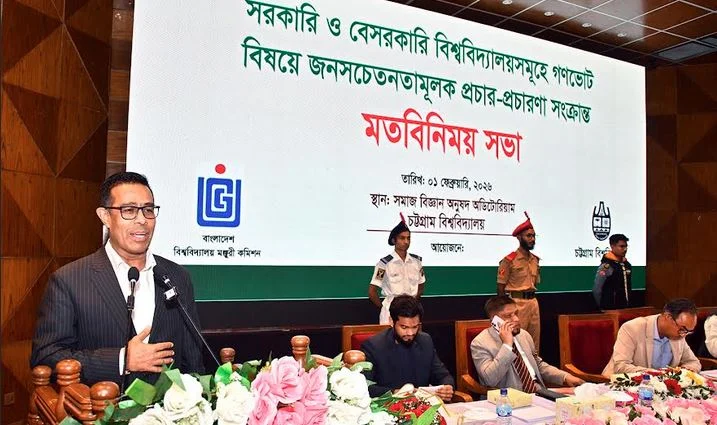
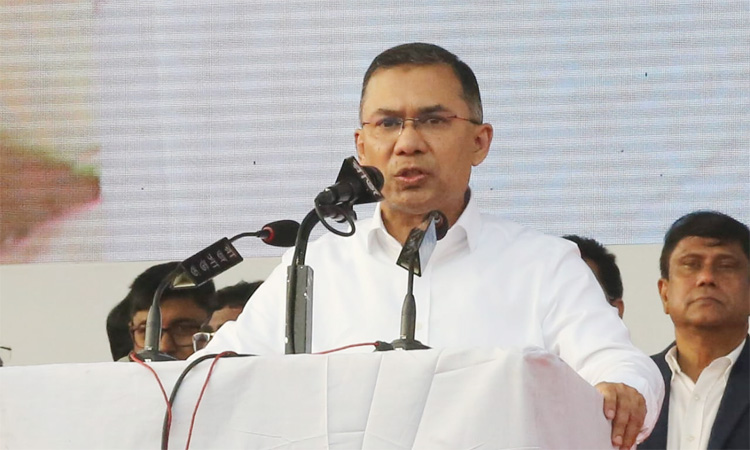
CHATTOGRAM, Feb 1, 2026 (BSS) - Chief Adviser's Special Assistant Monir Haider today said the primary objective of the upcoming referendum on reforms is to eliminate the conditions that allow future coups to take root in the country.
"No parent should have to bear the pain of carrying the lifeless body of their beloved child. The referendum aims to put an end to such tragedies," he said while speaking as the chief guest at a discussion meeting held as part of a nationwide awareness campaign on the forthcoming referendum.
The discussion was jointly organised by Chittagong University (CU) and the University Grants Commission (UGC) at the Social Science Faculty auditorium of CU, with UGC Member Prof Mohammad Ayub Islam in the chair. CU Vice-Chancellor Prof Dr Mohammad Yahiya Akhter attended the programme as the chief patron.
Vice-chancellors, pro vice-chancellors, treasurers, deans and registrars of various government and private universities under the Chattogram Division attended the event. Guardians of student martyrs and injured fighters of the July Uprising were also present.
Monir Haider said the referendum scheduled for February 12 is not a hasty decision but the outcome of a careful and well-considered process. He noted that the questions and framework of the referendum were finalised through extensive discussions, consultations with political parties and inputs from experienced individuals.
He said the referendum is not driven by partisan interests, but rather reflects a collective effort to guide the state towards a sustainable and equitable future, ensuring people's consent on critical state issues. "Fundamental decisions of the state cannot be imposed without the approval of the people," he added.
Refuting claims that the referendum was suddenly announced, Haider said such assertions stem either from a lack of understanding or deliberate misinformation. He stressed that every step of the process was planned on the basis of political consensus and practical wisdom.
He acknowledged that due to time constraints, many people-including educated sections of society-remain unclear about the contents of the referendum, and urged participants to clarify its purpose and context within their respective networks.
Highlighting constitutional history, Monir Haider said that in the 54 years since independence, the constitution has been amended numerous times, but only once- in 1996-was it done in the national interest. He noted that the transition from a presidential to a parliamentary system through constitutional amendment and referendum was carried out by the BNP government under Prime Minister Begum Khaleda Zia. "Except for the 1996 amendment, most others primarily served individual or group interests," he observed.
Explaining proposed reforms under the July Charter, he said there would be an Upper House of Parliament comprising 100 members elected through a proportional representation (PR) system. Under this system, even parties that fail to secure seats in the national election but receive a certain percentage of votes would be represented in the Upper House.
He said statistics show that no party in Bangladesh has ever received more than 40 percent of the total votes cast. As constitutional amendments would require 51 percent approval from members of both houses, it would be difficult for any ruling party to make unilateral changes, making consensus with other parties mandatory.
He further said certain laws would require approval through a referendum even after being passed by both houses. For example, any future decision to abolish the caretaker government system would need public approval through a referendum.
On presidential powers, Monir Haider questioned the actual role of the president, noting that key functions such as judicial appointments are effectively carried out by the prime minister. He criticised past practices of excessive expenditure by presidents despite limited responsibilities.
To address this, he said proposed reforms would provide for the election of the president through a secret ballot by members of both the Upper and Lower Houses.
He also criticised Article 70 of the Constitution, describing it as restrictive and responsible for making members of parliament subservient to their parties. He said reforms could allow MPs to vote against party lines except in specific cases such as votes of confidence, state of emergency and the national budget.
Monir Haider stressed the need to reform the Election Commission, saying the existing system grants excessive power to the prime minister in its formation. He advocated for a transparent process involving both ruling and opposition parties in parliament. He also expressed support for impartial formation of the Public Service Commission.
Clarifying the government's position, he said although the government is campaigning for a "Yes" vote, citizens are fully free to vote "No" if they choose.
Speaking on the occasion, CU Vice-Chancellor Prof Dr Mohammad Yahiya Akhter said the supreme sacrifices made by students during the July Uprising have created a historic opportunity to reform the state and bring meaningful changes for a lasting democratic society.
He said the implementation of the July National Charter, the referendum and the proposed reforms are highly significant and will have far-reaching implications for the future of the country.