Thursday
27 August, 2026
News Flash
News Flash
By Barun Kumar Das
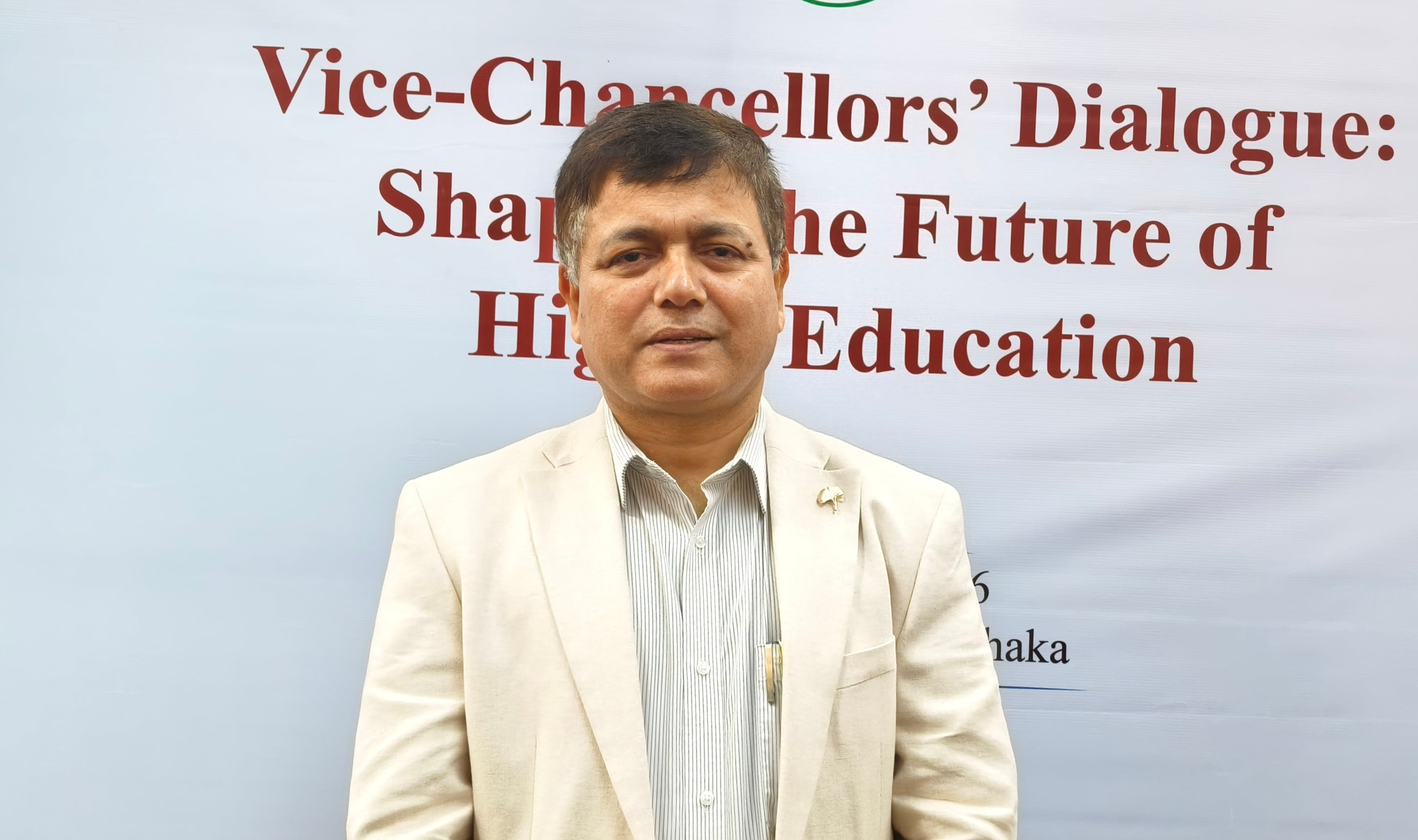
DHAKA, Aug 07, 2026 (BSS)- Urging for considering dengue outbreak as a national public health issue note public health expert Mustaq Hossain said the fight against dengue should not only start in hospitals, but also from homes, neighborhoods, schools, workplaces and local communities.
Deaths from dengue and suffering can be significantly reduced if coordinated efforts are taken to identify patients quickly, protect vulnerable people, ensure social support for poor patients. But destroying Aedes mosquito breeding grounds is foremost important, public health expert and former chief scientific officer at IEDCR Dr. Mushtaq Hossain told BSS.
"If we see rain during the monsoon as just a natural phenomenon for dengue, then the crisis will deepen. Preventive measures should be strengthened after rain each time to make possible free the country from dengue outbreak gradually,” he said.
Dr. Mushtaq said while the rainy season is a relief for the people of Bangladesh, it is also a time of great concern for public health.
"Continuous rain, humid weather and clean water accumulated in various places all create an ideal environment for the reproduction of Aedes mosquitoes. As a result, the outbreak of dengue increases every year around the monsoon."
He said this year is no exception while the number of patients has already increased in July compared to June. Analyzing the current situation, it is feared that this number may increase further in August, he said.
Dr Mostaque said Dengue infection does not increase immediately as a certain biological cycle works behind it.
He said many people think that number of mosquitoes decrease when it rains, but the reality is different. During rains, adult Aedes mosquitoes take shelter in tree leaves, bushes, corners of houses or other safe places and mosquitoes become active as soon as the rain stops. On the other hand, he said, mosquito eggs spread from one place to another in rainwater.
Since the Aedes mosquito eggs have a sticky coating on them, they stick to various containers, the edges of walls or the edge of water. If the environment becomes favourable, the larvae emerge from there within three to five days, he noted.
Then, within seven to ten days, the larvae turn into adult mosquitoes and if they bite a patient carrying the virus, they themselves become infected. Later, when that mosquito bites healthy persons, the dengue virus spreads," he said.
Dr. Mushtaq said the biggest limitation in controlling dengue is that people still mainly become active after the patient is admitted to a hospital.
There is a tendency to take action at the last stage of the crisis, he said, adding that ICUs in large hospitals, specialized treatment or efforts to save critically ill patients are certainly important. But, more important is that the patient should not reach that critical condition, he said.
Dr Mustaq said it is not possible to reduce dengue deaths with only tertiary treatment if preventive measures and primary treatment are not given due importance.
"Our first task should be to quickly identify the disease at the grassroots level. Although dengue testing is available officially, it is still not easily available to everyone. It becomes difficult to get tested at the beginning of fever, especially for people from densely populated slums, low-income areas or marginalized communities," the expert observed.
However, he said, if testing can be done free of charge as soon as fever occurs and the patient is identified, then it will be possible to give him/her proper advice.
He said, combating dengue should not be seen only as a matter of healthcare as it is also a matter of social security.
Local administration, public representatives, social workers and voluntary organizations should come forward and ensure food and minimum assistance to the sick and poor people, he said.
Stating that it is not necessary to admit all dengue patients to major hospitals in the capital, he said, rather, those who are at risk such as pregnant women, children under five years, elderly people, diabetic or high blood pressure patients, malnourished children, overweight people or people suffering from other complex diseases should be kept under observation in the upazila health complex, district hospital or designated secondary level hospitals.
This will make it possible to take necessary measures under the supervision of a doctor before the patient's condition deteriorates, he said.
At the same time, the expert said, the pressure on specialized hospitals will also be reduced.
Stressing the need for taking effective measures for mosquito control, Dr. Mushtaq said just spreading smoke with fog machines or realising fines through seasonal inspections is not enough.
Arrangements should be made to destroy larvae regularly in buildings under construction, abandoned cars, water accumulated on roofs, open drums, flower tubs, broken pots or water accumulated on the side of the road, he said.
In coastal areas, where people store rainwater for a long time, it is important to train the people on the use of safe larvicide or water purification technology and provide them with necessary materials, he said.
He said, a coordinated action plan is needed for dengue prevention as like the coordinated initiative taken during the Covid-19 pandemic. Dengue is no more a problem for Dhaka as number of patients is on rise rapidly in different parts of the country. It must be considered as a national public health issue.