Friday
04 September, 2026
News Flash
News Flash
By Saiful Islam
DHAKA, July 18, 2026 (BSS) - Although not all cancers can be prevented, certain types-such as cervical cancer-can be effectively prevented through vaccination.
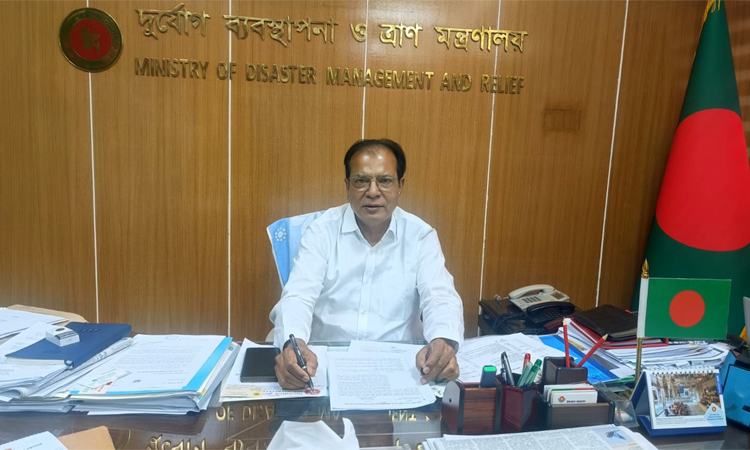
"Despite government initiatives, a lack of public awareness has prevented many families from vaccinating their children. Likewise, ensuring timely Hepatitis B vaccination could significantly reduce the risk of liver cancer," National Institute of Cancer Research and Hospital (NICRH) director Dr Mostafa Aziz Sumon told BSS in an interview at his office.
During the interview, he discussed various aspects of cancer prevention, treatment and the country's future plans for tackling the disease.
He said alongside new hospitals, modern medical equipment and medicines, the most urgent priorities in combating cancer are raising public awareness, expanding preventive vaccination, and implementing a nationwide cancer screening programme.
According to him, the number of cancer patients is increasing in Bangladesh due to air pollution, food adulteration and various environmental hazards.
However, timely vaccination, regular screening and greater public awareness could prevent a significant number of cancer cases or detect them at an early stage, he said.
He said although school-going girls have been included in the cervical cancer vaccination programme, only about 3 percent coverage has been achieved so far because of inadequate public awareness.
Despite the government's provision of all necessary logistical support, effective cancer prevention will remain difficult unless people become more aware, he added.
Sumon said one of Bangladesh's major shortcomings is the absence of a national cancer screening programme. In developed countries, cancers such as breast and colorectal cancer are routinely detected at an early stage through regular screening.
In Bangladesh, however, most patients seek treatment only after the disease has reached an advanced stage, reducing the chances of successful treatment, said the director.
He stressed that early diagnosis should receive the highest priority alongside primary prevention.
Referring to the shortage of cancer specialists relative to the country's population, Sumon said the greater challenge is the lack of technology-based training. Cancer treatment has become increasingly technology-driven, making it essential to modernize medical training and curricula to improve physicians' skills.
Speaking about improvements in hospital services, he said that the hospital is currently providing radiotherapy in three shifts until midnight using two radiotherapy machines while evening chemotherapy sessions have also been introduced.
As a result, with the same workforce, nearly 300 patients now receive radiotherapy and chemotherapy each day-significantly more than before, he said.
He added that an echocardiography (echo) machine and an anesthesia machine, both of which had remained out of service for a long period, have been made operational, while additional personnel have also been recruited.
Sumon said that nearly 98 percent of medicines are now provided to patients completely free of charge. This has been made possible through an additional Tk 30 crore special allocation from the government after he assumed office, enabling the hospital to procure the necessary medicines, he said.
However, he identified the shortage of radiotherapy services as a major challenge, noting that around 6,500 patients are currently waiting for treatment at NICRH alone.
He said since a complete course of radiotherapy for a single patient requires four to six weeks, the waiting list cannot be reduced quickly as new patients continue to be added.
To address the problem, he said, a Memorandum of Understanding (MoU) has been signed with the Institute of Nuclear Medical Physics (INMP) in Savar. Under the arrangement, patients will be able to receive treatment there, while doctors from the National Cancer Hospital will also provide services at the facility, he said.
In addition, the government has purchased a new radiotherapy machine, which is expected to become operational within the next six months, said Sumon.
He described the initiative as another important government contribution to expanding cancer treatment services.
Outlining the government's long-term plan, the NICRH director said work is underway to implement an integrated project by 2028 to provide cancer, cardiology and dialysis services in all eight divisional cities.
Once the project is completed, each divisional city will have two radiotherapy machines, chemotherapy centres and modern treatment facilities. Construction of infrastructure has already been completed at most locations, while procurement of equipment is currently in progress, he added.
Sumon also said a proposal has been submitted to the Ministry of Health to increase the National Cancer Hospital's bed capacity from 500 to 1,200. In the meantime, a separate proposal has been made to expand the hospital to 700 beds by utilizing existing infrastructure before the long-term project is completed.
If the required operational funding is approved, an additional 200 beds could be introduced without constructing new buildings or recruiting more staff, he said.
Regarding government assistance for cancer patients, the director said financial support provided through the Ministry of Social Welfare has been increased from Tk 50,000 to Tk 100,000.
So far, applications from around 1,700 patients have been processed and none of the allocated funds has remained unused, he said.
Describing public awareness as the most powerful tool in cancer control, Sumon said the government is making every effort to ensure treatment, vaccination, medicines and healthcare infrastructure.
However, he warned that the growing burden of cancer cannot be reduced unless people become more conscious about prevention.
He also urged those involved in food adulteration and the use of harmful chemicals to act responsibly, saying that they too are members of the same society and are ultimately not immune to the risks posed by such diseases.
A comprehensive strategy combining greater public awareness, expanded vaccination programmes, the introduction of a national cancer screening programme, technology-based modern treatment and expanded healthcare infrastructure offers the most effective way to address Bangladesh's growing cancer burden, the director said.