Thursday
13 August, 2026
News Flash
News Flash
By Mah Alam
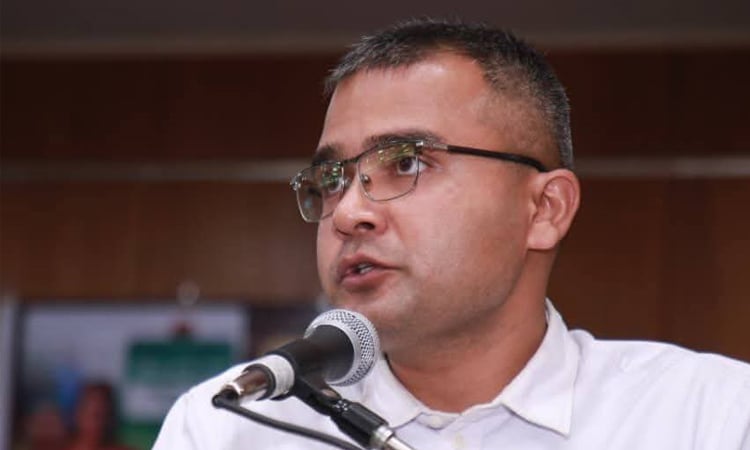
JAHANGIRNAGAR UNIVERSITY, Aug 13, 2026 (BSS)- Jahangirnagar University unit of Jatiyatabadi Chhatra Dal (JCD) Member Secretary Wasim Ahmed Anik has said the July Uprising of 2024 should be regarded as a collective achievement of people from different sections of society, rather than the property of any particular group.
"The July movement initially emerged as a student movement before taking a broader political form, involving people from different sections of society," he told Bangladesh Sangbad Sangstha (BSS) in an interview.
Anik said no individual or organisation should claim exclusive ownership of the movement, stressing that its broader significance lay in the collective participation of people who stood against injustice.
He expressed hope that Bangladesh would move towards a political and institutional system based on democracy, rule of law, accountability and meaningful reforms.
Recalling his involvement in the July Uprising, Anik said JCD's central leadership had instructed its activists to support students' legitimate demands without attempting to take control of the movement.
"JCD's central leadership instructed its activists to support students' legitimate demands without attempting to take control of the movement," he said.
He said general students were encouraged to remain at the forefront, while political activists worked from behind to provide necessary support.
"We never tried to take leadership of the movement. We worked to provide whatever support was necessary while allowing general students to lead," Anik said.
According to him, he and fellow activists were involved in coordination, logistics and communication and helped bring students from outside Jahangirnagar University to the demonstrations.
He recalled facing tear gas and gunfire at several locations in Savar, including Radio Colony, the bus stand and Shimultala.
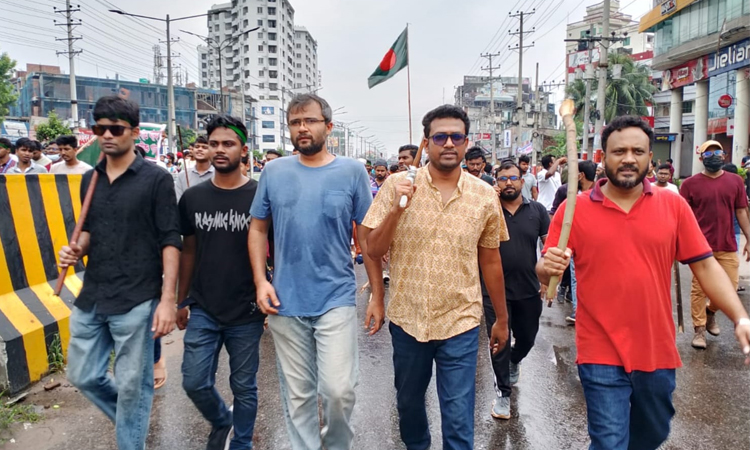
Anik described the death of Abdul Kaiyum, a student of Comilla University, as one of the most painful moments of the uprising. "I had been at the place only a few minutes earlier. I could have been among the victims," he said.
He said fear of arrest also affected communication among activists during the movement. They often limited mobile phone use and relied on direct communication and designated meeting points to coordinate activities.
Anik credited teachers and journalists with playing important roles during the movement. While teachers provided moral support to students, journalists continued reporting despite facing risks, he said.
Regarding the role of the university administration, Anik alleged that it failed to adequately protect students during the crisis. However, he stressed that any accountability process should be based on impartial investigation and evidence.
About his political journey, Anik said his interest in nationalist politics began during his school years, when he started learning about Bangladesh's political history and various political ideologies.
He said the political philosophy of Shaheed President Ziaur Rahman particularly attracted him, while former Prime Minister Khaleda Zia's political career and struggle also influenced his political outlook.
"I felt that Bangladeshi nationalism was compatible with my own thinking and that it could provide a platform to work for the country, society and people," he said.
After being admitted to Jahangirnagar University, Anik said he was elected as a first-year representative and a member of the Philosophy Department Students' Union. He subsequently became actively involved in JCD politics.
He said political engagement was not the only part of his university life. He also participated in Rover Scouts, ethics-related activities and other constructive programmes.
Student leaders, he said, should develop their leadership and personal skills through academic, social and extracurricular activities alongside political involvement.
Recalling the political repression he experienced, Anik said opposition student activists at Jahangirnagar University faced pressure, intimidation and threats during the early 2010s under the then Awami League government.
Anik said he stayed at Shaheed Rafiq-Jabbar Hall for around eight months before becoming joint convener of the JCD hall committee in 2012.
He alleged that threats of physical assault, public humiliation and psychological pressure eventually made it impossible for him to continue living in the hall.
"Leaving the residential hall adversely affected my academic life, as I could not regularly attend classes or use university facilities in a normal environment," he said.
Anik also recalled his experiences with criminal cases and imprisonment. He said a university-related vandalism case was filed against 19 people in 2012 and alleged that police subsequently visited his village home.
"I was arrested on January 19, 2015, and remained in prison for nearly a year," he said.
He alleged that an explosives case was filed against him and that additional cases, including an attempted murder case and a vandalism case relating to Dhaka University, were subsequently filed.
Describing that period as one of the most difficult phases of his life, Anik alleged that the cases were politically motivated.
He further alleged that his political activities created pressure on his family, including police searches at their village home and a prolonged dispute over family property.
Reflecting on his political experiences, Anik urged young political activists to remain cautious and avoid impulsive decisions.
"Many kinds of traps exist in politics. If you fall into one, both you and the organisation can face danger. Once you are in trouble, organisational activities are disrupted and the political vision cannot develop properly," he said.
He advised student leaders to keep a cool head, exercise patience and think deeply before making political decisions, while placing the interests of their organisation and the country above personal ambition.
Regarding his own future, Anik said he planned to enter professional life after completing student politics but would remain ready to undertake organisational responsibilities if entrusted by his party.
He reiterated his hope for a Bangladesh founded on democracy, rule of law, accountability and institutional reform, saying the lessons of the July Uprising should be reflected in the country's future political and institutional development.