Wednesday
03 June, 2026
News Flash
News Flash

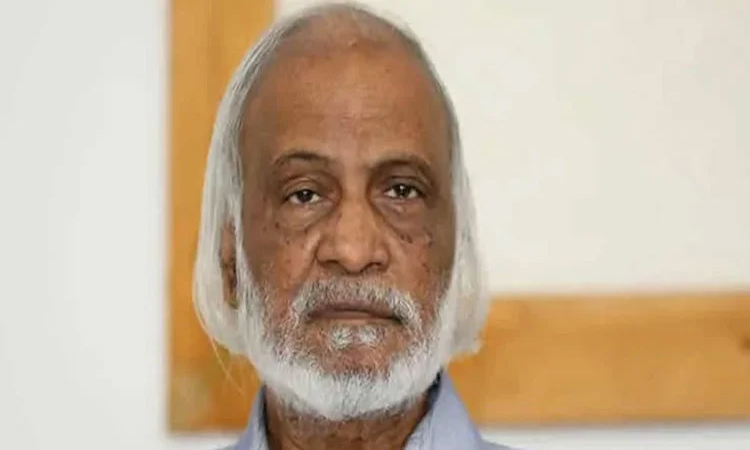
DHAKA, Nov 18, 2025 (BSS) - Aminul Islam Bulbul, former national captain and Bangladesh’s first Test centurion, was elected unopposed as the new President of the Bangladesh Cricket Board (BCB) last month. He takes on the role at a crucial moment for Bangladesh cricket, with a focus on ensuring stability and strengthening grassroots development.
Drawing on his experience with the ICC and ACC, Bulbul has introduced a new cricket charter called the Triple Century, through which he aims to guide Bangladesh cricket toward the level of progress the nation has long envisioned.
The Bangladesh Sangbad Sangstha (BSS) spoke with him to learn more about his action plans and the challenges he faces in implementing them.
Question: You played for Bangladesh and also captained the side. Now you are the BCB President — how has the experience been so far?
Bulbul: My first term was five months — during that period, I established the Triple Century Programme. Now I’m focusing on delivering it. That first term was a learning curve. Now I have four elected years ahead of me, so I can plan long-term. When I first arrived, I felt the board was in disarray. We’re trying to emerge from that state.
Question: Was there any specific reason that motivated you to take up the role, especially since everyone knows it is far from a comfortable position?
Bulbul: Yes, there has been all kinds of criticism. But to be honest, there are two things. First, I genuinely didn’t know the situation was this damaged. I have worked very closely with 20 Associate Member boards, as well as with Sri Lanka and Afghanistan. Through that work, I gained an understanding of the character of different boards and their positions with the ICC. I assumed things here would be similar — but they were not.
Second, I actually came only to work for the initial four months. I had a job. My family lives in Australia. Right now, I have nothing here — my family is far away, I have no income, and I stay in Dhaka with my own money. I travel to Melbourne with my own money. I am living off my savings. I do not take a single penny from the Cricket Board.
I’m doing this because I felt Bangladesh cricket needed me. There are many people here who are better administrators than I am. But since I was given this role — and since this is exactly the kind of work I’ve done for 19 years at the ICC and ACC — I felt I should do it. And I want to do it together with the 25 directors of the board, for the country.
There is only one interest here: the interest of Bangladesh cricket. Nothing else.
And one more thing — this is not a role to enjoy. It is a responsibility. Bangladesh cricket has come to us as a trust. I am simply trying to protect that trust.
Question: Mushfiqur Rahim is about to play his 100th Test — the first Bangladeshi cricketer to reach this milestone in 25 years of Test cricket. While the feat is worth celebrating, isn’t it also an indication of flaws in the cricketing system? And do you have any special plans for him?
Bulbul: First, let me say, we’ve been playing Test cricket for 25 years. And in these 25 years, he is our first cricketer to play 100 Test matches. When we started playing Test cricket in 2000, in the first two years, we tried many cricketers. Even in the next ten years, we tried many players — if you look, many of them played one Test, two Tests, three Tests. We had many such players. Our selection was always very inconsistent. We were a new Test nation. We experimented countless times, which is why we have had so many Test cricketers in these 25 years — perhaps more than any other country.
Coming back to Mushfiqur Rahim — he has had three roles. First, he was Bangladesh’s most dependable batsman. His name became “Mr. Dependable.” Second, he kept wicket. And third, he played all formats. If you combine these three, you see why reaching 100 Tests — especially in a country that barely gets enough Test matches — is a massive achievement. His dedication to cricket, his fitness, and his consistency made this possible. To me, he fully deserves it.
Since we have the chance to be part of his 100th Test, we’ll try to make it memorable. But we won’t interrupt him during the match so his focus isn’t disrupted. Cricket Operations has planned a few small things — we’ll share those with him to honor him.
Question: What kind of arrangements?
Bulbul: Perhaps a special cap, some commemorative jerseys from teammates, and a prize. His family will be invited to watch the game from a box together.
Question: You mentioned inconsistent selection earlier. Even now, except for four or five senior players, no one has played 50 Tests. Many have been around for seven or eight years but only intermittently. Domestic performance rarely translates to Test success. The gap between domestic and Test cricket has remained large even after 25 years. Why is this, and what is your take on it?
Bulbul: Our board is only 36 days old now. In these 36 days, I’ve seen we have a lot of potential. About selection — selection should follow a process and policy. I still don’t know what policy was used before. Yes, performance matters, but there are two types of selection:
Book selection — from scorecards and statistics.
Spot selection — spotting talent instantly, like Wasim Akram or Mustafiz did.
Our selection panel was unchanged for 10 years. No country keeps the same selectors for more than two or three years. That’s surreal. So, there was no proper selection process.
Secondly, I will talk about the coaching system. To play good Test cricket, you need strong grassroots coaching. Bangladesh had no Level 2 or Level 3 coaching courses for 17–18 years. After we came, we started Level 3 courses.
Third is the quality of wickets — we didn’t have good Test wickets.
Fourth is the division-based teams — teams for Khulna, Barishal, Chattogram were being run from Dhaka. That can’t work.
So, no system and no process existed. Now we’re trying to fix these — making division-based teams, giving facilities to divisions, improving first-class cricket, training more coaches across the country. These things take time.
Question: This all seems tied to decentralization. Why didn’t previous boards do it?
Bulbul: First, proper planning was never there, and secondly, nobody wanted to give power outside Dhaka.
Question: How do you want to operate in decentralizing cricket?
Bulbul: Our board has 12 directors from clubs, 10 from districts/divisions, two from the government, and one from category three. The 10 district/division directors were supposed to develop cricket there — they did nothing. Now we’re making them do their actual jobs. If we clarify everyone’s roles and terms of reference, things will improve.
Question: Could you explain your Triple Century programme?
Bulbul: First, we need to understand the cricket ecosystem. To understand the cricket ecosystem, we must begin at the grassroots level — primary schools, madrasas, and community institutions. A robust development structure is essential. We must ensure regular training, coaching, and competition for intermediate players, supported by strong domestic pathways. Competitiveness in all domestic competitions — NCL, BCL, regional and district leagues, university cricket, school and madrasa cricket, and club cricket — is crucial. Strength across these levels will ultimately produce high-performing elite teams capable of achieving our ultimate goal: winning global titles for Bangladesh.
The Triple Century Programme is a charter for Bangladesh cricket, personally designed by me as a long-term roadmap. It focuses on four core pillars: protecting the spirit of the game, ensuring high performance at every level, connecting and growing the game across the nation, and transforming the BCB into a world-class organization.
Question: Your Triple Century programme, which you term as the charter for Bangladesh cricket, seems promising. But domestic cricket is Dhaka-centric. What action have you taken to organize a cricket league regularly in all other districts?
Bulbul: My question to you — why didn’t you ask this to previous boards?
Anyway, our decentralization Step 1 is done. We brought four stakeholders from every district and learned their needs.
The next step is to appoint a Head of Cricket in every division. They will run domestic cricket there — district coaches, district leagues, everything.
We’re setting up small BCB offices across the country. Cricket will run locally now. The selection process will also happen there, not from Dhaka.
Our pilot program will start in Sylhet and Rangpur — not Chattogram yet, because it’s big (12 districts), and we already organized a franchise tournament there. We want to start on a small scale so we don’t make mistakes.
Question: Bangladesh’s performance has declined across formats. We used to be a good ODI team. How do you view this issue?
Bulbul: Performance alone does not represent the true picture of a country’s cricket. But you have asked a very important question. Our first-class cricket, fifty-over cricket, and Test cricket — all of these depend on the quality of our coaching, infrastructure, and first-class system. At one time, our ODI team was very strong, with players like Shakib, Tamim, Mushfiq, Mashrafe, and Riyad. Now, for the next generation to rise, the main platform is the Dhaka Premier League (DPL), because we do not have any other strong and competitive one-day league.
Now I hear that several clubs may not take part in the Dhaka League this year. This will have multiple consequences — our fifty-over cricket will suffer. The number and standard of competitive one-day matches will decline. The club system — where most of our national players play — will also be harmed.
The responsibility of the Cricket Board is to provide grounds, balls, umpires, facilities, and financial support — in other words, to organize the competitions. But players participate under the banner of their clubs. If the clubs do not participate, these three major damages become unavoidable. And if the DPL becomes weak, the gap between international and domestic cricket will widen even further, leading to a decline in our national team’s performance.
The quality of the DPL determines the strength of our ODI cricket. If the clubs perform well, the national team will also benefit. Since 12 directors come from this league, if they can make their clubs competitive and well-run, the gap between international and domestic cricket will narrow. Otherwise, the situation will worsen day by day.
We have already spoken with the First Division clubs — out of 20, 12 clubs have agreed to play. We have invited the others as well. Our responsibility is to run the competitions, and the clubs’ responsibility is to field their players under their own banners. Everything else — funding, facilities, arrangements — is provided by us. If someone decides not to take part, we cannot force them, but it will only harm cricket.
Question: What reason they showed to skip the league? Are you talking to the clubs to convince them to play?
Bulbul: In my view, many such decisions are often influenced by issues of power or positions in the board—becoming president, a councillor, or a director. For the betterment of cricket, the right decisions must be made. Our CCDM Chairman Adnan Rahman Dipon and Vice-President Faruk bhai are working on this issue. I myself am talking to major clubs, including Mohammedan. We are all trying to ensure the clubs’ participation. Because the players are Bangladesh’s players—they should be allowed to play. It is unfortunate that things have reached this state, and it should not have happened.
For ODIs, we only play the Dhaka League—no other 50-over competition. If the DPL becomes weak this year because some clubs won’t participate, it will have multiple negative effects—less competition, a weaker national team, a weaker pipeline. The board provides grounds, balls, umpires, funds. Clubs simply need to field teams. If they don’t, cricket suffers. We’ve convinced 12 clubs; we’re trying to bring more.
Question: Within these four years that you have in hand, where do you want to see Bangladesh in ICC rankings—whether in Tests, ODIs, or T20s?
Bulbul: It’s very difficult to say right now. Considering the condition from which we are starting, you need proper management for a team to perform well. But here we have no CFO, no Head of HR, no Head of Commercial, no digital division—nothing. After setting all these up, after decentralizing cricket and creating competitive cricket across the country, I want to see an improvement in our national team’s performance. At this moment, I do not want to make any commitments. But we want to restructure cricket nationwide.
Question: But in Bangladesh, people generally want short-term success. If you cannot deliver within one or two years, don’t you think people will become impatient again?
Bulbul: Yes, this is something we are saying after 25 years. We will try. If we cannot deliver, we will step aside—there is no issue with that. If someone better comes along, or if we feel we are unable to work according to our commitments, it’s still just a phase of our lives. We won’t cling to our position forever.
My main concern is that, as a nation, we tend to chase short-term results. And people think long-term plans do not work because they take time and seem unstable. Even then, short-term does not mean we won’t focus on the national team’s performance. But we want to pay greater attention to strengthening grassroots cricket.
Question: Do you have any special plans for the national team?
Bulbul: Right now, even the basic pathways of our cricket aren’t clear. Where will players from the district or divisional level play? How will talent identification work? What competitions will these players be part of? We need to set all of this first—these things never properly existed. Once these are in place, we can focus on the rest.
As for the national team, we will try to introduce higher-quality training. To perform at the international level, we must have sports science. We are focusing on that.
Question: Since taking office, what are the major challenges you’ve faced so far?
Bulbul: I have seen several roadblocks, both within cricket and outside it. For example, today is the 16th of November. The biggest news today should have been that a young boy named Habibur Rahman Sohan scored a century off 35 balls in a tournament. But there is no news about it anywhere.
Our Test team is about to play the second Test against Ireland, and there is not a single report about their preparation. We have pushed cricket aside, and for viewership or business, we highlight only negative headlines. I believe this is a roadblock for the development of Bangladesh cricket.
Secondly, the government has always provided huge support for Bangladesh cricket. But on the other hand, our cricket culture has disappeared. Reviving this cricket culture is essential.
And cricket and politics can never run together. Cricket should be allowed to function independently. When politics enters cricket—or any sport—it injects political interests into it. So it is better if more sports-oriented administrators come forward or assist us.
Finally, the most important thing is that cricket has gone backward over the last 15 years. To progress, we first need to bring everything back to normal. Whether it’s administration, coaching, or the league system—everything has turned negative.
So first, we must restore normalcy. Only then can we build momentum. Bringing back this normalcy requires a lot of hard work. And for that work, we need support from every sector.
Question: Regarding recent issues—such as the ones currently circulating about women’s cricket—and then there are Jahanara’s allegations. How embarrassing are these?
Bulbul: Look, first of all, this incident originally happened in 2021–22. And when it happened back then, the board at that time—based on what we learned from our CEO—had already closed the matter. After closing it, they took certain decisions, which we still don’t know in detail. Later, when reports resurfaced through a YouTube channel…
Let me interrupt—are there any records of it?
There are records. When I said “we don’t know,” I meant we don’t know how they closed it. But we did find the letter Jahanara had submitted. The complaints in that letter do not match the new complaints being made now. If she had any complaints that were unresolved, she should have brought them to the board. Instead, she raised them elsewhere or spoke publicly. The problem is, since it never came to us officially, it creates confusion.
Still, we felt this issue needed to be addressed, so we formed a five-member investigation committee—very strong members, as you know—and they have already begun working. Since the investigation is ongoing, we are not interfering, nor are we being updated.
Another issue is the claim that a letter was hidden. That letter came right before the BCB election. A girl was not selected for the Under-19 team, and out of frustration, she supposedly wrote that letter.
Based on that letter, our CEO had written to the National Sports Council (NSC), saying that in selection processes, some will be unhappy and some will not. If someone gets upset and writes a letter, we cannot run after every single complaint like that—that would be wrong. So we responded to NSC accordingly.
Then it was claimed that the letter was withheld. In all this, my name was unnecessarily dragged into it. I feel this is an attempt to socially demean me. I am the board president, after all.
Since both issues have now come to us, we are not ignoring them. We handed them over to the investigation committee, which includes a judge—an extremely strong team. They will judge it. My question is, since these problems are old, and all other issues are also from before, why are they being placed on our shoulders? We are just a 35-day-old board.
Still, we are handling everything with patience. We are conducting proper investigations. And through this process—although the incidents happened four years ago and are not from our tenure—we hope to get recommendations from the new committee so such things do not happen in the future.
Question: Do you think these are driven by personal vendetta?
Bulbul: I wouldn’t call it personal vendetta. I would call it jealousy. Look at our work over the past few months: we have completed the coaching structure, conducted Level-3 courses, specialized batting courses, umpiring courses, created an umpiring panel, brought in Simon Taufel, brought back Alex Ross, conducted Level-3 programs with Ross Turner. Our national team has won the last four series. The women’s team performed well in the World Cup.
In the last two and a half months, we restructured the entire board through a world-class HR company. We are now going to implement a new structure, with new roles across the board. We have a good reputation at the ICC; they praise our work. Amid all this positive progress, why is my name dragged into unnecessary negativity? For example, yesterday Sohan scored a century off 35 balls—no news coverage.
So I have one request for sports and cricket journalists: stay true to sports journalism. Talk about the game. When someone scores a 150-run innings, when our Test team wins, when we win an ODI series against West Indies—even if we lose or win in T20s—why are these positive stories being ignored?
I believe everyone should remain fair. That is my final request to all.
Question: When you ran for President, did you expect such pressure and criticism?
Bulbul: No, I didn’t. I thought it would be smooth. But you see people’s true nature when you’re in trouble. I realized during the election. Some people who report or influence opinion—I feel they need to be more cricket-focused.
I’ve learned a lot. It’s part of my learning.