Friday
28 August, 2026
News Flash
News Flash
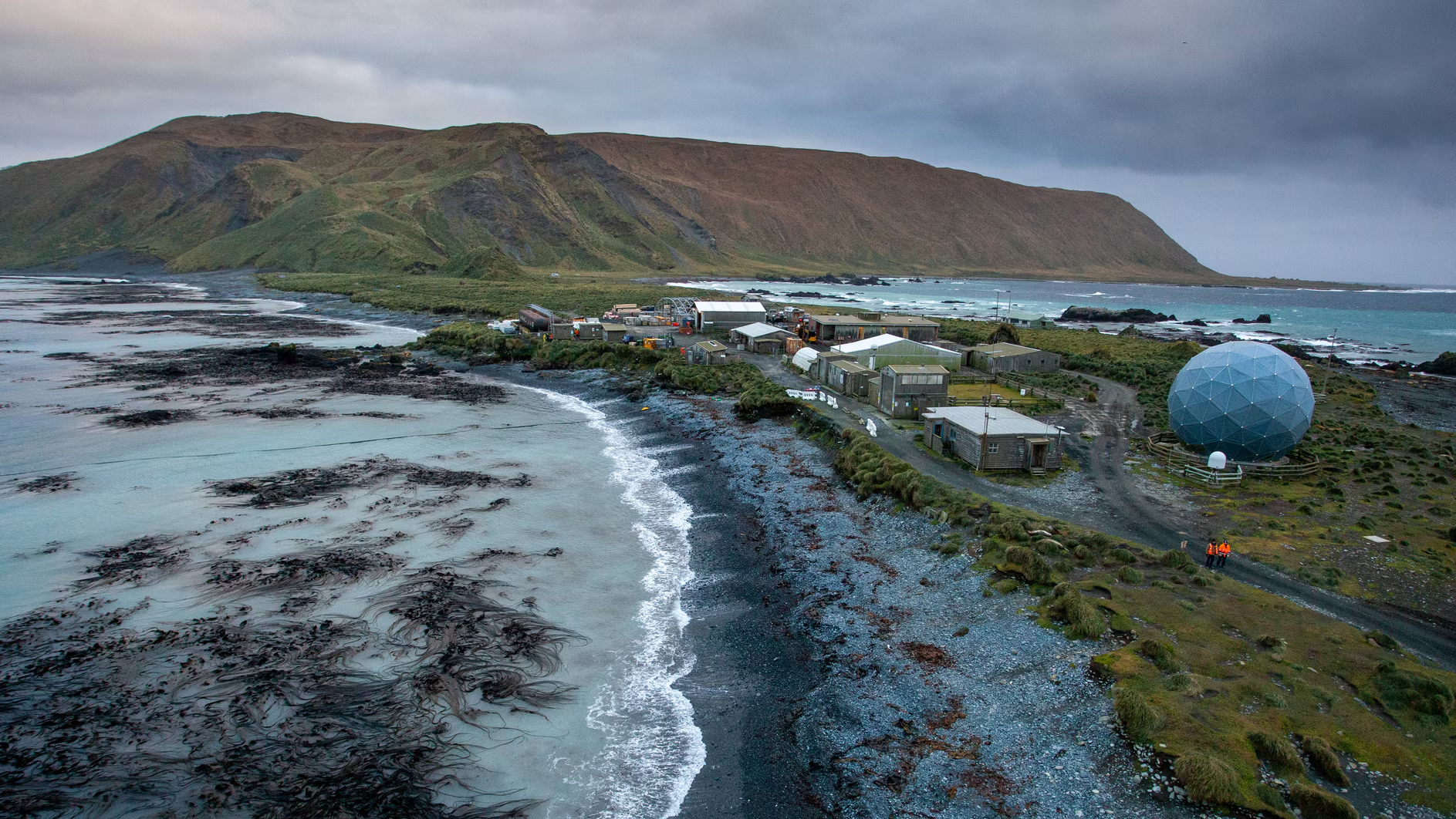
SYDNEY, Australia, Aug 28, 2026 (BSS/AFP) - Australia said Friday it would evacuate workers from a research station on a remote island over the "psychosocial" risk caused by a potential outbreak of the highly contagious H5N1 avian influenza.
Macquarie Island lies halfway between Tasmania and the Antarctic and is home to an Australian research station as well as thousands of elephant seals.
The mammals are highly susceptible to H5N1 bird flu and while no cases have been detected on the island, officials said many were expected to die during the breeding season from September through November.
"While the risk to humans of H5 bird flu is considered low, we can't ignore the psychosocial risks of living near potentially large numbers of affected animals," said Sean Sullivan, deputy secretary at Canberra's Department of Climate Change, Energy, the Environment and Water.
"Our expeditioners already live and work in one of the world's most remote and challenging environments," he said.
"It is important that we minimise any additional risks that could affect their wellbeing and the safe operation of our stations."
Macquarie's 24 tradespeople, scientists and support staff will be evacuated on the RSV Nuyina icebreaker in September or early October, the environment ministry said.
Officials in June reported thousands of elephant seal pups had died of bird flu on another remote Australian territory, the Heard and McDonald Islands.
The country was for years the only continental landmass free of the H5 strain, which has caused severe disease and death in poultry and wild birds worldwide.
As of Friday, authorities have reported 341 confirmed or presumed positive cases of H5 bird flu in Australia.
There have been no cases detected in poultry or in the country's agriculture production.