Friday
28 August, 2026
News Flash
News Flash
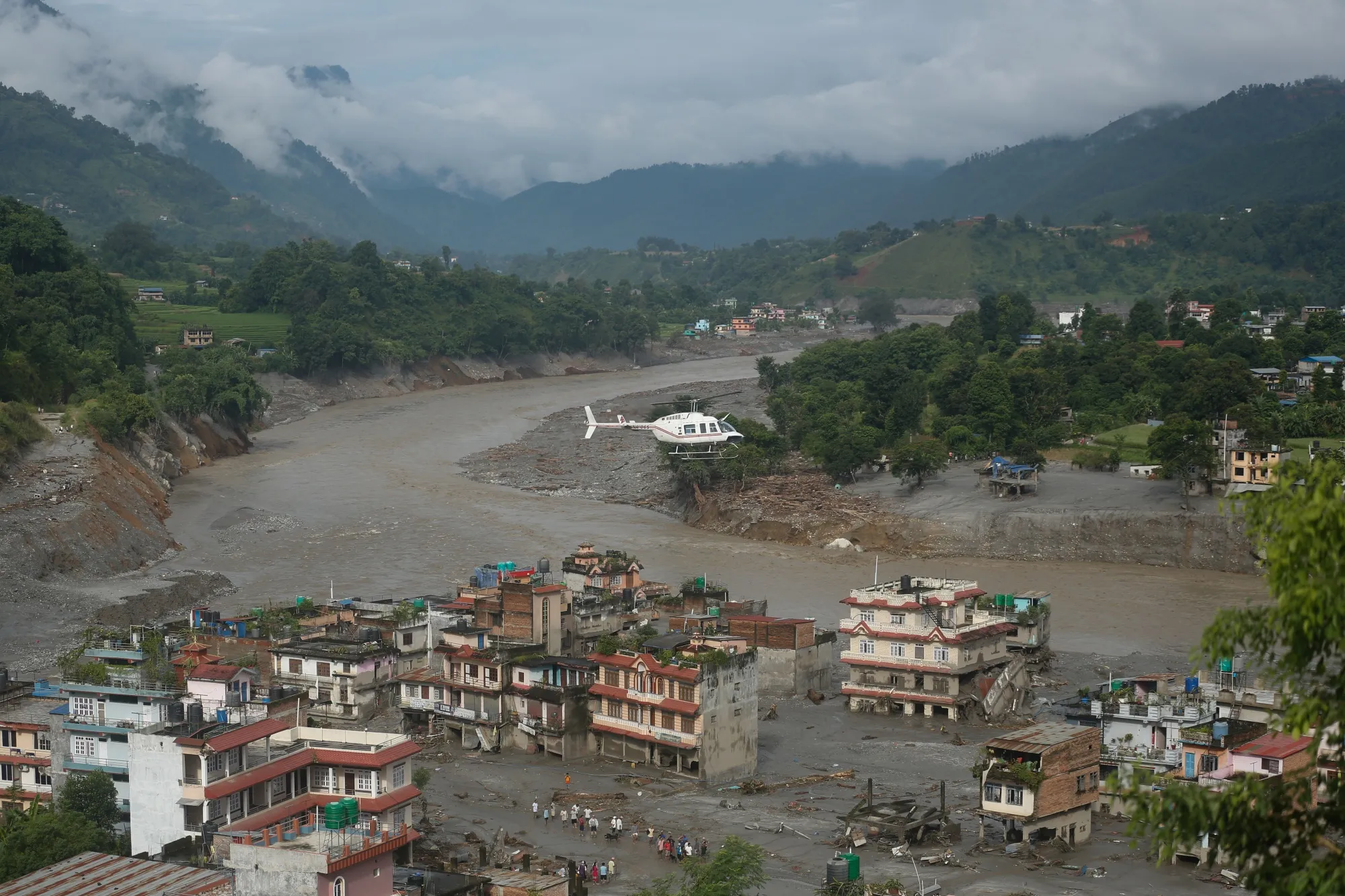
KATHMANDU, Nepal, Aug 28, 2026 (BSS/AFP)- Nepali army helicopter rescue teams were working on Friday to rescue around 100 people trapped inside a tunnel at a hydropower project swamped by a devastating flood two days earlier.
"Our focus is in search and rescue of people... some people are trapped in the tunnel of Trishuli 3A hydropower project," Nepal Army spokesman Raja Ram Basnet told AFP.
"Two helicopters have been dispatched but it is challenging because it is tough to even locate the entry points of the tunnel. Relief efforts are also underway to provide the rescued people what they need," he added.
The prime minister's office said in a statement that the army had been working in tough conditions.
"A Nepali Army team has successfully rescued 350 workers and locals who were trapped in the tunnel a while ago facing extremely risky and challenging conditions amid adverse weather and rapid floodwaters," the statement read.
"The army is still working to safely evacuate more than 100 people trapped in the same tunnel."
It did not give further details about the nationalities of those rescued or trapped.
The scale of destruction from devastating floods in Nepal's northern border region was becoming clearer on Friday, with roads, bridges and hydropower infrastructure destroyed and survivors describing scenes of extraordinary devastation.
Workers rescued from other dam projects along the Trishuli valley described a disaster that unfolded with terrifying speed.
"There were at least 400 workers at the site," Dev Shrestha, who was airlifted from the site where he was working, told AFP after his rescue. "More people died than were rescued."
Worker Buddha Tamang said he survived only because he was inside a tunnel at the dam where he worked when the flood struck -- but he had managed to get out and reach help.
"I survived as I was in the tunnel," said Tamang, who was airlifted on Thursday after being marooned for more than 24 hours.
"The senior officers working on the other side, they were all swept away."
Another worker, Arjun Kumar Tamang, spoke of "massive damage" at the hydropower site where he had been.
"I don't know how many people died but the force of the water swept everything away," he said.
The US Geological Survey (USGS) said the disaster on Wednesday was caused by a glacial collapse that triggered a vast flow of icy debris.
Climate change is causing glaciers to melt worldwide, increasing the risks of glacial lake floods and glacial collapses.
The destruction has severed vital links across a mountainous region where roads and bridges are often the only routes.
The damage also extended to Nepal's key hydropower sector, with several projects -- both operating and under construction -- hit hard.