Monday
24 August, 2026
News Flash
News Flash
By Md Aynal Haque
RAJSHAHI, Feb 28, 2026 (BSS)- Rajshahi has long been known as the heart of Bangladesh's silk industry as the climate, soil, and environment of this
Padma-washed region are highly suitable for sericulture, that's why the silk industry has developed here over many years.
This traditional industry continues to play an important role in Rajshahi's economy, employment and cultural life.
Rajshahi silk is well known not only in the domestic market but also internationally. Due to the high quality of the yarn and fabrics produced
here, there is demand abroad as well.
The use of Rajshahi silk in various garments such as saris, punjabis, three-piece outfits, and scarves has been increasing steadily.
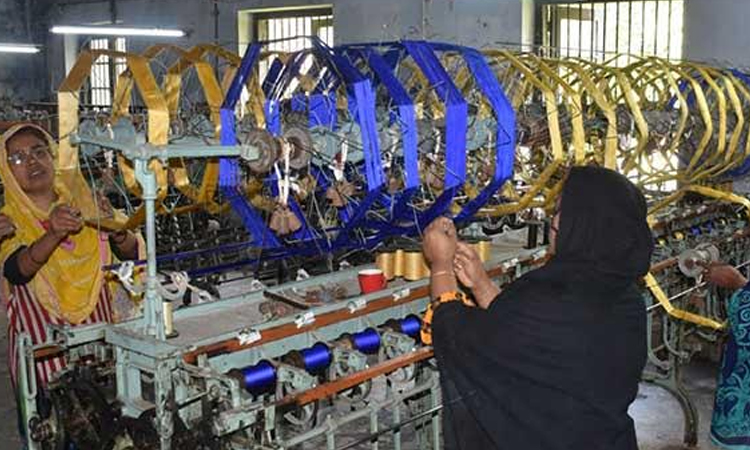
Thousands of people are directly and indirectly involved in the silk industry. Mulberry farmers, silkworm rearers, yarn producers, weavers, and
traders earn their livelihoods from this sector.
In particular, the silk industry has created an important source of employment for rural women, contributing to women's economic empowerment.
Regular sericulture (silk yarn production) is also carried out at the Bangladesh Silk Board. In addition, several silk marketing centers have been
established in the BSCIC industrial estate in the city, where sales remain brisk.
Employees at the retail outlets say that sales of silk garments are increasing day by day, and that demand and popularity have grown compared to
the past.
Wahidur Rahman, a sales assistant, said, "There is demand for our silk garments all over the country. Many foreign buyers also visit from time to
time and like our products. However, sales peak during Eid, when demand is especially high."
Regular silk production is also ongoing at the Rajshahi Silk Board, though officials say they are unable to supply enough yarn to meet demand.
A visit to the site shows mulberry cultivation and silkworm rearing taking
place in separate areas within the board premises. Fazlul Haque Biswas, an employee who has worked there for 13 years, said, "I
joined here in 2012 and have been working continuously since then. Our families survive on the income from this work. Rajshahi silk has good demand
both at home and abroad."
Another silkworm rearer, Saddam Hossain, said, "You won't find silk yarn and fabric like Rajshahi anywhere else. That's why Rajshahi is famous. The silk
here is produced using our own farmers and high-quality yarn. We have been making yarn for a long time and have now become skilled."
Despite its vast potential, Rajshahi's silk industry is facing various challenges. Rising raw material prices, lack of modern technology,
insufficient government support, and weaknesses in marketing are making it difficult for many entrepreneurs to survive.
In addition, low-priced imported synthetic fabrics are capturing the market, posing a serious challenge to the domestic silk industry.
Local traders say they are importing yarn from abroad to maintain production. Due to the shortage and high price of domestic silk, they are turning to
foreign yarn.
An owner of a retail outlet in the BSCIC industrial estate said, "Most of the silk shops in BSCIC sell products made with imported yarn. Because domestic
yarn is expensive, everyone is now importing yarn from abroad. However, foreign yarn is not as soft as domestic yarn. To sustain this local silk
industry, the government must take initiatives in mulberry cultivation and silkworm rearing."
Mohammad Almas, sub-assistant officer at the Bangladesh Silk Board, said, "Rajshahi silk is no longer as vibrant as it once was. Since 2024, there have
been no new projects here. Previously, we had 154 employees, but over time the number has decreased. Government support is necessary to sustain
Rajshahi's silk industry; otherwise, it will not survive."
According to experts, with planned government support, easy access to loans, modern training, and increased export incentives, Rajshahi's silk industry
can regain its former glory.
At the same time, strengthening branding and design development could help it become more competitive in the international market.
Professor Muhammad Mahmudur Rahman of the Department of Political Science at Rajshahi University said, "To restore the glory of Rajshahi silk, specific
plans must be adopted and implemented. Work needs to be done on silk marketing and branding. Silk farmers must be trained, modern equipment
supplied, and qualified personnel appointed. At the same time, government monitoring should be increased to ensure proper implementation of projects. A
collective effort is needed for the development of Rajshahi silk."
Towfique Al Mahmud, Director General of the Bangladeshi Silk Development Board, said, "Projects for the development of Rajshahi silk are underway, and
the silk industry is moving forward. There were some problems in between, which is why two projects are currently stalled. Due to the lack of ADB
funding, we cannot start work on them yet. We hope these issues will be resolved very soon. We are working for the development of the silk industry."
Rajshahi's silk industry is not just a heritage-it is a promising economic sector. With proper planning and patronage, it can further strengthen
Rajshahi's economy and make a significant contribution at the national level as well.
By blending tradition with modernity, Rajshahi silk could become one of the country's leading export-oriented industries, according to stakeholders.