Wednesday
22 July, 2026
News Flash
News Flash
DHAKA, April 23, 2026 (BSS) – Economists and policy experts today called for disciplined macroeconomic management and urgent structural reforms to safeguard Bangladesh's fragile economic recovery against intensifying global headwinds, including the Middle East crisis and impending LDC graduation.
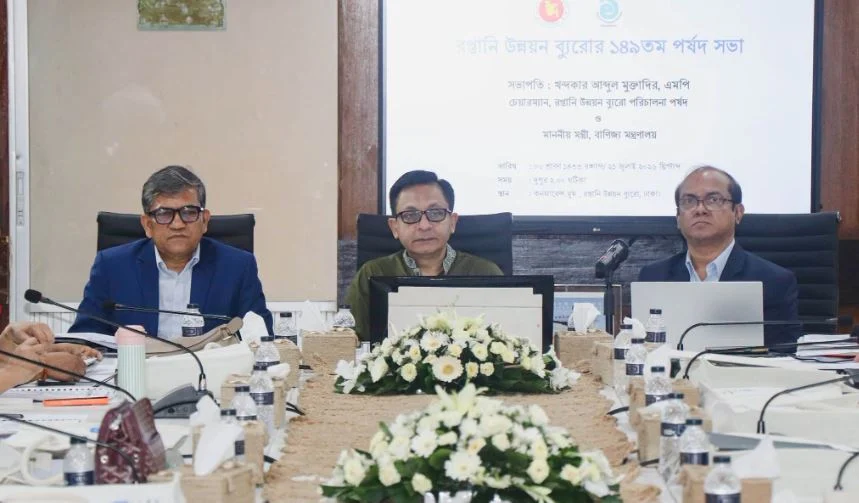
Speaking at a discussion titled “Monthly Macroeconomic Insights: Evolving Global Landscape for Trade and Growth,” organized by the Policy Research Institute (PRI), Bangladesh in collaboration with the Australian Government at PRI conference room in the city, speakers warned that while some stability has returned, significant internal vulnerabilities remain, said a press release.
Dr Ashikur Rahman, Principal Economist at PRI, noted that while foreign reserves improved to approximately $30 billion by early 2026 and inflation moderated to 8-9%, the underlying recovery is weak.
“Economic growth in Q2 of FY26 plummeted to 3%, the lowest since the pandemic era. The financial sector remains fractured with non-performing loans (NPLs) at 30%, which has stifled private sector credit growth to just 6%,” he added.
Furthermore, he said, a lack of fiscal space has forced the government to rely on high-interest loans and central bank financing.
Dr. Rahman described backtracking on critical reforms as a self-inflicted wound that risks amplifying macroeconomic stress.
PRI Chairman Dr. Zaidi Sattar emphasized that the rules-based international order is in tatters, replaced by a volatile, multipolar landscape.
He specifically highlighted the Middle East crisis and disruptions in the Strait of Hormuz as global shocks that depress trade and raise energy costs.
Dr. Sattar warned of a triad of risks—the three Fs (Fuel, Fertilizer, and Food)—stating that sharp rises in oil prices would inevitably spread to production and cost of living. With fuel reserves estimated at only three months of cover, Bangladesh remains highly vulnerable to these external shifts.
The seminar revealed that exports fell by approximately 5% in FY2026, attributed to weak global demand and regional instability.
Dr. Sattar criticized Bangladesh’s restrictive import regime, noting an import penetration ratio of only 16%, far below the global average of 45-50%.
"We cannot aim for export-led growth while keeping our import regime so tight," Dr. Sattar remarked, arguing that import liberalization is essential for firms to access machinery and technology.
While the intrinsic growth rate for Bangladesh is roughly 6%, he mentioned that projections for FY2026 from the IMF and World Bank are more muted, ranging between 4.7% and 5%.
As Bangladesh approaches the final $1.3 billion tranche of its IMF programme, experts stressed that release depends on progress in revenue mobilization, fiscal consolidation, and banking reforms.
While external stability and exchange-rate reforms have seen progress, the banking sector remains a primary area of concern.
Clinton Pobke, Deputy Head of Mission at the Australian High Commission, underscored that Bangladesh’s long-standing “6% growth machine” can no longer be taken for granted.
He emphasized that sustaining growth during middle-income transition requires difficult choices in energy security and trade openness.
The event, which included business leaders and former government officials, concluded that only through deep-rooted structural reforms can Bangladesh secure a resilient and inclusive growth trajectory amid a changing world order.