Friday
11 September, 2026
News Flash
News Flash
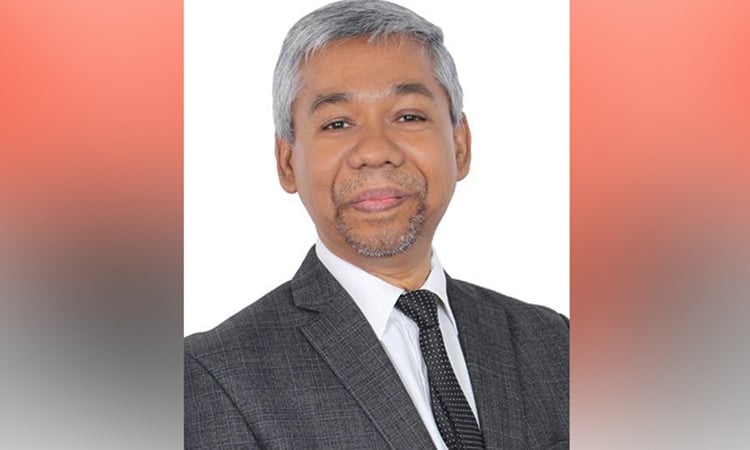
DHAKA, April 8, 2026 (BSS) – The National Board of Revenue (NBR) Chairman Md Abdur Rahman Khan today announced a comprehensive shift toward full automation across customs, VAT, and income tax sectors to simplify revenue collection through curbing evasion.
“The government is moving away from the culture of providing special amnesties to tax evaders and is instead focusing on creating an investment-friendly environment for compliant taxpayers,” the NBR chief said while speaking at the pre-budget meeting at Revenue Bhaban in the city.
Bangladesh Association of Construction Industries (BACI), Real Estate & Housing Association of Bangladesh (REHAB), Bangladesh Cement Manufacturers Association (BCMA), Bangladesh Ceramic Manufacturers & Exporters Association (BCMEA), Bangladesh Land Developers Association (BLDA), Tea Traders Association of Bangladesh (TTAB), Bangladesh Association of Pharmaceutical Industries (BAPI), Bangladesh Foodstuff Importers & Suppliers Association (BAFISA), Footwear Leathergoods & Accessories Exporters Association (FLAXA), Bangladesh Tanners Association (BTA), Bangladesh Finished Leather, Leather goods and Footwear Exporters Association (BFLLFEA), Plastic and Rubber Shoe Merchant Association, Marble, Granite & Other Natural Stone Blocks Processing Industries Association and Bangladesh Paduka Prostutkarak Samity (BPPS) took part at the pre-budget meeting.
In his speech, Abdur Rahman Khan said that the NBR is prioritizing the automation of customs valuation, moving toward an invoice-based system that utilizes international price benchmarks to ensure fair assessment.
To facilitate trade, he said, the Authorized Economic Operator (AEO) programme will be further promoted, allowing compliant taxpayers to enjoy self-assessment and release of goods without physical examination.
In the realm of income tax, the Chairman noted that 100% of individual tax returns have been transitioned to e-returns, with approximately 44 to 45 lakh online submissions expected this year.
Furthermore, he said, the NBR has modernized its audit system, stopping manual audit selection for the past 20 to 21 months.
Starting next week, he mentioned that 60,000 tax returns will be audited through a purely automated, data-driven selection process that eliminates subjective judgment by tax officials.
The Chairman confirmed that VAT returns are now 100% online, and the board will not accept any paper returns starting next year.
He highlighted that tax evasion significantly harms compliant taxpayers and acts as a barrier to foreign investment.
By expanding the tax net and reducing evasion, he said that the NBR aims to prevent policy measures from inadvertently penalizing those who are already compliant.
Addressing the issue of offshore funds, the Chairman stated that the NBR's doors are entirely open for individuals to repatriate money from abroad under existing laws.
“Taxpayers can file revised returns within 160 to 180 days and pay taxes at regular rates to invest these funds back into the national economy,” he added.
The Chairman sent a clear message that the era of encouraging tax evaders through low-tax amnesties is over, noting that previous scopes for whitening black money have been closed.
"We want to stop the culture of distorting the tax system by allowing evaders to pay less than regular taxpayers," he asserted.
The Chairman urged the business community to propose revenue-augmenting measures and to continue their role as the primary drivers of the country's development activities.
He requested participants to remain brief in their feedback, focusing on the most pressing issues for their respective sectors.
During the meeting, REHAB President Md Wahiduzzaman submitted a comprehensive set of proposals to the government for the upcoming 2026-27 national budget, seeking sweeping tax reforms to revitalise the housing sector.
To lower the entry barrier for homeownership and encourage formal property documentation, he proposed a streamlined structure for taxes and fees.
He argued that the current high costs deter registration and hinder the growth of the real estate industry.
He sought specific amendments to the Value Added Tax (VAT) Act 2012 and the Income Tax Act 2023 to ease the financial burden on both developers and buyers.