Tuesday
08 September, 2026
News Flash
News Flash
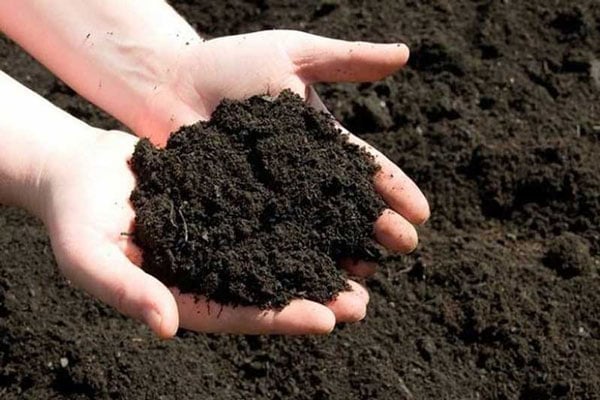
CHATTOGRAM, August 17, 2026 (BSS) - A youth from Chattogram is producing 'organic fertilizer' using entirely natural components to protect soil health from 'chemical toxins'.
He aims to distribute this fertilizer nationwide to safeguard the environment and nature.
This young man, named Mohammad At-Tawabul Islam, resides in the Hill view Residential Area of the city. Islam, a highly educated individual with a family background in the nursery business asserts, “We cannot afford to delay in preserving the integrity of the soil against chemical contamination”.
At-Tawabul Islam, the founder and CEO of 'Jannatshop in Chattogram shared his insights with BSS at the ongoing tree fair at Laldighi ground in the city.
He remarked, "The rampant use of chemical fertilizers has led to the pollution of our soil and water, posing risks to both humans and animals. Initially, chemical fertilizers were utilized solely for the cultivation of staple crops like rice and wheat; however, in the last decade, their application has expanded to include tree planting”.
“With the rising demand, numerous domestic and international corporations are now promoting chemical fertilizers for trees. People are purchasing these fertilizers for tree growth without fully understanding the implications and are using them excessively”, he added.
This situation is leading to chemical pollution at all levels within nature and the environment, rendering the soil toxic. The crops cultivated in this contaminated soil are entering the human body through the food chain. Consequently, individuals are suffering from long-term chemical poisoning without their knowledge.
Tawabul Islam said, “It is imperative that we liberate the soil and environment of our country from this predicament immediately, as it may already be too late for us.
Asked about the inspiration behind creating 'organic fertilizer,' he said, "I began gardening in 2005 while I was still a student. At that time, purchasing urea, potash, and TSP fertilizers for my plants was financially unfeasible. Thus, I sought an alternative. I started utilizing kitchen compost, organic kitchen waste, cow dung, and similar materials, but I discovered that even cow dung was detrimental to the plants”.
“Raw dung is harmful; however, once it dries, it transforms into organic fertilizer. I delved into research on this topic and realized that the chemical fertilizers widely used in the country are extremely harmful to both the soil and the environment,” he added.
He continued, “This realization sparked my desire to protect the soil and environment of our nation, leading me to pursue the development of organic fertilizer”.
He emphasized, "It is already too late to mitigate chemical pollution; this country must be salvaged.
If the environment and nature of our country are not healthy, none of us can maintain our health”.
“Utilizing organic fertilizer for crop production or tree planting will preserve the integrity of our soil, safeguard our health, and also provide financial savings."
When inquired about the components of organic fertilizer, Tawabul Islam explained, "We create organic fertilizer using approximately 15 natural ingredients, including kitchen waste, vermicompost, decayed leaves, rice husk, straw, eggshells, bone meal, horn shavings, neem powder, kheil, and tree bark. There is a specific ratio for these ingredients, and they are mixed accordingly”.
The price ranges from a minimum of TK 40 per kg to a maximum of TK 80, he said adding, “In the process of planting trees, there is no additional payment required for four months after the initial application of organic fertilizer”.
He stated, “We are promoting organic fertilizer with the intention of safeguarding the nation's soil and environment.
Chemical fertilizers, on the other hand, degrade soil fertility and disrupt the pH balance due to their chemical composition, whereas organic fertilizers preserve soil fertility and do not pose a threat to the environment”.
Organic fertilizer consists of natural ingredients that solely supply nutrients to plants. The government should promote the use of organic fertilizers nationwide.
In response to various queries regarding organic fertilizers, Prof Dr. Khaled Misbahuzzaman from the ‘Institute of Forestry and Environmental Sciences’ at Chattogram University told BSS today that the initiative taken by a young entrepreneur from Chittagong to promote organic fertilizer is indeed praiseworthy.
“If organic materials are processed and utilized correctly, they can enhance organic matter, improve water retention capacity, soil structure, and the activity of beneficial microorganisms,” he said.
However, the belief that natural ingredients are entirely safe is not scientifically proven. For instance, merely drying raw cow dung does not render it a safe organic fertilizer; it must undergo proper decomposition and maturation.
Likewise, he said, “If the proportions and mixing ratios of bones, horns, dung, or kitchen waste are incorrect, it can lead to an accumulation of excess nutrients in the soil. Excess nitrogen and phosphorus can contaminate both the soil and groundwater, as well as aquatic ecosystems.”
He further added, 'It is also crucial to note that categorizing organic fertilizers and chemical fertilizers simply as 'good' and 'bad' is misleading. When used in appropriate amounts, chemical fertilizers supply essential nutrients to plants; conversely, an overabundance of organic fertilizers can also be detrimental to the environment.
It is essential to utilize the appropriate fertilizer in the correct quantity and at the optimal time, guided by soil tests, he said.
SM Nazer Hossain, Central Vice-Chairman of the Consumer Association of Bangladesh (CAB), told BSS, “When purchasing fertilizer, consumers should not focus solely on the cost or the speed of plant growth; they must also consider the safety of the fertilizer for the soil. Nature should be regarded as a recyclable system.
By products such as rice husk, tree leaves and bark, and animal bones, which may seem unnecessary for human use, hold significant value for nature. Restoring that value to agriculture and plant care will be crucial in the effort to preserve environmental balance.