Tuesday
01 September, 2026
News Flash
News Flash
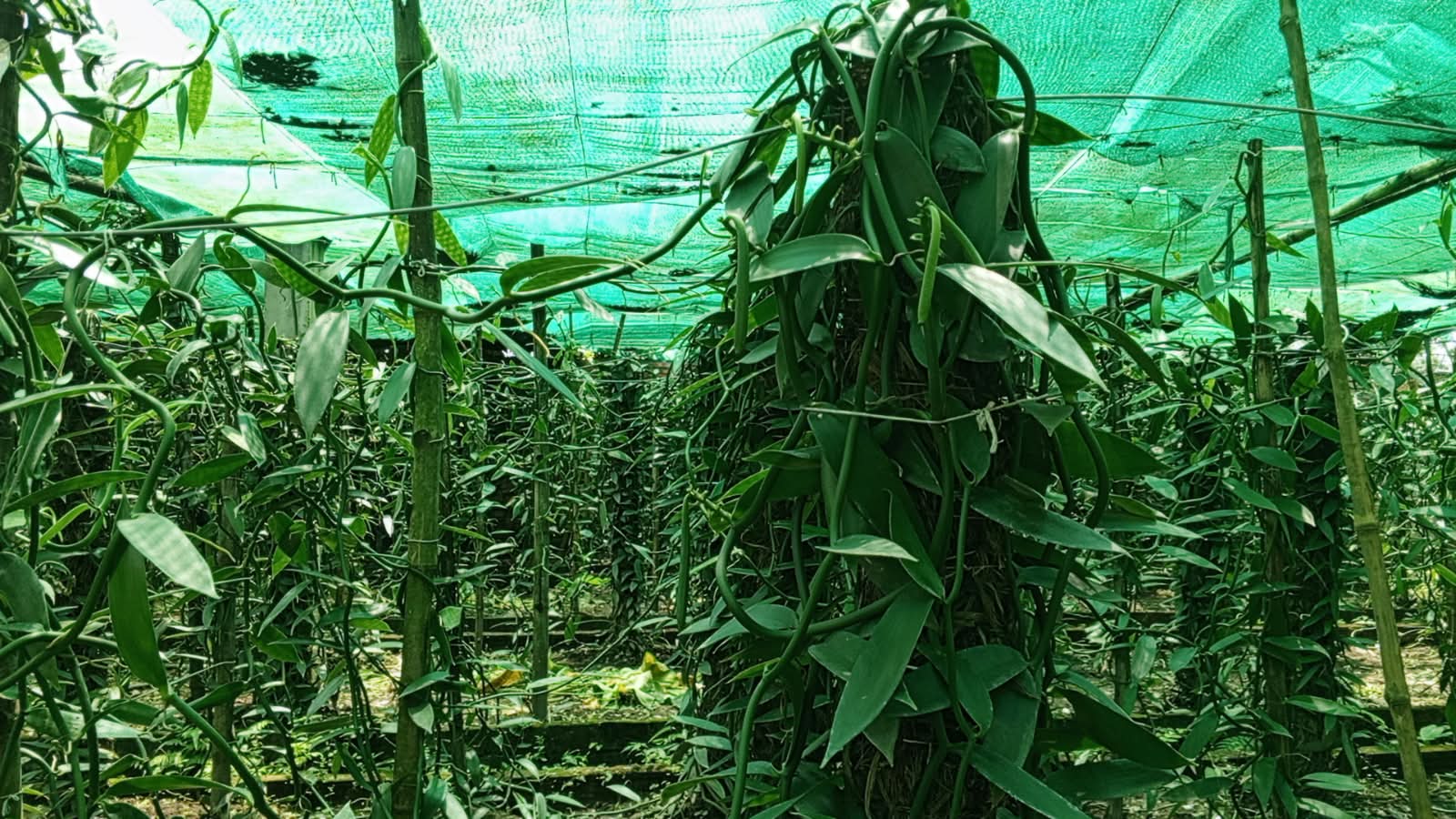
CHUADANGA, Sept 1, 2026 (BSS) - Humayun Kabir Farazi, a farmer in Begumpur Colonypara of Chuadanga Sadar upazila, has set a new example in agricultural arena by introducing vanilla cultivation alongside various fruits, vegetables and livestock.
The 51-year-old farmer has created a buzz in the area by cultivating vanilla, an exotic high-value crop, for the first time in Chuadanga. After four years of intensive care, his vanilla plants have started bearing fruit this year, attracting curious visitors to his farm.
Humayun has named his 18-bigha integrated farm “New Kamal Agro”. Besides vanilla, the farm currently produces Kashmiri bananas, papaya and dragon fruit. He also rears goats, sheep, dumba sheep and cattle.
Located about 25 kilometres from the district town, the farm features a dairy unit, sheds for goats, sheep and dumba, accommodation facilities and a vanilla garden. The vanilla plantation covers 10 kathas of land enclosed with netting to maintain a suitable environment.
Around 600 to 700 pillars have been installed in the garden, with vanilla vines climbing and hanging from them. The green vanilla pods, which resemble yardlong beans, are currently around 8 to 10 inches long. They will be harvested after turning slightly brown.
Talking to BSS, Humayun Kabir said he had been involved in the fruit business for many years and had decided around two decades ago to enter modern fruit cultivation. His father had a fruit wholesale business named “Kushtia Bhandar” at Kawran Bazar in Dhaka, which inspired him to pursue farming.
He initially cultivated litchi, dragon fruit, mulberry and avocado. Four years ago, he collected Penifolia variety vanilla cuttings from a neighbouring country and began experimental cultivation on 10 kathas of land using a greenhouse system.
He has spent around Taka 900,000 on the vanilla project over the past four years.
“I collected the vanilla cuttings in 2022 after learning about the crop through YouTube and participating in a vanilla project programme. I also visited the neighbouring country to see the plants and learn the cultivation method,” he said.
This year, he expects to produce around 120 kilograms of vanilla. Depending on quality, the current market price of vanilla is between Taka 30,000 and Taka 40,000 per kilogram. He expects to earn Taka 700,000 to Taka 800,000 from the crop if he receives a favourable market price.
“Vanilla cultivation requires a lot of patience. Four workers are engaged every day to take care of my vanilla garden, while another six to seven workers are employed for other farm activities,” Humayun said.
He believes vanilla has significant potential in Bangladesh and that commercial cultivation could help meet domestic demand and eventually create opportunities for export.
According to Humayun, Bangladesh’s climate is not completely suitable for vanilla cultivation, but the crop can be grown successfully under greenhouse conditions. Vanilla requires a temperature of around 16 to 28 degrees Celsius and grows well in shaded, humid environments.
He spent Taka 100,000 in 2022 to collect around 150 metres of vanilla vines. He then cut the vines into small sections, leaving one node on each piece, and produced nearly 1,000 saplings. After keeping the cuttings for about four months, he planted them in soil prepared with sandy loam and organic fertiliser.
As vanilla thrives in a humid environment, the plants require frequent water spraying. The vines gradually grow and spread along the support pillars. The plants generally begin bearing fruit four to five years after planting and can produce fruit twice a year, with September and October considered the peak period.
After harvesting, the tips of the vines can be cut and used to produce new saplings, he said.
Vanilla generally faces limited pest and disease problems. Minor fungal infections and pest attacks can be controlled with appropriate fungicides and pesticides. Flowers appear on the plants between April and May, after which proper care helps them develop into pods. The fruits are expected to mature by October.
After harvesting, the vanilla pods are processed by heating or “sweating” them at around 60 to 70 degrees Celsius for about three minutes at a time. The process is repeated three times before the pods are dried in the sun and marketed.
Dried vanilla currently sells for around Taka 30,000 to Taka 40,000 per kilogram. Five-star hotels and major pharmaceutical companies in Dhaka and other parts of the country are among the buyers, Humayun said.
Worker Mohasin Ali said vanilla cultivation requires considerable labour.
“Vanilla grows well in shaded and humid conditions, so I regularly spray water on the plants. The base of the plants also needs to be cleaned regularly, while the vines have to be trained onto the pillars. If any fungal disease or pest infestation appears, pesticides are sprayed,” he said.
“After four years of hard work, the plants have finally started bearing fruit. We hope the pods will mature within the next few months and can then be harvested,” he added.
Deputy Director of Department of Agricultural Extension in Chuadanga Masudur Rahman Sarker said Humayun Kabir Farazi had independently taken the initiative to cultivate vanilla on 10 kathas of land at Colonypara in Begumpur union.
“After four years, his plants have produced flowers and fruits this year. We hope he will be able to harvest all the fruits within the next one to one-and-a-half months,” he said.
The official said further research into the technology and cultivation techniques could help expand vanilla production in Bangladesh.
“Vanilla is a very high-value crop. If we can expand its cultivation, we will be able to meet domestic demand and potentially export it, earning foreign currency. At the same time, the money currently spent on importing vanilla could be saved,” he said.
He added that commercial vanilla cultivation could also create employment opportunities and contribute to the diversification of Bangladesh’s agricultural economy.
The local community hopes that more entrepreneurs like Humayun Kabir will move beyond traditional farming and invest in vanilla and other exotic fruit cultivation, opening up new opportunities for the country’s agricultural economy.