Wednesday
02 September, 2026
News Flash
News Flash
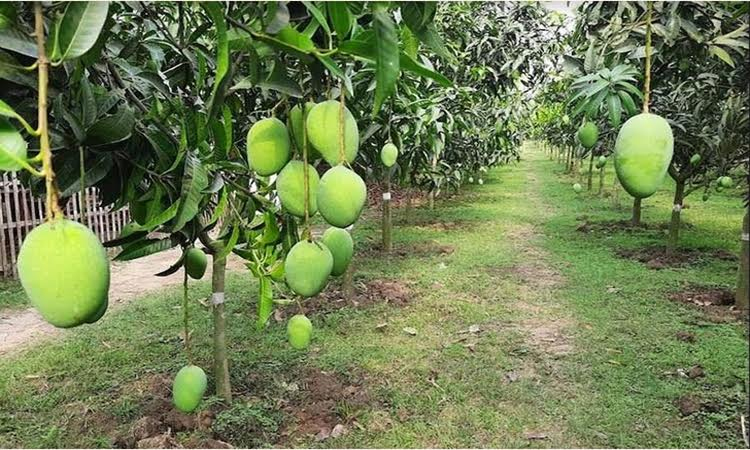
RAJSHAHI, April 22, 2026 (BSS) - The agriculture-rich Rajshahi region is emerging as a promising hub for agro-processing industries, driven by bumper production of mangoes, tomatoes, potatoes and aromatic rice along with its favourable geographical location.
Officials and industry insiders said the establishment of processing facilities for mango-based products, tomato paste, potato chips and poultry feed could significantly boost the local economy, create employment and enhance export earnings.
In Rajshahi, Naogaon and Chapainawabganj districts, large volumes of mangoes are produced annually, offering substantial opportunities for processing into pulp, juice, jam, jelly and mango bars. Work is also underway to set up a Vapour Heat Treatment (VHT) plant to facilitate mango exports.
Experts noted that processing facilities for surplus tomatoes, potatoes and vegetables could help prevent post-harvest losses by producing items such as tomato paste, sauce, ketchup, chips and frozen French fries.
The region's high-quality aromatic rice, particularly from Naogaon and Rajshahi, also has potential for value addition through modern milling and packaging systems.
Given the easy availability of maize and other grains, entrepreneurs see strong prospects for establishing poultry and fish feed mills in the region.
Industrialist Liakat Ali said there are plans to develop a dedicated agro-processing hub or special economic zone in Rajshahi, which could attract investment and generate employment opportunities.
He said exporting processed agricultural products, especially mango-based and vegetable items, could bring in significant foreign currency.
Stakeholders stressed that improved infrastructure, uninterrupted electricity and gas supply, and government support, including access to low-interest loans, would be key to transforming Rajshahi into a major agro-industrial centre.
The region, which is heavily dependent on agriculture, produces large quantities of food crops. Tomato yields range between 60 and 70 maunds per bigha, generating an income of Tk 60,000 to 70,000 per bigha at current market rates-significantly higher than returns from paddy and many other crops.
Annual transactions related to tomato trading in the region amount to around Tk 400 crore to Tk 500 crore.
Betel leaf trading in the district accounts for about Tk 1,561 crore annually, while mango sales in Rajshahi district reached approximately Tk 100 crore in the 2024-25 season.
Experts said the development of agro-processing industries would directly benefit farmers by ensuring better prices for their produce while also creating jobs.
They also recommended enhanced government incentives to increase production and boost export-oriented processing.
However, several challenges remain. Stakeholders called for the establishment of a separate economic zone dedicated to agro-based industries in Rajshahi, along with district-wise budget allocations, tax holidays and low-interest financing.
Despite its agricultural strength, Rajshahi still lags behind in industrial development. Entrepreneurs pointed out that land prices in the region's second BSCIC industrial estate are the highest among the country's 23 such zones, discouraging investment.
Environmental concerns were also raised, particularly the declining groundwater levels that could lead to desertification. Experts stressed the need to prioritise the use of surface water and expedite the North Rajshahi Irrigation Project to sustain agricultural productivity.
Although the region produces surplus carp-type fish, there is no dedicated fish processing system. Industry players suggested establishing a fish processing zone and including export-oriented provisions in the national budget.
They also emphasised increasing agricultural subsidies to strengthen the sector.
To improve connectivity and reduce transport costs, stakeholders recommended dredging the Padma and other rivers to revive waterways, as well as upgrading the railway line between Rajshahi and Abdulpur to dual gauge.
For boosting exports, they called for the introduction of cargo flights from Rajshahi Airport and its upgradation to international standards with immigration and customs facilities.
Reviving the traditional Rajshahi silk industry was also highlighted as a priority, with suggestions to support marginal farmers and women through interest-free loans for mulberry cultivation.
To accelerate industrialisation, stakeholders proposed a Tk 1,000 crore zero-interest fund along with VAT and tax exemptions in the upcoming national budget.