Sunday
13 September, 2026
News Flash
News Flash
By Md Aynal Haque
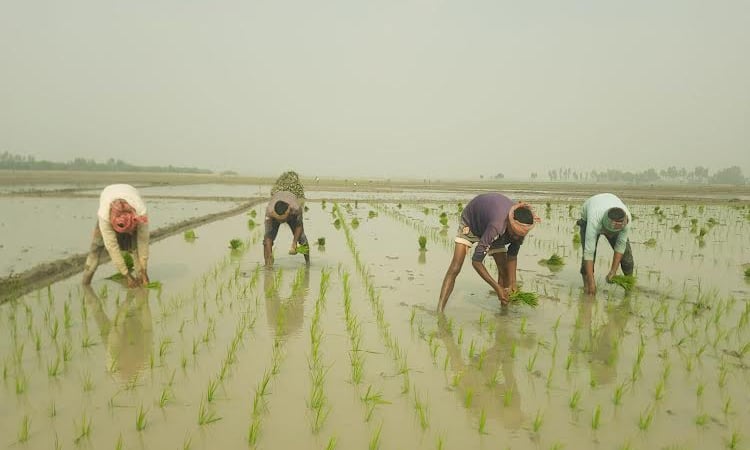
RAJSHAHI, Jan 15, 2026 (BSS) - Farming on char lands in the Rajshahi region has emerged as a highly profitable and expanding agricultural venture, with farmers achieving remarkable success through the cultivation of winter vegetables, fruits and cash crops, significantly contributing to local livelihoods and national food supply.
Chars emerging along the Padma and Mohananda rivers have transformed the fortunes of farmers in Paba, Godagari and Bagha upazilas of Rajshahi district and Sadar and Shibganj upazilas of Chapainawabganj over the past two decades.
Abundant production of all varieties of winter vegetables has already flooded local markets, with yields exceeding targets due to early cultivation. Agricultural officials said fertile alluvial soil deposited by the Padma River has created ideal growing conditions, triggering what they described as a "silent revolution" in riverbed farming.
Farmers are earning substantial profits from high-value crops, with many generating several hundred thousand taka annually. Low cultivation costs on char lands have further increased profit margins.
Muhammad Nuruzzaman, 48, a farmer from Char Khidirpur village under Paba upazila, said he cultivated brinjal on five bighas of land and has been selling the produce at lucrative prices for the past few weeks.
"Early-harvested products are always profitable as they attract wholesalers, retailers and consumers," Nuruzzaman told BSS at Shaheb Bazar kitchen market on Wednesday.
Another farmer of the same village, Taifur Rahman, 54, has become a local role model for vegetable farming, earning an average of Tk three to four lakh annually.
"I have cultivated wheat on five bighas of land and am hopeful of a bumper yield in the upcoming harvesting season," said Jamilur Rahman of Bazubagha Natunpara village under Bagha upazila.
He added that favourable weather conditions this year encouraged farmers to expand vegetable cultivation beyond homestead gardening.
After meeting local demand, surplus vegetables are being supplied to different parts of the country, including Dhaka, benefiting consumers nationwide.
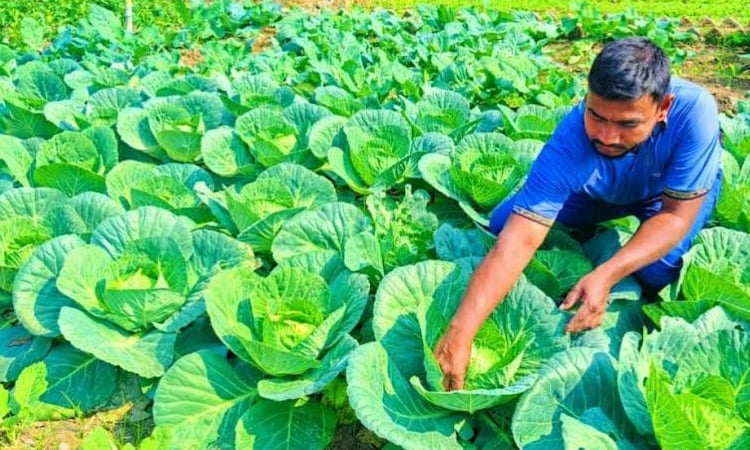
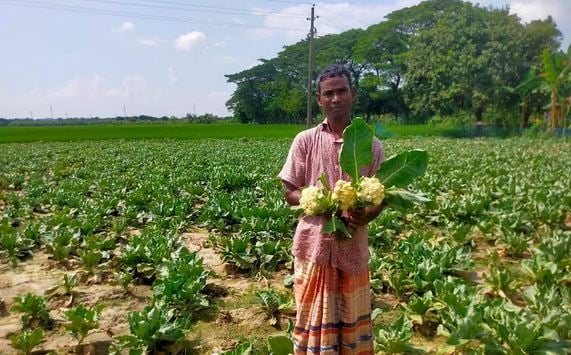
Ramjan Ali, a farmer from the same village, said he cultivated cauliflower and cabbage on one acre of land at a cost of Tk 25,000 and earned around Tk 95,000 during the current season.
Other farmers, including Tozammel Haque, Hasen Ali and Asad Ullah of Amadpur village, reported similar success, expressing optimism about expanding commercial farming in vast char areas.
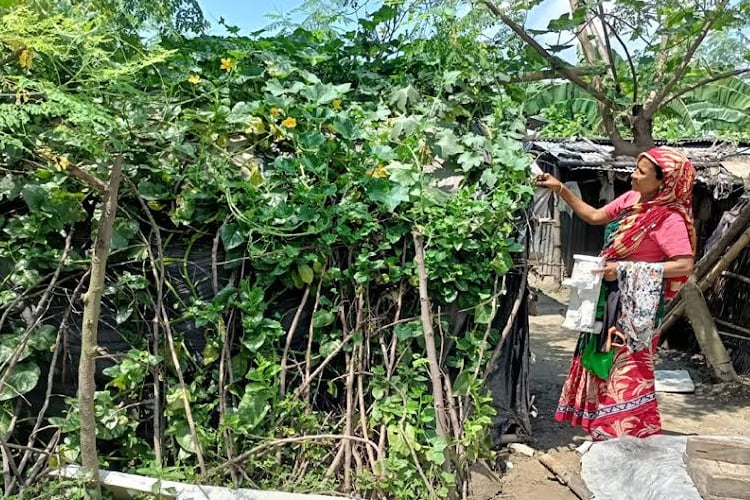
A wide range of crops, including tomato, brinjal, beans and leafy vegetables, are now grown successfully. Bumper production of cauliflower, cabbage, potato, bottle gourd, onion and tomato has been reported.
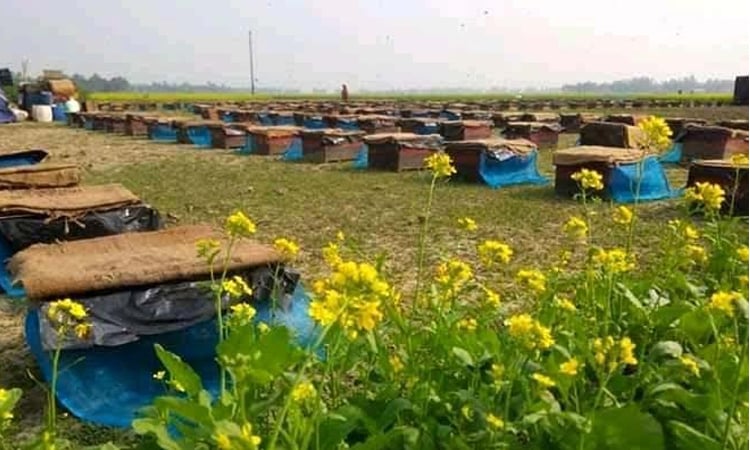
Commercial cultivation of high-yielding fruits, particularly Thai guava, has gained popularity, while mango and jujube plantations are also being introduced. Crops such as wheat, maize, lentil, mustard and sesame are cultivated with limited irrigation.
Agricultural experts view char land farming as an effective climate change adaptation strategy, turning unstable riverbeds into productive agricultural zones.
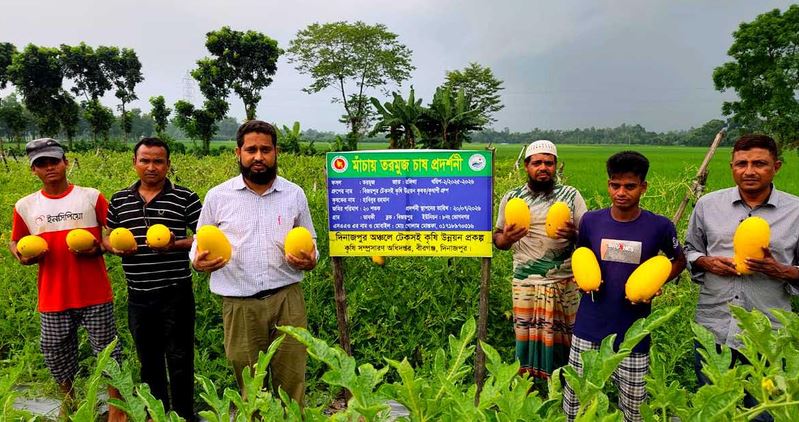
The Department of Agricultural Extension (DAE) is supporting farmers by disseminating modern technologies and high-yielding varieties through training programmes and demonstration plots.
DAE Additional Director Dr Azizur Rahman said char land farming has created extensive employment opportunities, improving the socio-economic conditions of local communities.
Overall, char land agriculture in the Rajshahi region has evolved from subsistence farming to large-scale commercial operations, playing a crucial role in meeting the country's growing food demand, he added.