Friday
19 June, 2026
News Flash
News Flash
PARIS, France, May 22, 2026 (BSS/AFP) - In 1970 it was the introduction of yellow and red cards. In 2018 VAR made its World Cup debut, while in Qatar in 2022 a FIFA directive to referees led to huge extensions to the amount of stoppage time played in games.
So what can we expect to see at this year's World Cup in North America?
- Hydration breaks –
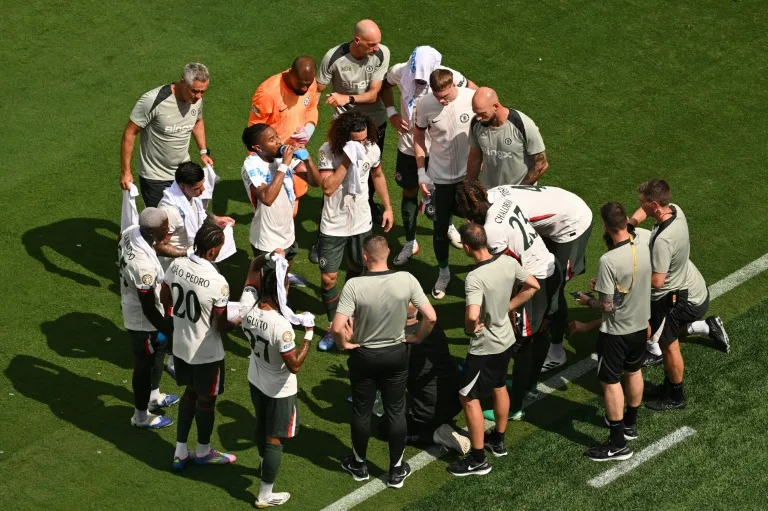
Pauses to allow players to take on fluids have been regularly seen in games played in hot conditions, but they have never been introduced as a compulsory element of every match at a World Cup.
That will change this year, with FIFA bringing in three-minute hydration breaks midway through each half -- regardless of the weather, even for matches played in cool conditions or under a closed roof.
"There will be no weather or temperature condition in place, with the breaks being called by the referee in all games, to ensure equal conditions for all teams, in all matches," football's world governing body said.
FIFA puts the introduction of hydration breaks down to a commitment to player welfare, but cynics might say the decision to effectively split matches into four quarters resembles the way some leading US sports are played and suits American broadcasters who might take advantage by selling advertising during the breaks in action.
- VAR to review corners, second yellows –
The video assistant referee system was initially introduced to review possible clear and obvious errors in relaton to goals, penalty incidents, straight red cards and cases of mistaken identity.
Earlier this year, the International Football Association Board (IFAB), which determines the laws of the game, announced that it would allow VAR's scope to be extended to cover second yellow cards and corners in time for the World Cup.
That means a review can now take place if a player is sent off for a second booking, as well as straight red card incidents.
VAR will also be able to review a "clearly incorrectly awarded corner" so long, the IFAB says, as "the review can be completed immediately and without delaying the restart".
- Countdowns for goal-kicks, substitutions –
Countdowns will be introduced for goal-kicks, throw-ins and substitutions in an attempt to discourage time-wasting.
If a player takes too long, possession will switch to the opposition, meaning a goal-kick could become a corner, or a throw-in would change hands.
This comes after the recent introduction of the eight-second time limit imposed on goalkeepers when they have the ball, which sees a corner given against them if they take too long.
"If the referee considers that a throw-in or goal kick is taking too long or is being deliberately delayed, a five-second visual countdown will be initiated," said the IFAB.
Meanwhile, players will have 10 seconds to leave the field once their number is shown on the substitute board.
If they fail to do so, they must still leave the field immediately, but the substitute will not be allowed on until the next stoppage in play, after at least one minute of play has elapsed.
Players who receive treatment for an injury, or where their injury causes play to be stopped, must leave the field for one minute before being allowed back on.
- Red cards for covering mouths –
Players who cover their mouths "in a confrontational situation with an opponent" can now be shown a red card, FIFA said last month.
The announcement came after an incident during a UEFA Champions League game in February when Benfica's Gianluca Prestianni covered his mouth while speaking to Vinicius Junior of Real Madrid.
Prestianni was accused of racist abuse and later received a six-match ban "for discriminatory (i.e. homophobic) conduct".
In addition, FIFA said officials would be allowed to show a red card to any player who leaves the field of play in protest at a decision.
"This new rule will also apply to any team official who incites players to leave the field of play," FIFA added. "A team that causes a match to be abandoned will, in principle, forfeit the match."
January's Africa Cup of Nations final was marred when Senegal players walked off in protest at a penalty awarded to Morocco.
The players eventually returned and Senegal won the match, but the Confederation of African Football later stripped them of the title, saying "that the champions had infringed tournament regulations by walking off".