Tuesday
01 September, 2026
News Flash
News Flash
By Selina Sheuly & Muhammad Hedayet Ullah
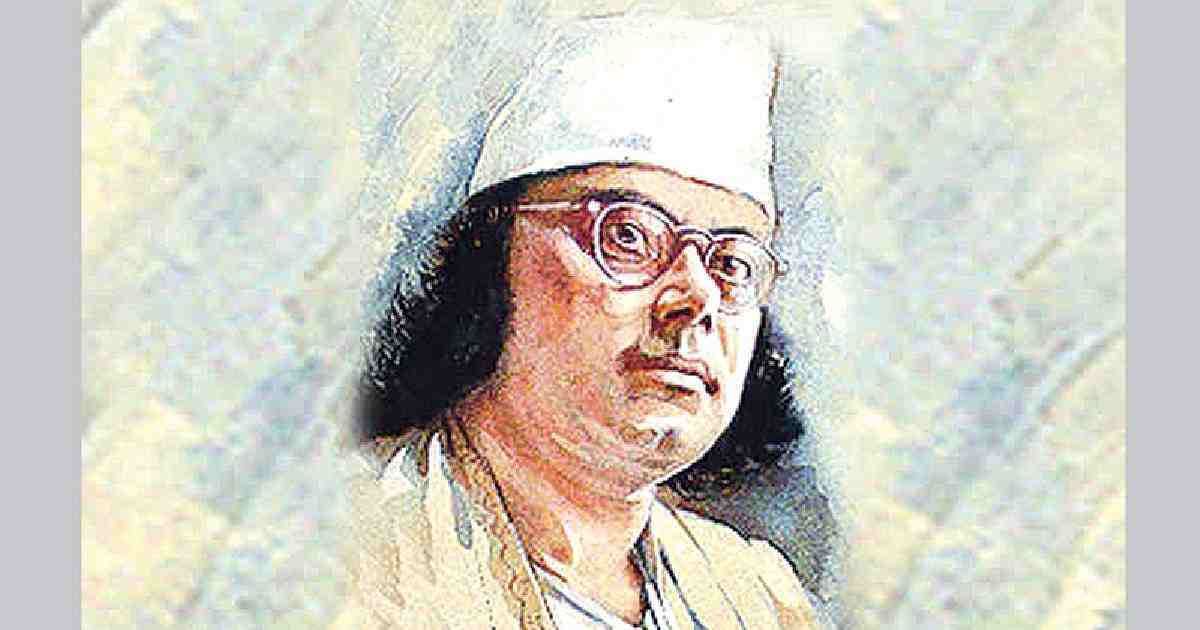
DHAKA, Sept 1, 2026 (BSS) - Against the backdrop of the turbulent political atmosphere of 1926, National Poet Kazi Nazrul Islam visited Joydebpur in Gazipur to campaign as a Swaraj Party candidate for the Bengal Legislative Council election.
The National Poet ran for a reserved Muslim seat representing a vast constituency that encompassed undivided Dhaka, Mymensingh, Faridpur, and Bakerganj in then-British India. As part of his campaign, Nazrul traveled across various regions of East Bengal from November 1 to November 21, 1926.
During this visit, he boarded a train to reach Joydebpur and the greater Gazipur region, then part of the Rajbari Pargana.
A century ago, amid the physical strain of political travel during autumn and late autumn, the poet’s sensitive heart surrendered to nature’s timeless beauty.
That aesthetic awakening inspired one of the most vividly imaginative poems in Bengali literature, "Chandni Rate" (On a Moonlit Night), originally titled "Joydebpurer Pothe" (On the Way to Joydebpur).
Speaking to BSS regarding this historical visit, Mukul Kumar Mallick, former principal of Bhasha Shahid College in Gazipur, noted that Kazi Nazrul penned the poem "Joydebpurer Pothe" at night while traveling by train in November 1926.
During the election, the poet resided at 52 Becharam Deuri in Dhaka. Sometime between November 1 and November 21, he took a night train through Gazipur en route to Mymensingh.
Available records suggest that upon arriving in Gazipur, Nazrul stayed overnight at the Dak Bungalow of the then-Bhawal King, conducted his political outreach the following day, and continued his journey. Famous poet Abdul Kadir accompanied him on this trip.
According to Gazipur-based historians and researchers, the harsh realities and conflicts of electioneering failed to dim the poet’s sense of beauty. Recalling that night, Nazrul's companion and prominent literary figure Abdul Kadir wrote: "It was a moonlight night; the entire sky was bathed in illumination, and the horizon swelled with pure joy. The poet was heading to Joydebpur to canvas for votes, but all mundane conflicts and hostility completely evaporated from his mind. Only an unbroken melody of horizon-spanning beauty resonated within him. Stringing verse after verse along that thread of beauty, he composed a moderately long poem: 'Joydebpurer Pothe'."
In his book History and Heritage of Gazipur District, Dr. Farid Ahmed, former professor at Gazipur Women's College, highlighted that this immortal poem—later included in Nazrul's renowned poetry collection Sindhu-Hindol—is a masterpiece of poetic imagery. The 36-line poem uses seven to eight carefully chosen words per line to capture the calm, serene, and picturesque ambiance of contemporary Joydebpur.
According to research in the book, the poem first appeared in the inaugural issue of the magazine Abhiyan, edited by Mohammad Kashem. When the editor asked for a contribution for the launch issue, Nazrul submitted it under the title "Joydebpurer Pothe." After Abhiyan ceased publication, the poem was reprinted under the new title "Chandni Rate" in Jayati, a magazine edited by Abdul Kadir. It was later compiled into Sindhu-Hindol.
The poet's rendition of Joydebpur’s night sky, surrounding nature, and the play of clouds and moonlight reflects unmatched poetic harmony. Nazrul wrote: "Waves of mottled clouds rise in the blue river of the sky,Star-bubbles submerge and float, while moonlight paints them in gold."
Looking at the night mist and the tree line along the horizon, Nazrul’s imagination reached far beyond. The captivating beauty of nature emerges in every line: "That shadow-dense row of green trees along the horizon,Is that a border of net-like fog draped over the sky?"
With a delicate touch of longing and emotion, he crafted metaphors like:"In sheer affection, down the chin of the sky-beloved,Do drops of sweat fall one by one in the form of dew, my friend..."
Reflecting on the historical significance of the visit, senior Gazipur advocate Subodh Chandra Das said, "Authentic records confirm that Kazi Nazrul Islam came to Joydebpur in 1926 for election campaign work. This tour remains a glorious chapter in Gazipur's political and cultural history."
He expressed regret, however, that despite the significance of this memory, no government initiative has been taken to establish an institution in Gazipur to preserve Nazrul's legacy, causing disappointment among locals.
Mehedi Hasan Biplob, current chairman of the "Bidrohi Kobi Smriti Sangsad"—founded by the late Nazrul Islam Badami in Gazipur—said, "It is deeply unfortunate that there is no government-backed institution in Gazipur to honor Kazi Nazrul Islam. To keep the memory of the National Poet's historic visit alive and to introduce the new generation to Gazipur’s rich heritage, we earnestly appeal to the government to include the poem 'Joydebpurer Pothe' in the national curriculum."
The literary devotion demonstrated by Poet Nazrul inside a train compartment on that moonlit night in 1926 remains vibrant a century later. Creating timeless poetry while navigating political complexities remains a point of immense pride for the people of Gazipur. Historians and local cultural activists believe that identifying the Bhawal King's Dak Bungalow, erecting a memorial plaque, and incorporating "Joydebpurer Pothe" into school textbooks will permanently preserve the National Poet's historical footprint in the region.