Sunday
30 August, 2026
News Flash
News Flash
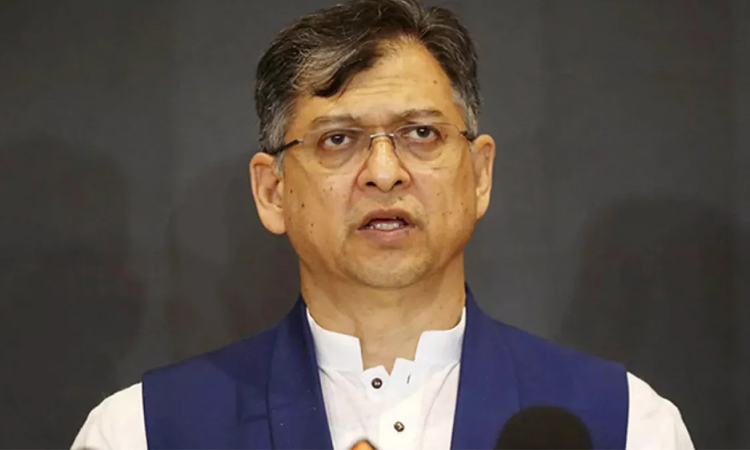
CHATTOGRAM, Aug 30, 2026 (BSS) - Home Minister Salahuddin Ahmed was among those who disappeared during the Awami League-led fascist government's tenure, in an incident that remains one of Bangladesh's most discussed cases of alleged enforced disappearance.
On March 10, 2015, Salahuddin, then BNP joint secretary general and the party's spokesperson during the anti-government movement, was allegedly taken from an apartment in Uttara, Dhaka. After remaining unaccounted for nearly two months, he was found in Shillong, Meghalaya, India, on May 11.
The incident has resurfaced on International Day of the Victims of Enforced Disappearances, observed annually on August 30.
But where was Salahuddin before he disappeared, and what happened in the hours leading up to his disappearance?
A close associate of Salahuddin Ahmed and eyewitness to the events, Syed Habib Hasnat, a Chattogram resident, who sheltered Salahuddin at his Uttara residence has provided BSS with an account of those events.
From Gulshan to Uttara:
According to Syed Habib Hasnat, government and intelligence agencies had been searching for Salahuddin after he became BNP spokesperson. To evade arrest, Salahuddin frequently changed locations in Gulshan.
As intelligence agencies intensified their operations in the area, party leaders advised him to move elsewhere. He eventually decided to stay at Habib Hasnat's flat in Uttara.
Habib Hasnat said Salahuddin called him around noon on the last day of February 2015 and asked him to arrange the move. Habib Hasnat went to Gulshan in his car at around 5pm and brought Salahuddin and BNP leader Tabith Awal to the Uttara apartment, using a route designed to avoid police checkpoints.
To keep Salahuddin's presence secret, Habib Hasnat said he asked a security guard to bring him cigarettes while he was waiting outside. When the guard left the gate, Salahuddin and Tabith quickly entered the building and went upstairs.
Habib Hasnat then instructed the cook and an assistant to look after their "guest" and left with his wife for another apartment.
From the Uttara flat, Salahuddin continued issuing statements and video messages calling for the BNP-led movement to continue.
The night of March 10:
Habib Hasnat said he returned to Uttara on March 10 and immediately noticed an unusual atmosphere in the area.
Several streets were poorly lit, shops were closed and the playgrounds, normally crowded with young people in the evening, were deserted. As he approached the apartment building, he saw a heavy presence of law enforcement personnel.
He entered the building and found the gatekeeper visibly distressed. The apartment door had been broken open, while the cook and assistant came out crying.
"They told me, 'The guest has been taken away,'" Habib Hasnat recalled.
Fearing that he could also be detained, Habib Hasnat decided to leave the country. He said he took his wife and travelled to the airport wearing only the clothes he had on, with associates arranging tickets.
After reaching Dubai, he received a call from the officer-in-charge of Uttara Police Station, who told him that police were looking for him.
Habib Hasnat later travelled to the United States, where he contacted Salahuddin's wife Hasina Ahmed and BNP Chairperson Khaleda Zia.
Government denied abduction:
At the time, the government denied that law enforcement agencies had taken Salahuddin and suggested that he had gone into hiding.
Habib Hasnat said he was later asked to hold a press conference abroad and disclose that Salahuddin had been taken from his Uttara residence. However, he claimed that before the planned press conference, an intelligence agency warned him to remain silent and threatened that he would not be allowed to return to Bangladesh and could be killed if he spoke.
The press conference was therefore never held and Habib Hasnat remained abroad for an extended period.
Events before the disappearance:
Records and media reports from the period show that law enforcement agencies had been searching for Salahuddin in the days before his disappearance.
RAB detained his two drivers, Shafiq and Khokon and personal assistant Osman Gani on March 7, 2015.
The following day, RAB searched the Gulshan branch of First Security Islami Bank and the residence of a senior bank official, according to accounts from the time. The office and residence belonged to Habib Hasnat.
Meanwhile, Salahuddin's Gulshan residence was reportedly searched several times, while detectives were deployed around the house.
On March 18, Prothom Alo and New Age reported that eyewitnesses had been identified in connection with the law enforcement operation during which Salahuddin was allegedly taken away.
Security personnel and residents in the area also told the newspapers that a law enforcement pickup had been seen near the residence before Salahuddin's removal. According to those accounts, people who arrived in the vehicle asked local security guards about Road 13-B.
The guards at the residence later said unidentified armed men had taken Salahuddin.
Found in Shillong:
While the government continued to deny involvement, Salahuddin remained missing for 62 days.
He was eventually found in Shillong, Meghalaya, India, in May 2015, reportedly in a physically and mentally distressed condition.
The government continued to reject allegations of abduction, with some ruling-party leaders describing the incident as "self-exile" rather than disappearance.
The circumstances surrounding Salahuddin's disappearance have remained a subject of controversy ever since.
His case also forms part of a darker chapter in Bangladesh's recent political history, marked by allegations of enforced disappearances involving opposition activists, political leaders and other dissenting voices.
Today, as the world observes the International Day of the Victims of Enforced Disappearances, the case has once again drawn public attention to one of the most dramatic episodes in Bangladesh's recent political history.