Sunday
30 August, 2026
News Flash
News Flash
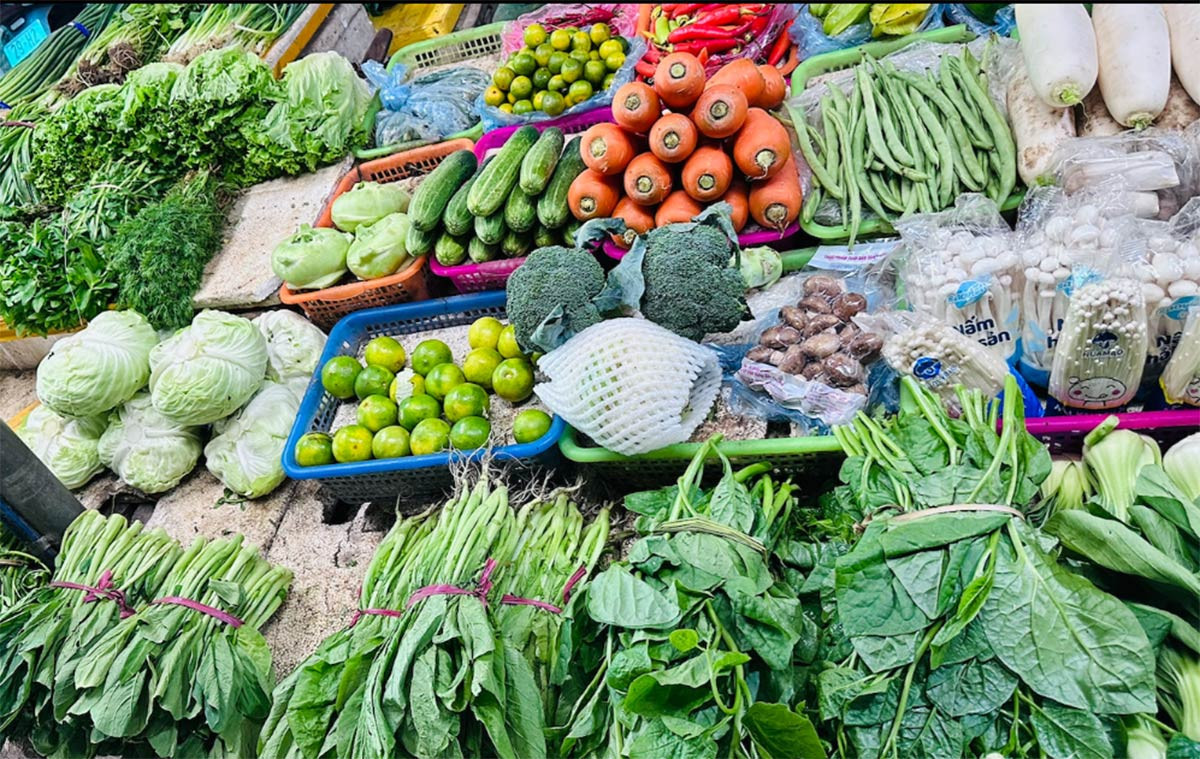
CHATTOGRAM, Aug 30 2026 (BSS) - Vegetable prices in the kitchen markets of Chattogram have declined slightly over the past 15 days, despite production losses caused by the floods that hit several upazilas of the district in early July.
Now, short-term vegetable production has resumed following recession of the floodwaters. Although the flood damage was significant in the areas of Satkania, Banshkhali, Chandanaish, and Lohagara, vegetable supplies have been sourced from other upazilas and hilly regions.
Additionally, trucks transporting vegetables from different regions of the country are consistently arriving in Chattogram. Previously, the prices of nearly all vegetables had surged to Taka 100 per KG due to the floods, but they have now decreased by Tk 10-20 per kilogram.
The Agriculture Department has indicated that despite the severe damage to local vegetable production in Chattogram, the market is not solely reliant on local supplies, as a substantial quantity of vegetables is imported from outside.
Buyers have expressed the need for regular market monitoring to ensure that commodity prices remain affordable for the average consumer.
Following discussions with the buyers and sellers in Chawkbazar, Bahaddarhat, Kazir Deuri Raw Market, and Riazuddin Market, it was revealed that vegetable prices have somewhat eased.
With the reduction in prices for most vegetables compared to earlier, buyers are now able to purchase them in smaller amounts.
However, the prices of ‘brinjal’ and ‘tomatoes’ have yet to decrease. Now, most vegetables are available in the market at prices ranging from TK 30 to 80, while high-quality ‘brinjal’ and ‘tomatoes’ are being sold at Tk 120 per kilogram.
Now, ‘patal’, ‘kakrol’ and ‘jhinga’ are being sold at Tk 50, while bitter gourd costs to Tk 60, and both gourd and papaya are available at Tk 30 per kg.
Jahangir Alam, a customer from the Muradpur area of Bahaddarhat, remarked, "The prices of certain vegetables have decreased compared to previous times. Many varieties are now priced between Tk 60 and 80, which somewhat alleviates market expenses. However, the costs of ‘brinjal’ and ‘tomatoes’ remain elevated”.
Another customer, Jahirul Islam, noted that ‘brinjal’, ‘dal’, ‘jhinga’, and papaya are currently offered at lower prices in the market.
He suggested that if the prices of ‘brinjal’ and ‘tomatoes’ were slightly reduced, it would provide greater relief in the market. He added that even a minor decrease in the prices of one or two vegetables would not significantly ease the overall market pressure.
Iqbal Hossain, a vendor at Kazir Deuri Bazar, explained that the decline in prices for several vegetables is attributed to increased supply from various districts, including hilly regions, as the flood damage has subsided.
However, the supply of ‘brinjal’ and ‘tomatoes’ remains relatively low, necessitating higher purchase prices from suppliers. Consequently, the retail prices of these vegetables are not decreasing.
Md Kaiser, a vegetable seller at Bahaddarhat Kacha Bazar, stated that supply of various vegetables have contributed to lower prices.
He is currently selling ‘brinjal’, ‘dal’, ‘jhinge’, and ‘jali’ at Tk 60. The price of papaya is even lower at TK 30 per kg. However, ‘brinjal’ and ‘tomatoes’ must be procured at higher prices from suppliers. Winter vegetables, such as beans, are being sold at Tk 180 to 200 per kg.
A recent visit to the market revealed a slight decline in the prices of green chillies and ‘brinjals’ this week compared to the past 15 days.
Green chillies, which were priced at Tk 120 per kg last week, are currently available for Tk 100 in the market today, reflecting a decrease of Tk 20 per kg within a week.
The same trend applies to ‘brinjals’. Previously sold at 100 to 110 taka last week, they are now priced between 80 to 90 taka this week. Additionally, carrots that were priced at TK 120 last week are now being sold at TK 80 to 90.
Besides, the price of ‘potol’ per kg has dropped from TK 80 to 50, while ‘dals’ are priced at Tk 100, and ‘kachur lati’ has seen a reduction from Tk 80 to 60.
Omar Faruk, the Deputy Director of the Department of Agricultural Extension in Chattogram, stated that the persistent heavy rains and landslides in Chattogram from July 6 to 14 have resulted in significant damage to the vegetables in the region.
Over 5,907 hectares of vegetable farmland across various upazilas in the district have suffered damage, leading to a loss of 43,050 tons in production.
This has resulted in a financial setback of Tk 861 million. Nevertheless, the Chattogram market does not rely solely on local vegetables, as a significant quantity is also imported from neighboring districts, he added.
Abdul Karim, a private sector employee, noted that although vegetable prices have dropped in the market, traders are attributing this to floods and rainfall, suggesting that a substantial syndicate is operating behind the scenes.
There is a lack of market oversight and monitoring in Chattogram, which ultimately affects consumers.
SM Nazer Hossain, Vice President of the Consumers Association of Bangladesh (CAB), pointed out that vegetables are sourced from various regions of the country, and the northern areas were not impacted by the floods.
He accused some traders of exploiting the inadequate market supervision by using the floods as a pretext to inflate prices. Although there has been a slight decrease in prices recently, it is essential to enhance market supervision to ensure this trend continues.