Saturday
29 August, 2026
News Flash
News Flash
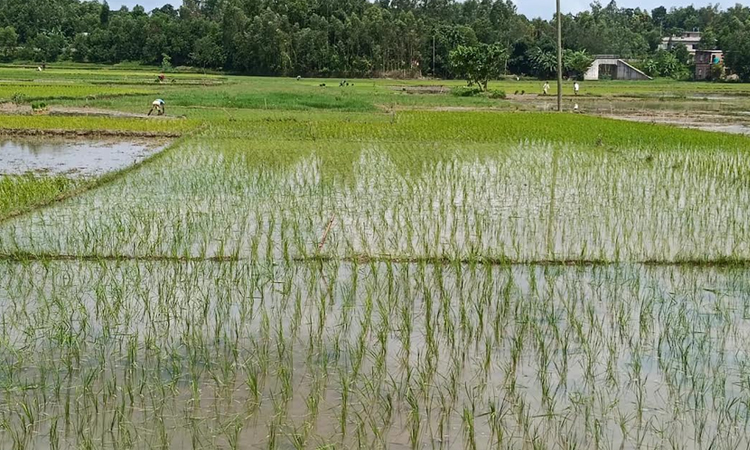
CHATTOGRAM, Aug 29, 2026 (BSS) - Following the recovery from the impact of the flood during the first week of July, extensive areas across various upazilas of the district are now actively engaged in planting Aman seedlings.
The swift cultivation of the land, the transplantation of seedlings from the seedbeds, and the farmers' heightened enthusiasm in applying essential fertilizers have collectively fostered a vibrant new sowing season.
Now, the expansive lands are being adorned with lush green fodder. Apru Marma, the Deputy Director of the Department of Agricultural Extension in Chattogram, informed BSS that this season, a target of 179,980 hectares has been set for Aman cultivation across 15 upazilas in the district. Last year, Aman was cultivated across 179,809 hectares in the district.
As of August 27, about 144,000 hectares of land have been cultivated. With favorable weather conditions and the reduction of water in previously flooded areas, the pace of cultivation is expected to accelerate further in the upcoming two weeks.
The target for Aman seedbeds this year was 9,211 hectares; however, seedbeds have been established on 10,731 hectares, exceeding the target by approximately 1,520 hectares. Therefore, the total area under cultivation this year may increase.
Apru Marma indicated that following the floods, the Department of Agricultural Extension promptly provided essential support to farmers, including fertilizers and seeds, which has facilitated the cultivation process.
Government support has also been crucial in addressing the shortage of seedlings and seeds that were lost due to the flooding. Observations made during site visits to the Patiya, Chandanaish, Banshkhali, and Satkania upazilas of the district revealed that farmers are actively engaged in planting Aman seedlings in their fields.
Jaber Mia, a farmer from Kelishahar, said BSS that, "We belong to a farming family and have been cultivating paddy since the time of our ancestors. Each year, we cultivate paddy on 5 kani (approximately two acres) of land."
"Usually, seedlings should be planted by the middle of Shrawan. Although this year there has been a slight delay due to flooding, the weather is currently very favorable, allowing for rapid cultivation," he added.
Siraj Uddin, a farmer from the Dohazari area of Chandanaish, remarked, "The flood destroyed our seedbed. However, the government has supplied us with seedlings, and we are now planting them in the fields."
The Aman rice planting festival is currently taking place at Gumai beel, one of the country's major grain-producing wetlands, in Rangunia of northern Chattogram.
Azizar Bhuiyan, a farmer from Gumaibil, remarked, "Gumaibil experienced flooding for several days, which resulted in the destruction of numerous seedbeds. However, farmers managed to quickly cultivate the land thanks to the seeds and seedlings supplied by the government office. I have completed Aman planting on my 10 kani of land, and I will need to apply fertilizer again next week."
Agriculture officials indicated that both the Agriculture Department and the administration are closely monitoring the situation to prevent any fertilizer shortages during this critical period of Aman cultivation.
Agriculture officer Apru Marma stated that there is currently an adequate supply of fertilizer in Chattogram to meet the demand. So, there is no concern regarding a fertilizer shortage during the Aman season.
He added, "We are also overseeing the supply and pricing of fertilizer in the market. We will not allow the creation of an artificial crisis or the imposition of excessive prices for fertilizer. The Agriculture Department and the administration remain vigilant in this matter."