Sunday
23 August, 2026
News Flash
News Flash
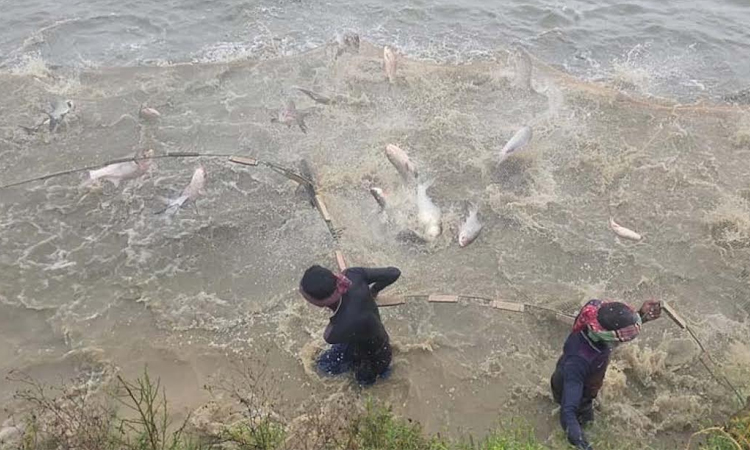
RAJBARI, Aug 23, 2026 (BSS) - Once known for its abundant native fish, the rivers, canals, floodplains and wetlands of Rajbari are witnessing renewed prospects for the production of several endangered and declining indigenous fish species, thanks to conservation efforts and growing interest among fish farmers.
The district’s natural water bodies were once considered safe habitats for a wide variety of tasty native fish, but climate change, adverse environmental impacts, the filling of water bodies and the shrinking of breeding grounds have pushed many indigenous species toward extinction.
Over the past few years, initiatives by the district fisheries department have generated considerable interest among fishermen in cultivating native fish species, creating new opportunities for their production.
According to the district fisheries department, Rajbari has around 44,881 hectares of fisheries resources, including rivers, beels, floodplains, ponds, haors and baors.
Data for the 2024-25 fiscal year show that the district produces around 33,252 metric tonnes of fish annually against a local demand of 22,239.86 metric tonnes.
With production exceeding demand by about 11,012 metric tonnes, fishermen supply the surplus fish to neighbouring districts.
To restore declining native fish populations, the fisheries department has established six fish sanctuaries across the district. Of these, one is in Goalanda, two in Kalukhali, one in Pangsha and two in Baliakandi.
Baliakandi Upazila Fisheries Officer Tanvir Ahmed told BSS that fishing has been prohibited in the designated sanctuary areas, allowing brood fish to spawn freely.
“As fishing is prohibited in these areas, people are reluctant to catch fish there. As a result, brood fish can spawn freely, which was not possible before the sanctuaries were established,” he said.
He added that the number of native fish species has increased compared with previous years, benefiting local fish farmers.
Production of native species such as koi, shing, magur, bain, chanda, tengra, pabda, dhela and mola has increased, resulting in improved supplies of these fish in local markets.
District Fisheries Department official Mohammad Mahbubul Haque told BSS that, alongside protecting breeding and feeding grounds in natural water bodies, the department is encouraging farmers to cultivate native species in ponds and other enclosed water bodies.
Such initiatives are increasing native fish production, while also creating employment opportunities and raising the incomes of fish farmers, he said.
Fish farmers said that only a few years ago, native koi, shing, magur, tengra and pabda were considered relatively scarce in the area.
However, the adoption of modern aquaculture techniques has made it possible to produce these species in ponds, increasing their availability in local markets.
Baliakandi fisheries official Tanvirul Islam said various programmes, including establishing fish sanctuaries, releasing fish fry, providing training and motivating farmers, are being implemented to conserve native species and increase their production.
If these initiatives continue, native fish production is expected to increase further, while many species currently at risk of disappearing could gradually return to sustainable levels, officials said.
The revival of native fish production is expected not only to help meet the demand for animal protein but also to reduce dependence on meat. Beyond meeting food demand, the initiative could play an important role in conserving biodiversity and ensuring nutritional security.