Sunday
23 August, 2026
News Flash
News Flash
By Muhammad Hedayet Ullah
GAZIPUR, Aug 23, 2026 (BSS) - Gazipur has emerged as a major hub of Bangladesh's ready-made garment industry, where a quiet but far-reaching "green revolution" is transforming factories and strengthening the country's image among global apparel buyers.
At a time when the world is focusing on sustainable production to combat the risks of climate change, garment factories in Gazipur have brought unprecedented success to global branding.
A significant share of Bangladesh's LEED-certified factories is located in the industrial areas of Gazipur, enhancing the country's credibility and reputation among international buyers.
A recent visit to the industrial areas of Sreepur, Konabari and Tongi found that many modern green factories are a sharp departure from the dark, congested and overheated industrial environments of the past.
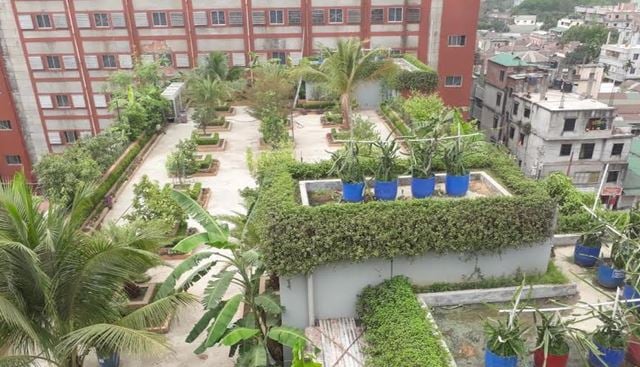
The facilities feature ample natural light and ventilation, landscaped green spaces and advanced systems for reducing carbon emissions, conserving water and managing waste, while providing safer and more comfortable workplaces for workers.
One of the key features of Gazipur's environmentally friendly factories is the efficient use of energy and natural resources. Large solar panels installed on factory rooftops supply a significant portion of daily electricity demand, reducing dependence on conventional power sources.
Factory operators say such measures have helped cut carbon emissions by around 30 to 40 percent in some facilities.
To address the garment industry's heavy dependence on groundwater, factories are also introducing rainwater harvesting systems. Rainwater collected from large rooftops is treated and reused for processes such as washing and dyeing.
Modern water-treatment plants and effluent treatment plants (ETPs) are also being used to treat wastewater and facilitate recycling, helping reduce pressure on groundwater resources.
Bangladesh has established itself as one of the world's leading countries in environmentally friendly garment manufacturing. The country currently has 291 LEED-certified green factories, including 111 with the highest "Platinum" rating and 133 with "Gold" certification.
Bangladesh also dominates the list of the world's top 10 green factories based on the latest standards of the U.S. Green Building Council (USGBC).
Gazipur-based Hams Garments Limited has secured the top position with 108 out of 110 points. Tasnia Fabrics Limited, part of Masco Group and located in Kashimpur, Gazipur, ranks second with 107 points.
Other Gazipur-based factories featured among the world's top green facilities include SM Sourcing, Tanisha Fabrics, Esprit Apparels, Knit Asia, Integra Dresses, Lida Textile and Dyeing, and Liz Fashion Industries.
Engineer Md. Iqbal Hossain Khan, general manager (maintenance) of Masco Group, told BSS that the company has created a healthier and more efficient workplace through natural ventilation, energy-efficient lighting, water conservation and maintaining green areas covering around 30 percent of its facilities.
"Although buyers do not currently offer a direct price benefit for these measures, they are highly effective in controlling operational costs, identifying losses and protecting workers' health," he said.
He added that, because of these benefits, Masco Group plans to gradually upgrade all 14 of its factories to meet the relevant green standards.
Sheikh Hossain Mohammad Mostafiz, director of the Bangladesh Garment Manufacturers and Exporters Association (BGMEA), told BSS that Bangladesh currently has more LEED-certified green garment factories than any other country.
"Certification of a building alone is not enough," he said. "A truly green factory must demonstrate continuous efficiency in energy use, carbon-emission reduction, water conservation and waste management."
He said pressure from buyers in major international markets regarding environmental and energy management is increasing.
"In the coming days, sustainable production will no longer be merely a compliance issue, it will become a key condition for remaining competitive in the global market," Mostafiz said.
He called for coordinated efforts by the government, BGMEA, financial institutions and international brands to develop Gazipur as a model "green garment industrial hub."
Ananta Ahmed, managing director of 360 Degree Total Solution, a technical consultancy working with leading green projects including Hams Garments, said the rapid growth of green buildings in Gazipur is mainly driven by sustainability practices in the garment sector and increasing demand from international buyers.
"Green buildings increase energy and water efficiency, which directly reduces factory operating costs and improves productivity," he told BSS.
He said green certification gives factories a significant advantage in securing orders, even though buyers may not necessarily pay a premium for the certification itself.
Environmental engineers and industry stakeholders say the biggest challenge in expanding green technologies is the high initial investment required.
They called for long-term green financing on easier terms, low-interest loans, special tax incentives and simplified regulatory procedures to accelerate the country's green industrial transition.
They also emphasized the need for technical assistance and grant support, particularly to help small and medium-sized factories adopt green technologies.
The environmentally friendly industrial model emerging in Gazipur is more than a regional success story. Industry stakeholders view it as a potential blueprint for placing Bangladesh's broader economy on a more sustainable footing.
With continued government support and international partnerships, they believe Bangladesh can strengthen its position as a leading global sourcing destination while making its garment industry more environmentally sustainable and resilient.