Sunday
09 August, 2026
News Flash
News Flash
By Muhammad Hedayet Ullah
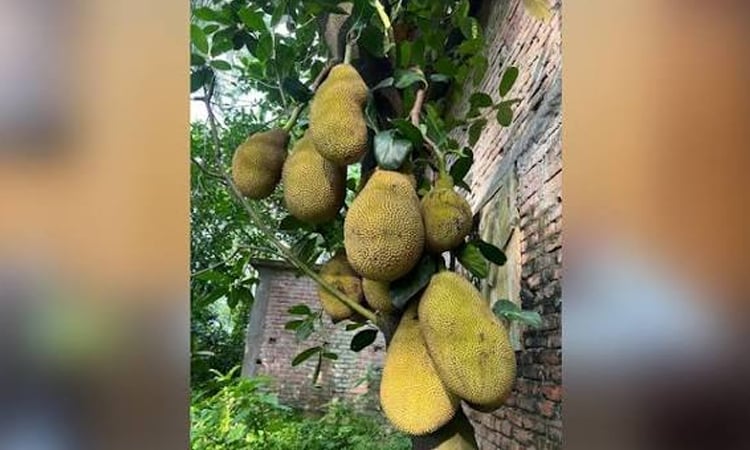
GAZIPUR, Aug 9, 2026 (BSS) - During the peak jackfruit season, the villages, rural markets and bazaars of Gazipur are filled with the sweet aroma of ripe jackfruits, grown abundantly in the region’s fertile red soil.
Yet, despite jackfruit being Bangladesh’s national fruit and a Geographical Indication (GI)-recognised product, a lack of adequate storage and processing facilities causes huge quantities of the fruit to rot and go to waste in orchards and trees every year.
Aiming to turn this seasonal loss into an economic opportunity, entrepreneur Abdus Sattar Bhuiyan has launched an innovative initiative in Sreepur upazila of Gazipur, commercially producing nutritious and tasty biscuits from the national fruit.
The biscuits, made without artificial flavouring or harmful chemicals, have already generated considerable interest among consumers both offline and online.
According to data from the Gazipur Department of Agricultural Extension, jackfruit is cultivated on more than 10,000 hectares of land in the district every year, with more than 3,500 hectares concentrated in Sreepur alone.
However, from Baishakh to Bhadra, the long jackfruit season brings a huge supply of fruit to the market at the same time. With limited storage facilities, prices often fall sharply, leaving farmers deprived of fair returns.
Abdus Sattar Bhuiyan, an entrepreneur from Bairagirchala village under Sreepur Municipality, told BSS that he had long been thinking about how to prevent the seasonal wastage of jackfruit while creating a new commercial opportunity.
Drawing on his experiences during visits abroad, Bhuiyan was inspired by the way countries such as China, India, Indonesia and Japan process jackfruit into chips, candy, jam and other food products.
After returning home, he began experimenting at his own factory, Momtahina Food and Oil Mills in Bairagirchala, under the brand name ‘Mehman Food’.
During the current season, he successfully processed around 500 ripe jackfruits to produce biscuits.
A key feature of the product is that no artificial jackfruit flavour is used. Around 20 percent fresh, natural jackfruit pulp goes into each biscuit, along with ghee, butter, high-quality milk, flour and other ingredients, all mixed under hygienic conditions.
Explaining the production process, factory chief technician Manik Mia said the pulp is first extracted from ripe jackfruit bulbs and the seeds are removed. The pulp is then blended before being mixed with butter, ghee, milk and flour in a mixer to prepare the dough.
The dough is subsequently rolled and cut into the desired biscuit shapes using a dice. Each tray holds 36 biscuits, and 36 trays are placed on a trolley before being transferred to a specialised oven. The biscuits are baked for around 25 minutes at a specified temperature.
After cooling completely, the biscuits are packed in attractive airtight boxes. Each packet currently contains between 800 and 850 grams of biscuits and is sold for Taka 750.
Since its launch, Mehman Food’s jackfruit biscuits have generated considerable curiosity and enthusiasm among consumers and social media users.
Local courier worker Rakib said a significant number of online orders for the biscuits have been shipped to different parts of the country every day over the past several months. Many customers, he said, are placing repeat orders after trying the product.
Abdul Halim, a local customer who came to buy the biscuits, said he initially purchased them out of curiosity.
“After tasting the biscuits, I was impressed by the natural aroma and excellent flavour of jackfruit. That is why I came back to buy them again,” he said.
He added that the product offers consumers an opportunity to enjoy the taste of jackfruit at any time of the year.
The initiative has also raised new hopes among local jackfruit growers, extending beyond the creation of a new food product.
Veteran farmer Abu Bakkar told BSS that millions of taka worth of jackfruit used to rot in orchards every year because of inadequate storage facilities. The creation of a new market through processing, he said, could help farmers receive fair prices for their produce.
Experts also describe the initiative as timely from the perspective of technology and agricultural research.
Dr Golam Ferdous Chowdhury, chief scientific officer of the Postharvest Technology Division at the Bangladesh Agricultural Research Institute (BARI) in Gazipur, said Bangladesh produces large quantities of jackfruit but around one-third of the fruit is wasted every year because of inadequate processing facilities.
BARI has already developed more than 20 technologies aimed at reducing jackfruit wastage, he said.
“Jackfruit seeds, as well as powder and juice made from raw and ripe jackfruit, contain significant amounts of protein, fibre, minerals and antioxidants,” Dr Chowdhury said. “These nutritional components can be used to make biscuits, cakes, papad, candy and ice cream, contributing significantly to food security.”
Sreepur Upazila Agriculture Officer Sumaiya Sultana Bonna welcomed Bhuiyan’s initiative, saying around 52 types of processed food products are currently being made from jackfruit in Bangladesh, with some of them being exported abroad.
She described Bhuiyan’s innovation as commendable and said the agriculture department would provide him with necessary technical and training support.