Sunday
30 August, 2026
News Flash
News Flash
KHULNA, Aug 9, 2026 (BSS) - Jute cultivation in the Khulna agricultural region has surpassed the target for the current season, driven by favourable weather, remunerative market prices and growing demand for environmentally friendly jute products.
According to the Department of Agricultural Extension (DAE), farmers in Khulna, Bagerhat, Narail and Satkhira have cultivated jute on 38,361 hectares this year against the target of 38,287 hectares.
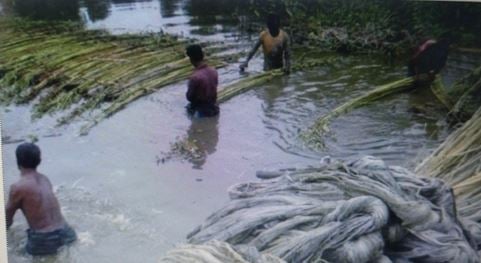
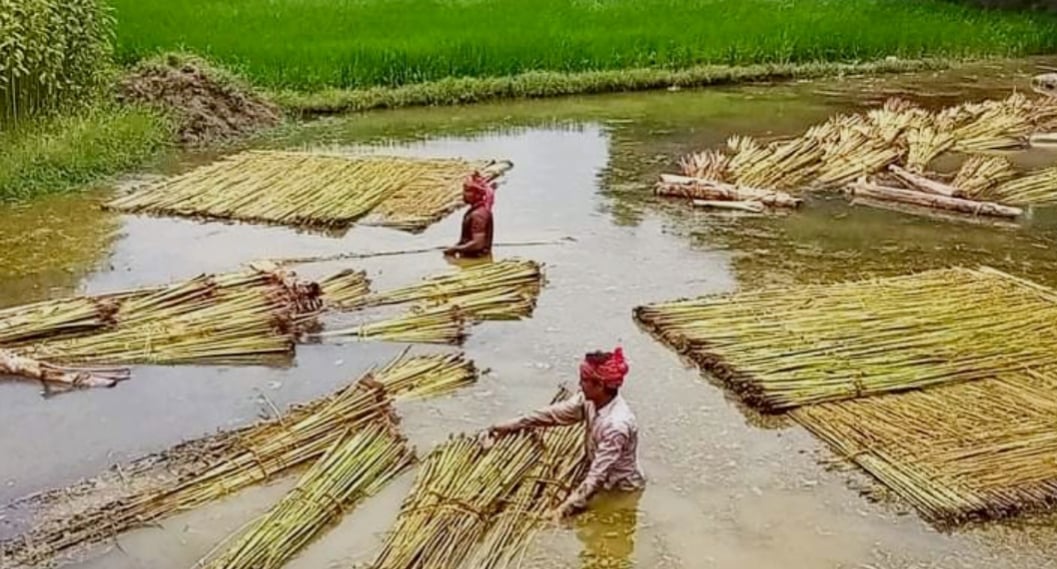
As the peak harvesting season gets underway, lush green jute fields across the region are being harvested, while ponds, canals, beels, rivers and other water bodies are witnessing brisk activities including retting, fibre extraction, drying and collection of jute sticks.
DAE officials said jute cultivation in the region has expanded significantly in recent years. A few years ago, the area under jute was nearly half of its present size, but both cultivated acreage and per-hectare productivity have gradually increased.
So far, farmers have harvested jute from 20,083 hectares, producing around 90,535 tonnes of fibre. About 51.9 percent of the region's jute has been harvested as of Saturday.
During a visit to Terokhada upazila in Khulna on Saturday, hundreds of men and women were seen working along beels and nearby rivers in Baoisona and Kolabaria villages, where farmers and labourers were busy retting jute and extracting fibre.
Women's participation in post-harvest processing has become particularly noticeable. Many women separate fibres from retted jute without entering the water, often accepting jute sticks instead of cash as payment.
Jharna Begum of Kolabaria told BSS that she extracts jute fibre in exchange for keeping the jute sticks.
Several groups of women working along riverbanks were also seen collecting jute sticks instead of receiving cash wages. Many female members of farming households are processing jute fibres at their homesteads.
Tohura Banu, a first-year student of Terokhada College, said she helps her family process jute during class holidays, describing the work as both enjoyable and rewarding.
Mahmud Gazi, who was working in the Atharobeki River, said a team of 15 labourers earns around Tk 800 a day, while some workers are paid Tk 5 per bundle.
Across the agricultural region, freshly extracted jute fibres are being dried on bamboo frames, bridge railings and around village homes, while stacks of jute sticks line roadsides, reflecting the abundance of the crop this season.
Farmer Mahtab Hossain of Baoisona village cultivated jute on three bighas of land this year. He said abundant rainfall during the Bengali months of Ashar and Sraban filled nearby water bodies, making jute retting easier and reducing transportation costs.
However, frequent rain and limited sunshine have made it difficult to dry the fibres properly, he added.
Soumen Bairagi of Golna village in Dumuria upazila said cultivating jute between wheat or pulse harvesting and the Aman rice season helps farmers keep their land productive instead of leaving it fallow. He said early sowing in Chaitra also allows farmers to harvest jute in time for Aman transplantation.
Another farmer, Farid Ahmed, said farmers' interest in jute cultivation has increased significantly in recent years due to expanding domestic and international markets and better prices.
Md Mehedi Hasan, Terokhada Upazila Agriculture Officer, told BSS that the average yield in the area is around nine maunds per bigha.
Trading of the new season's jute has already begun at major markets in Khalishpur, Daulatpur and Khanjahan Ali in Khulna.
Farmer Anser Ali said he sold his freshly harvested jute for Tk 3,700 per maund at Daulatpur market.
Veteran jute trader Fazlu Sharif, former vice-president of the Bangladesh Jute Association, expressed optimism that prices would remain profitable for both farmers and traders this year.
Currently, jute is being sold at Tk 3,500 to Tk 4,500 per maund, with prices expected to rise further as marketing activities gain momentum.
Md Rafiqul Islam, Additional Director of the Khulna Agriculture Region, told BSS that the average production is currently around 8.5 maunds per bigha and is expected to increase further as harvesting continues.
He said abundant rainfall this season created favourable conditions for jute retting.
The official also said rising global demand for eco-friendly products has increased the use of jute both domestically and internationally.
"Higher prices are encouraging farmers to expand jute cultivation," he said, adding that the government has provided incentives while the agriculture department continues to support farmers through training and modern production technologies.