Thursday
09 July, 2026
News Flash
News Flash
By Mostak Ahmed
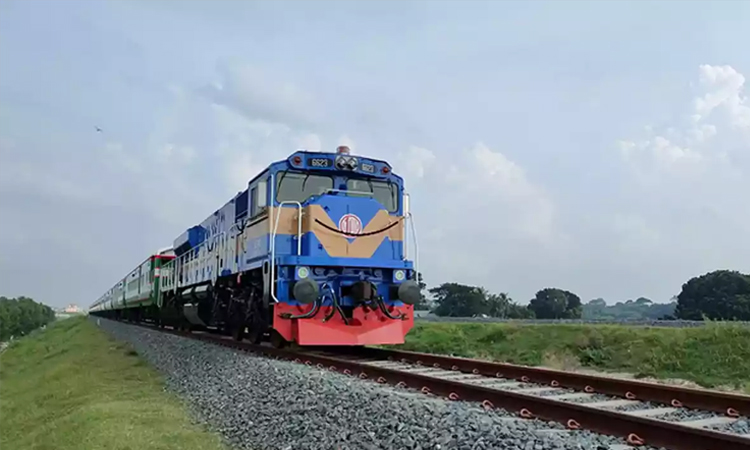
DHAKA, July 9, 2026 (BSS)- The government has taken an initiative to expand the railway network on a large scale to bring modern rail services to people's doorsteps.
Under the plan, 10 districts, deprived of railway services for a long time, will be brought under the national railway network.
Once implemented, the plan will add 10 new districts to the existing 49 districts connected by rail. As a result, 59 districts of the country will come directly under the railway network, marking a major step towards the government's goal of bringing all 64 districts under railway connectivity gradually.
Ministry officials said that Meherpur, Sherpur, Magura, Satkhira, Barishal, Barguna, Patuakhali, Jhalakathi, Pirojpur and Lakshmipur have been initially considered for new rail connections.
The officials concerned believe that implementation of the new initiative will ease travel for millions of people in vast areas of the southwestern, southern and northern regions while creating positive impacts on agriculture, industry, tourism, fisheries, import-export activities and regional trade.
Talking to BSS, Road Transport and Bridges, Shipping and Railways Minister Shaikh Rabiul Alam said a recent meeting chaired by the Prime Minister discussed in detail about the expansion of railway connectivity, ongoing projects and future plans.
He said the government's goal is to gradually bring all 64 districts under the railway network.
The railways minister said new projects will not only focus on railway track construction but also include arrangements for necessary locomotives, passenger coaches, freight wagons, modern signaling systems and manpower recruitment.
“As a result, train operations can begin immediately after completion of infrastructure construction,” he noted.
Railway officials said the total length of Bangladesh Railway's network is currently around 3,360 kilometres including broad gauge, metre gauge and dual gauge railway lines.
Although 49 out of the country's 64 districts currently have railway connectivity, 15 districts are still outside railway services and the government's now aims is to connect every district with the national railway network gradually.
Transport experts said railway transportation costs less than road transport for both passengers and goods, saves more fuel and has comparatively lower accident risks.
At the same time, rail transport is environment-friendly due to lower carbon emissions, therefore, they consider expansion of the railway network a timely initiative for developing the national economy, regional connectivity and a sustainable transport system.
Barishal division, in particular, has remained outside the railway network for a long time. Establishing rail connections in Barishal, Barguna, Patuakhali, Jhalakathi and Pirojpur will bring new momentum to communication with the capital and other parts of the country.
Similarly, construction of rail lines in Meherpur, Magura and Satkhira will further strengthen agriculture, industry and the economy of the southwestern region.
Besides, rail connectivity in Lakshmipur and Sherpur will create new opportunities for regional communication.
According to Bangladesh Railway data, more than 400 passenger and freight trains are currently being operated daily. Around 9 to 10 crore passengers travel by rail annually while 80 to 90 lakh tonnes of goods are transported through the railway network.
Officials concerned expect that this capacity will further increase after the construction of new railway lines.
Officials of the ministry said the government is also advancing the modernization of existing infrastructure alongside expanding the railway network.
Projects including the Akhaura-Sylhet and Sirajganj-Bogra railway projects, Inland Container Depot (ICD) at Dhirashram, construction of dual gauge double lines on the Tongi-Akhaura and Laksham-Sylhet routes and the Dhaka-Comilla chord line are also part of the same plan.
Once the Dhaka-Comilla chord line is implemented, the railway distance between the two cities will be reduced by around 80 to 82 kilometres.
Besides, there are plans to expand commuter train services centred around the capital. The establishment of the Dhaka-Manikganj railway connection is being considered with importance, which, if implemented, will create new facilities for daily commuting people.
Transport experts said implementation of this railway network expansion will reduce regional disparities in the country's communication system, lower transport costs and bring new momentum to agriculture, industry, tourism and trade sectors.
Railways state minister Habibur Rashid told BSS that the government is giving equal importance not only to constructing new railway lines but also to ensuring effective and quality services on those routes.
"In the past, in many cases, railway lines were constructed but expected services could not be provided to passengers due to a shortage of locomotives and coaches. This time, alongside constructing new railway routes, the government is working on an integrated plan to procure necessary locomotives and carriages," he said.
"The objective of expanding railway connectivity is not only to add new districts but also to build a modern and reliable railway system where necessary trains, coaches and locomotives will be available immediately after a railway line is opened,” he said, adding,this will improve passenger service quality and make rail travel more comfortable and time-efficient."
He also said, "The government is working on plans to expand commuter train services between Dhaka and surrounding districts, modernize important stations, improve railway level crossings, construct new underpasses and overpasses, and gradually convert the railway network into broad gauge in the long term.”
He hoped that once these initiatives are implemented, a new era will begin in the country's railway communication system.