News Flash

By Abbas Hossain
LAXMIPUR, July 7, 2026 (BSS) - What began as a simple idea to make productive use of his spare time, has grown into one of the most inspiring agricultural success story of a young teacher.
Mazharul Islam Naim, a teacher of Information and Communication Technology (ICT) of a madrasa, has turned hundreds of decimals of once-fallow land into a flourishing fruit orchard, proving that technology, determination and innovation can create new opportunities in the rural areas of the district.
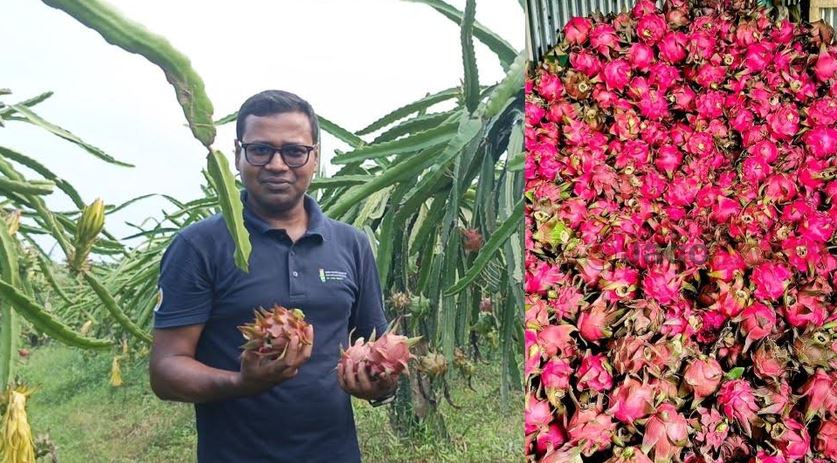
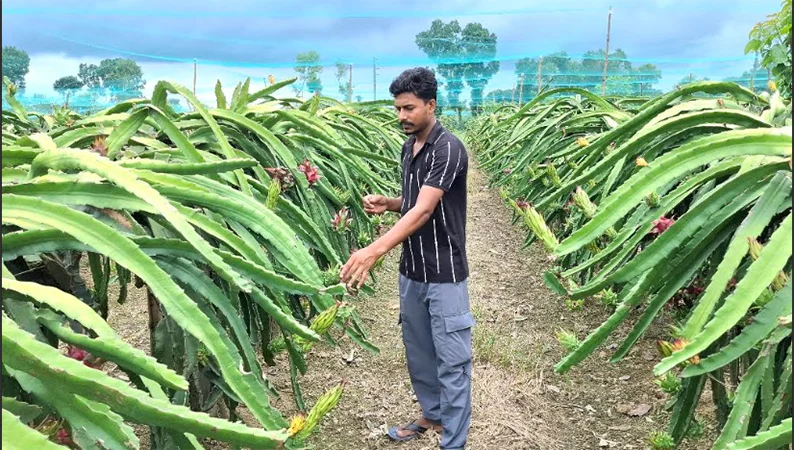
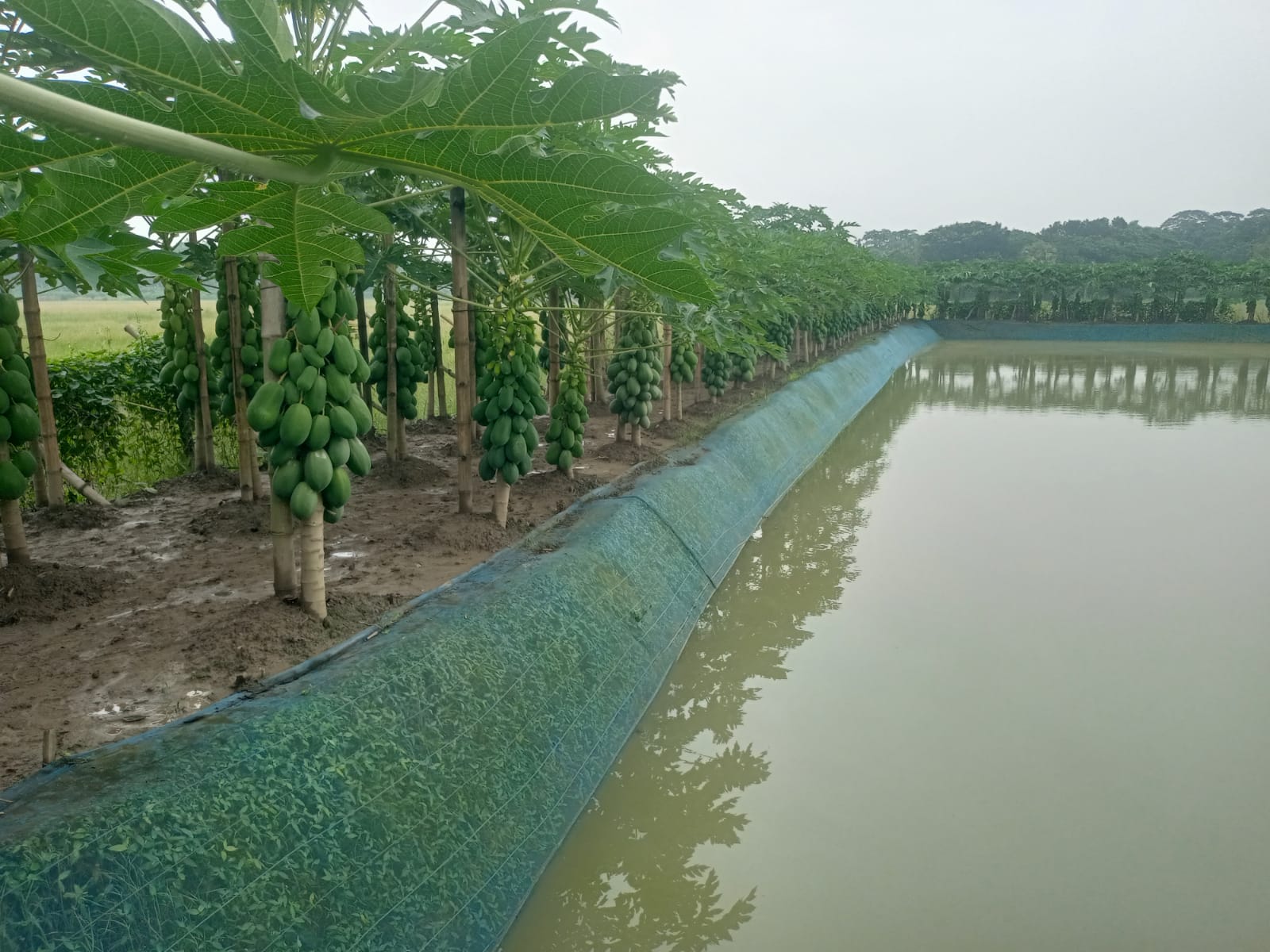
Today, his farm is home to around 6,000 dragon fruit plants, along with papaya and guava orchards and more than 50 goats. The vibrant rows of dragon fruit vines, laden with blossoms and ripening fruit, have become a source of income, employment and inspiration for the local community.
Located at Madhya Charramoni Mohan village under Sadar upazila, the orchard was established in 2021 after Naim leased 320 decimals of unused land. With financial support from his father, Nazrul Islam Khan, he invested Taka 2.5 million to launch the venture.
Although he has never received formal agricultural training, Naim relied on digital resources and online learning to build what is now known as Khan Agro Park. Drawing knowledge from YouTube and other online platforms during the COVID-19 pandemic, he carefully planned and expanded his cultivation of dragon fruit, papaya and guava.
The farm now presents a striking sight. Rows of concrete pillars support climbing dragon fruit plants bearing flowers, green fruit and fully ripened harvests. Workers move through the orchard picking ripe fruit into buckets before carrying them to a packing shed, where wholesalers sort, weigh and purchase the product for distribution to markets.
As the business has expanded, total investment has reached around Taka 5 million. During the current harvesting season alone, Naim expects dragon fruit sales to generate between Taka 1.5 million and Taka 2 million.
The venture has also created regular employment for several local workers, who are engaged in harvesting, grading, packaging and marketing the fruit while Naim balances farm management with his teaching responsibilities.
Local farmers Abul Hossain and Tofayel Ahmad believe dragon fruit offers promising prospects because of it suffers from relatively few diseases and commands attractive market prices.
“With proper training and technical support, many more farmers will become interested in dragon fruit cultivation,” they said. “We once believed it was an exotic fruit that could not be grown here. Now, Naim has proved otherwise,” he said.
Reflecting on his journey, Naim said the idea took shape during the pandemic, when he explored dragon fruit cultivation through YouTube and online resources.
“I started with an investment of around Taka 2.5 million,” he told BSS. “Now the farm is creating jobs and people from distant places come to visit and learn from the project.”
His father, Nazrul Islam Khan, now oversees daily supervision and marketing activities.
“At the beginning everything was new,” he said. “With experience, production has improved significantly and market demand for dragon fruit remains strong. Early in the season, wholesale prices range between Taka 300 and Taka 400 per kilogram, while they now stand at around Taka 150 to Taka 300 per kilogram.”
Md Manjur Hossain, Training Officer of Laxmipur District Department of Agricultural Extension, described Naim as an example of a new generation of rural entrepreneurs using technology to unlock agricultural potential.
“Naim’s vision and technology-driven planning have transformed unused land into productive farmland while creating employment and new economic opportunities,” he said. “Dragon fruit cultivation is not only profitable; it also has the potential to contribute significantly to agricultural and rural development,” he added.
Naim’s journey demonstrates how digital knowledge, entrepreneurial spirit and strategic investment can transform neglected land into a productive enterprise offering a model for young people seeking opportunities beyond conventional employment and highlighting the growing promise of high-value fruit cultivation in Bangladesh.