Monday
27 July, 2026
News Flash
News Flash
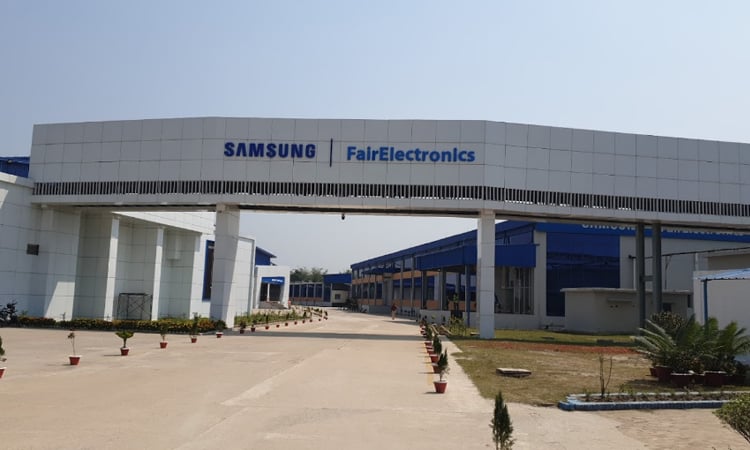
DHAKA, July 27, 2026 (BSS) - Samsung's decision to restart manufacturing in Bangladesh after an 18-month hiatus is providing an early boost to the government's ambition to transform the country into a global electronics manufacturing hub by 2030 through long-term policy support and investment incentives.
Production has already resumed at Fair Electronics' manufacturing facility in Shibpur, Narsingdi, where Samsung refrigerators are now being produced.
Washing machine production is scheduled to begin in September, followed by mobile phone manufacturing in November. Locally manufactured Samsung smartphones are expected to return to the domestic market in January next year.
Talking to BSS, Fair Group Chief Marketing Officer Mohammed Mesbah Uddin described the government's latest measures as encouraging for the electronics industry, saying both local manufacturers and consumers are expected to benefit.
"The fiscal budget reduced VAT on locally manufactured refrigerators, freezers, air conditioners and compressors from 15 percent to 7.5 percent, which is a positive step. After overall calculations, consumers may be able to purchase these products at around 5 percent lower prices," he said.
The phased rollout comes as the government has unveiled a strategy to provide the electronics and consumer electronics sector with long-term incentives similar to those extended to Bangladesh's garment industry, aiming to encourage investment, manufacturing and exports while positioning the country as a global technology hub by the end of the decade.
Fair Electronics was the first company to locally assemble Samsung smartphones in Bangladesh after establishing its manufacturing plant in 2017 and introducing the country's first locally manufactured Samsung smartphones in 2018. The company became Samsung's official distributor in Bangladesh in 2014.
Mohammed Mesbah Uddin said Samsung smartphone production remained suspended from mid-2024 until the end of 2025 after a sharp depreciation of the taka made business operations extremely difficult.
He said the transition from 4G to 5G devices also required technological upgrades and new manufacturing equipment, contributing to the delay in restarting production.
Replying to a query, Mesbah Uddin said the company is installing 5G testing equipment for the mobile phone manufacturing unit, after which smartphone production will begin in November.
About refrigerators, he said the company has started production on a limited scale this year, but plans to produce 40,000 to 50,000 units next year.
Although the factory has the capacity to manufacture around 2.5 million mobile phones annually, the company does not expect to utilise its full production capacity during the first year after operations resume, he added.
Fair Group has invested around Tk 10 billion in electronics manufacturing, including about Tk 3 billion in smartphone production, creating manufacturing infrastructure that now supports multiple consumer electronics product lines.
Alongside Samsung's return, the company is continuing production of China's Hisense brand and plans to manufacture about 150,000 refrigerators annually under the two brands by 2027. It currently produces between 40,000 and 50,000 Hisense refrigerators each year.
Factory operations now extend beyond product assembly. It has automated production lines where metal body fabrication, component assembly, foam insulation, compressor installation and final quality inspection are completed locally before finished refrigerators leave the plant.
The company's expansion roadmap also includes local production of air conditioners, televisions and smartphones in early 2027, reflecting a broader shift towards diversified electronics manufacturing.
The government's FY2026-27 budget identified electronics and consumer electronics manufacturing as one of the four pillars of its ICT and telecom strategy alongside connectivity, digital public infrastructure, and data centres and artificial intelligence.
The budget extended duty exemptions on raw materials for products including mobile phones, refrigerators, air conditioners, washing machines, computers and other digital devices until June 30, 2030, while reducing taxes on key manufacturing inputs to encourage local production.
During a visit to the factory on July 22, Korean Ambassador Jijoon KIM described Fair Electronics as a successful example of technology transfer, local manufacturing and industrial cooperation between Bangladesh and South Korea.
He said Bangladesh's large and hardworking workforce, combined with Korean technology and investment, could help develop the country into a regional manufacturing hub for Korean companies.
Chairman of Fair Group Ruhul Alam Al Mahbub urged stronger action against grey-market and unofficial mobile phone imports, saying a supportive policy environment would accelerate local manufacturing, attract investment, increase government revenue and create employment.
Managing Director of Samsung Bangladesh Jungmin Jung reaffirmed Samsung's long-term commitment to Bangladesh and its partnership with Fair Electronics to expand local manufacturing while maintaining the company's global quality standards.