BSS
  25 Jun 2026, 15:36

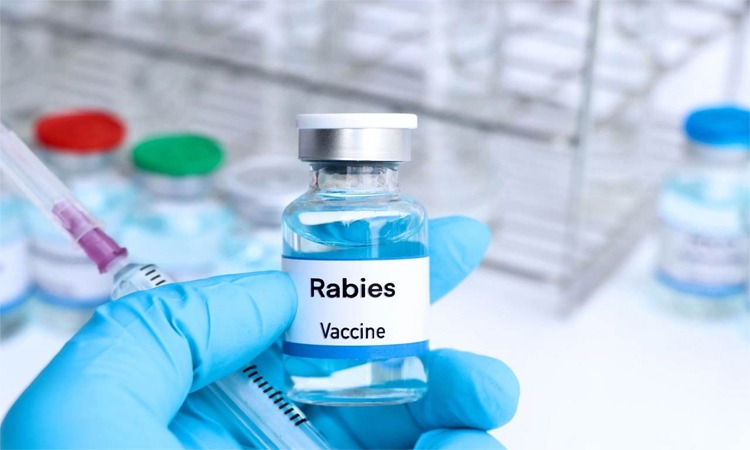
2m rabies vaccines to be imported for controlling the virus  

Kabir Ahmed Khan

DHAKA, June 25, 2026 (BSS) – The government has taken an initiative to import nearly 20 lakh doses of rabies vaccine as part of efforts to strengthen prevention of the deadly disease and expand dog vaccination programmes across the country.

To this end, the Department of Livestock Services (DLS) has sent a proposal to the Directorate General of Drug Administration (DGDA) seeking approval for the import. If approved within June, the vaccines will be brought into the country for use in rabies control programmes.

Talking to BSS, DLS Director General Md Shahjahan Khan said the department has recommended the import of around 2 million doses of anti-rabies vaccine and is currently awaiting approval from the drug administration authority.

“We hope to receive the approval within this month,” he said.

He said the DLS is planning to launch a large-scale Mass Dog Vaccination (MDV) programme to prevent rabies transmission through dogs. Special emphasis will be given to bringing stray dogs in Dhaka city under vaccination coverage to reduce public health risks.

Officials concerned said the MDV programme had been conducted nationwide under the supervision of the Directorate General of Health Services (DGHS) until 2024. Following the suspension of the programme, challenges emerged in controlling rabies among dog populations.

In the meantime, the government has approved a Tk 34-crore project under the DLS to prevent rabies. The project is expected to begin in July and will include rabies vaccination 

However, implementation has yet to start as a project director has not been appointed.

Shahjahan Khan said the programme would not only focus on vaccination but also include sterilization of stray dogs to help control their population growth and reduce the risks associated with increasing numbers of roaming animals.

The government initiative comes amid growing concern over rabies-related deaths in different parts of the country. In May, five people died within seven days in Sundarganj of Gaibandha after being bitten by a stray dog, triggering widespread alarm.

One of the victims was 52-year-old Ful Mia of Dhuboni Bazar village, who reportedly died after delays in receiving treatment. On April 22, a stray dog attacked 14 people in several areas under Kanchibari and nearby Chaprahati unions of the upazila.

Gaibandha Civil Surgeon Dr Md Rafiquzzaman had told journalists that based on the victims’ history and symptoms, they most likely died of rabies. He noted that once symptoms appear, there is virtually no effective treatment for the disease.

Delayed wound management, bites to critical areas such as the head, inadequate vaccine effectiveness and the shortage of Rabies Immunoglobulin (RIG) may also contribute to fatalities, he added.

For years, the number of stray dogs has been increasing in Dhaka and many other parts of the country, raising public concern. People are frequently attacked by roaming dogs in markets, roads and residential areas, particularly in rural regions. Residents of West Nakhalpara in the capital have also reported repeated incidents of dog attacks, forcing many victims to seek vaccination.

One such victim, Nahid Hasan Khan, an employee of a government autonomous institution, told BSS that he had to receive anti-rabies vaccination at the Infectious Disease Hospital in Mohakhali after being bitten by a stray dog while walking through Nakhalpara at night.
 
According to the hospital, 94,380 people received treatment after dog and cat attacks in 2023. The figure rose to 122,263 in 2024 and further increased to 146,243 in 2025. As of March 17 this year, 36,751 people had already received treatment.

Hospital data also indicate a rising trend in rabies-related deaths. A total of 42 people died from rabies in 2023, while the number increased to 58 in 2024 and 59 in 2025. During the first two and a half months of 2026 alone, 19 deaths were recorded.

Additional Livestock Officer of Thakurgaon district and veterinarian Dr Md Rezwanur Haque told BSS that rabies is a fatal viral disease transmitted from mammals to humans, most commonly through bites or scratches from infected dogs and cats, although foxes, mongooses and monkeys can also spread the virus.

He said anyone bitten or scratched by a dog or cat should immediately wash the affected area thoroughly with soap and running water for at least 15 minutes. 
The alkaline properties of soap are highly effective in destroying the rabies virus. The wound should then be disinfected with alcohol or iodine solution, and the victim should seek medical attention as quickly as possible and receive anti-rabies vaccination within 24 hours.