Sunday
12 July, 2026
News Flash
News Flash
By Md Mamun Islam
RANGPUR, June 10, 2026 (BSS) – The greater Rangpur people have started reaping multifaceted benefits in agriculture and many other sectors from the just implemented EIR project, which proves validity of the government's nationwide canal excavation programme.
The project has not only brought a revolutionary change in the agricultural sector by boosting crop yields, but is also improving the environment, reviving ecosystems, conserving surface water and recharging groundwater levels in the greater Rangpur region.
Barind Multipurpose Development Authority (BMDA) has implemented the five-year (2019-2025) ‘Expansion of irrigation in greater Rangpur through best uses of surface water and conservation of rainwater (EIR) project’ at Taka 288-crore.
BMDA officials said that completion of the surface water conservation project and use of conserved surface water are helping 33,328 farmers’ families in 35 upazilas of greater Rangpur to produce 1,39,064 tonnes of additional paddy worth Taka 418-crore annually.
Under this project, 230 kilometers of 35 extinct canals, 10 beels and 88 ponds were re-excavated, 30 solar-powered and 183 electric-powered low-lift pumps, 50 solar-powered dug wells, 16 footover bridges, and nine cross dams were installed.
As a result, 13,405 hectares of lands have been brought under irrigation and supplementary irrigation facilities with conserved surface water to produce 1,23,152 tonnes of extra paddy worth Taka 370-crore annually.
The excavation of extinct canals and water bodies have also freed another 1,000 hectares of land from partial water logging to produce more 5,000 tonnes of additional paddy worth Taka 15 crore every year in the project area.
Besides, installation of 1,122 meters of buried PVC pipes have freed 1,250 hectares of lands of Izlamari Char Beel, Miyar Char Beel and Sabuzpara Beel in Roumari upazila of Kurigram from permanent water logging for the first time.
As a result, local farmers are cultivating three crops on the 1,250 hectares of lands of these three Beels and producing 10,912 tonnes of additional paddy worth Taka 33 crore annually.
“The project has enabled farmers to bring 15,655 hectares of lands under irrigation and supplementary irrigation facilities to produce 1,39,064 tonnes of extra paddy annually,” BMDA Superintending Engineer and EIR Project Director Engineer Md Habibur Rahman Khan told BSS.
Farmers are also producing 1,650 tonnes of various vegetables, fruits, grass on the banks of the re-excavated canals and water bodies to feed livestock and 80 tonnes of extinct indigenous species of local variety fish worth Taka six crore annually.
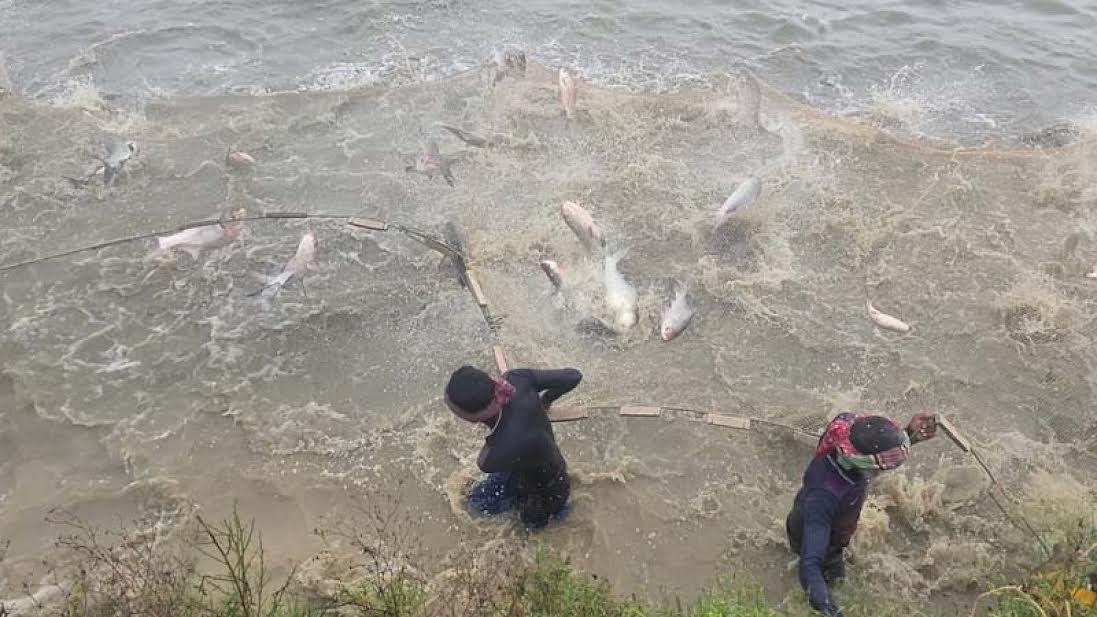
In addition, fishermen are fishing many local and extinct varieties of fish from the conserved water in the re-excavated canals, Beels and ponds while women are raising ducks to change their fortunes and using the water in household works every day.
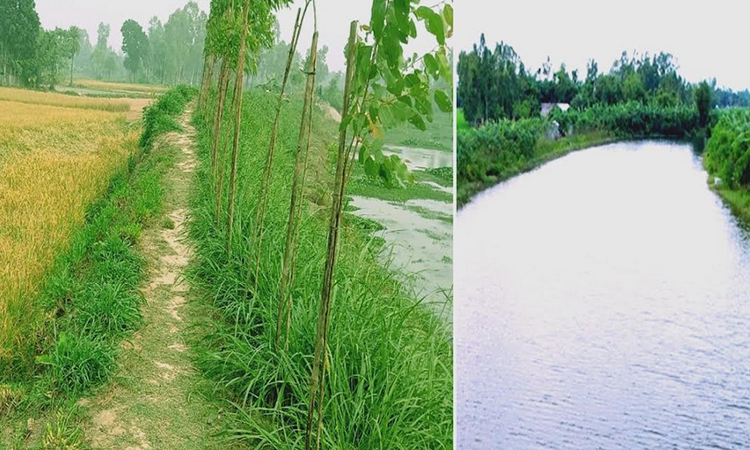
“We have planted 2.30-lakh saplings of wood, medicinal, decorative and medicinal plants on the banks of re-excavated canals and water bodies to enhance forest area and greenery and improve the environment and revive ecosystems in the project area,” Khan said.
Colorful flowers, birds, and plants on the shores of the re-excavated water bodies come together to create a breathtaking beauty that bridges nature and human love, filling people's minds with a sense of wonder.
“The EIR project has become an example in reviving the ecosystem and improving the environment to give nature a green look in Rangpur region,” Khan said.
Talking to BSS, Mashiur Rahman of village Sangkarpur in Badarganj upazila of Rangpur said re-excavation of the extinct river Mora Teesta has freed vast land area of farmers from water-logging and enabled them in cultivating Aman rice there after four decades.
Housewife Sheuly Begum of the same village said local women are improving livelihoods by rearing ducks and farming banana, vegetables and Napier grass on the banks following re-excavation of the river Mora Teesta.
Mokhlesur Rahman of the village said local fishermen and commoners are fishing in the re-excavated river Mora Teesta where the nature has become green following plantation of tree saplings on the banks, reviving the ecosystem too.
Farmer Abdul Halim of village Char Berubari in Nageshwari upazila of Kurigram said re-excavation of the Boalerdara canal has freed vast area from water-logging paving an opportunity to cultivate three crops there annually after four decades..
“Like the EIR project, implementation of the government’s canal excavation programme nationwide may effectively change the whole agriculture-economy and enhance food production along with improving the environment and ecosystems,” Engineer Khan opined.