BSS
  09 Jun 2026, 16:00

Entrepreneur turns pineapple waste into nutritious cattle feed in Tangail

Photo : BSS

TANGAIL, June 9, 2026 (BSS) - An innovative entrepreneur in Madhupur upazila of Tangail has successfully transformed discarded pineapple leaves into affordable, nutrient-rich silage for livestock, creating a sustainable solution for agricultural waste management while reducing feed costs for farmers.

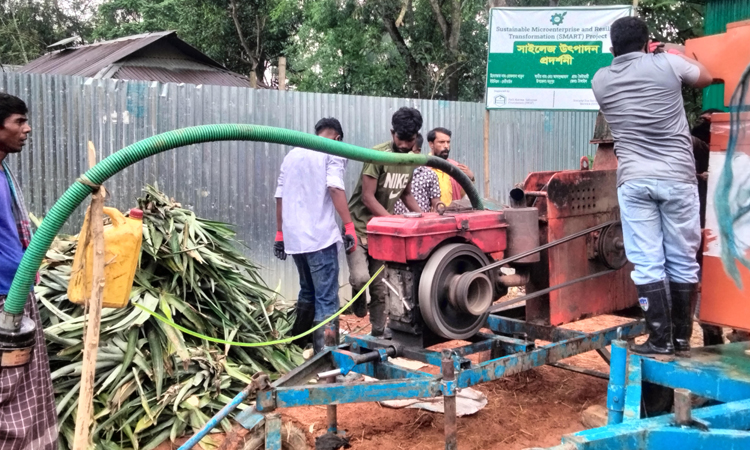
Madhupur, widely known as the pineapple capital of Bangladesh, produces vast quantities of pineapple annually. Along with the fruit, thousands of tons of pineapple leaves are discarded each year. Seeing an opportunity in this waste, entrepreneur Asaduzzaman Asad of Chunia Foitamari village under Birbaid union launched a project to convert pineapple leaves into livestock feed through a specialized silage-making process.

The silage is produced by processing pineapple leaves through a machine that converts them into liquid protein and granular feed suitable for cattle, buffaloes, goats and other livestock. The initiative not only ensures proper utilization of agricultural waste but also helps marginal farmers cut feed expenses by nearly 40 percent.

According to the Tangail District Livestock Office, silage made from pineapple leaves contains valuable fiber and natural sugars that improve digestion and contribute to higher milk and meat production. Dairy farmers have reported an increase of two to three liters of milk per cow per day after incorporating the feed into their livestock diets.

Speaking to BSS, Asaduzzaman said he received training in silage production in 2024 under a project jointly implemented by the non-governmental development organization SSS and the Palli Karma-Sahayak Foundation (PKSF). With financial assistance, he purchased a silage-making machine for Taka 9 lakh and began producing feed from pineapple leaves.

Initially facing skepticism from local residents, Asaduzzaman persisted with his idea. Today, he produces approximately six tons of silage daily and earns a monthly profit of around Taka 150,000 after expenses. The business currently employs eight workers, each earning Taka 600 per day.

"As demand for the product continues to rise, we now purchase pineapple leaves directly from farmers," he said. "The silage can be stored for up to six months and is being supplied to livestock farms across the country."

The feed is significantly cheaper than conventional corn silage. While corn silage sells for Taka 15-17 per kilogram in the market, pineapple leaf silage is available to farmers for only Taka 5-6 per kilogram.

Asaduzzaman currently supplies large quantities of silage to livestock farmers in Tangail and beyond, including farms in Savar, Rangpur, Sirajganj and Dinajpur.

Farm worker Mithun Mia said the facility produces six tons of silage every day and requires only two to three hours to process one ton of feed.

Livestock farmer Shihab Uddin from Bhuapur, a regular buyer of the product, said the low-cost feed has significantly reduced expenses on his farm.

"The quality is excellent and the price is affordable," he said. "Regular use of this silage has helped lower my cattle feed costs considerably."


Acting Executive Director of SSS, Santosh Chandra Pal, said the organization launched the Smart HVC Project to convert pineapple waste into valuable livestock feed. The project currently provides microfinance, training and technical support to around 1,800 beneficiaries.

"We observed that thousands of tons of pineapple leaves were being wasted every year in Madhupur," he said. "This initiative creates employment opportunities while promoting sustainable agricultural practices."

District Livestock Officer Dr. Md. Helal Uddin described pineapple leaf silage as a highly nutritious feed source rich in protein and cellulose. He said that the feed supports digestion, growth, reproductive efficiency, and increased milk and meat production in livestock.

Given its affordability and nutritional value, the livestock department has instructed officials across the district to promote the use of pineapple leaf silage among marginal farmers.

The success of Asaduzzaman's venture is increasingly being viewed as a model for converting agricultural waste into profitable enterprises, benefiting both farmers and the livestock sector while contributing to environmental sustainability.