Tuesday
30 June, 2026
News Flash
News Flash
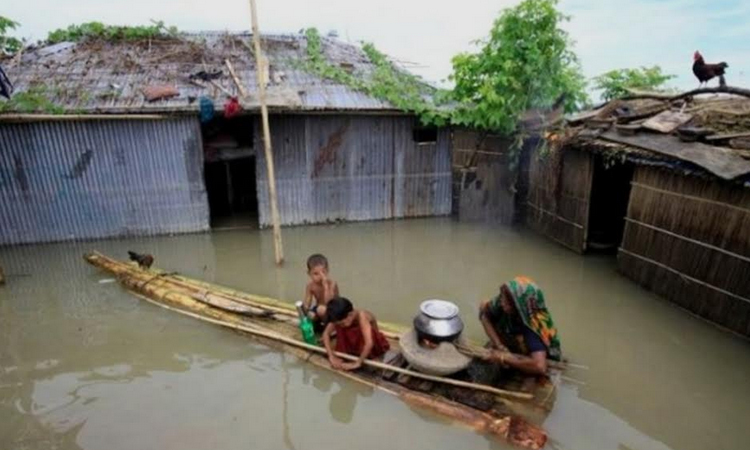
KHULNA, May 24, 2026 (BSS) - Seventeen years after super cyclone Aila that ravaged the coastal belt, memories of losing loved ones still haunt many families in southwestern Bangladesh, particularly in the hard-hit coastal Koyra Upazila here.
The devastating cyclone struck on May 25, 2009, causing widespread destruction across coastal regions, including Khulna.
Residents who lost family members during the disaster continue to observe the day with deep sorrow every year.
The devastating cyclone Aila, accompanied by a tidal surge, caused breaches in coastal embankments at over 40 points, including 27, submerging six unions of Koyra upazila in saline water.
Local people had to struggle with saline intrusion for more than three years after the disaster.
According to official figures, 41 people died in Koyra during the cyclone, though unofficial estimates suggest the death toll was much higher.
A recent field visit to Koyra upazila revealed that many people are still living in makeshift huts on the embankments in South Bedkashi, North Bedkashi, Koyra Sadar, and Maharajpur unions.
Houses, educational institutions, mosques, temples, roads, bridges, culverts, fish enclosures, croplands, trees, and livestock were washed away by tidal surges.
Even after 17 years, survivors and family members continue to carry painful memories of the tragedy. Due to the lack of burial space during the disaster, many victims’ bodies were wrapped in shrouds and floated away in the rivers.
According to villagers, everything they owned was swept away by the tidal surge. Moreover, the aggressive erosion of the Shakbaria, Kapotakkho, and Koyra rivers has devoured homesteads and agricultural land.
The environment of Koyra, now barren of trees, has yet to regain its former state. As a result, the area suffers from extreme heat during the dry season, making life unbearable.
Although most affected families have gradually resumed their normal lives, many are still recovering from the long-term impacts of the cyclone.
Residents who once took shelter in makeshift huts on embankments in unions such as South Bedkashi, North Bedkashi, Koyra Sadar, Maharajpur, and Moheshwaripur have largely returned to their homesteads.
“I do not want to recall the losses we suffered during Aila. We are now trying to lead a normal life again,” said Ripon Ahmed of North Bedkashi village.
Talking to BSS, Sheikh Moniruzzaman Monu, an Aila victim of KoyraSadar union, mentioned that many public representatives visited after Aila and made numerous promises for rehabilitation, but all were in so-called political commitment.
However, some people refused to leave the river islands because they still own land there. Even those who don't own land have grown emotionally attached to the place after living there for so long and are unwilling to move elsewhere, he added.
Shahbuddin Ahmed, a farmer from Sheikh Sardar Para in North Bedkashi union, said that farmers have managed to cultivate some crops in recent years, but the area is still not completely free from salinity.
According to the victims of Aila, a sustainable embankment is essential for their survival, without it, living in this region would be impossible.
After Aila, the area lost its sources of drinking water, and people are still crying out for access to clean water. In many places, people walk miles to fetch water from tube wells, they said.
They suggested that proper installation of deep tube wells and renovation of ponds with pond sand filters (PSFs) could alleviate the water crisis.
Following the cyclone, both government and non-government initiatives helped rehabilitate affected families.
Once barren after the disaster, Koyra has regained greenery. However, soil salinity still remains a challenge, limiting agricultural productivity in many areas.
Talking to BSS, Chairman of North Bedkashi Union Sardar Nurul Islam said many people had migrated elsewhere in search of livelihoods after Aila, but many have since returned to their ancestral homes as conditions improved.
H M Shahabuddin, president of the KoyraUpazila Water Committee, said river erosion remains the area’s main problem.
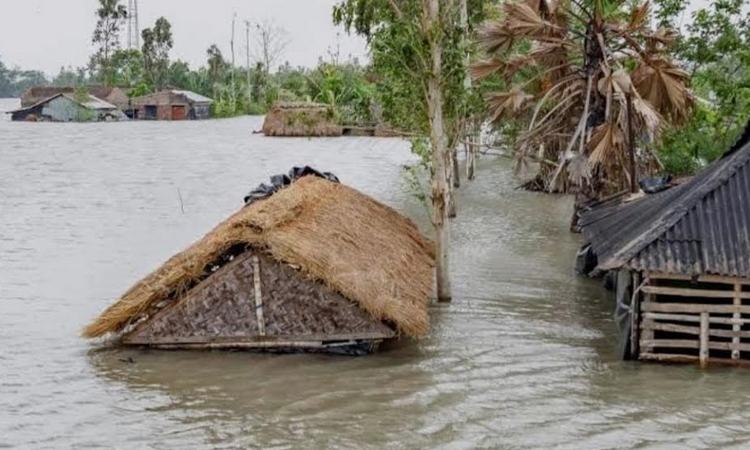
“If river erosion can be controlled, people will be able to live peacefully. Many embankments are still vulnerable, and urgent action by the Bangladesh Water Development Board (BWDB) is necessary to ensure the safety of lives and property,” he said.
Upazila Secondary Education Officer AbulKalam Azad and Primary Education Officer Tapan Kumar Karmakar said many educational institutions were repaired after Aila, though several schools still remain in fragile condition.
They also noted that poor road conditions continue to create difficulties for students.
Deputy Assistant Engineer of the BWDB Mashiu Abedin said repair work under a mega project is ongoing at vulnerable embankment points in Koyra, significantly improving protection structures.
Project Implementation Officer and member secretary of the Upazila Disaster Management Committee Abdullah Al Jaber, said people affected by Aila are still struggling to recover fully from the losses they suffered during the disaster.
Contacted Koyra UNO Md Abdullah Al Baki stressed the importance of sustainable embankments for protecting lives and property in the coastal region.
“The only long-term solution to protect this coastal belt from future natural disasters is to ensure durable and sustainable embankment systems,” he said.
Surrounded by rivers, the embankments in Koyra are its lifeline. Every year, somewhere in the upazila, an embankment breaks and causes flooding.
A sustainable embankment system is the only solution to protect this coastal region from future natural disasters, especially from cyclones, he added.