Tuesday
11 August, 2026
News Flash
News Flash
By Rostam Ali Mondol
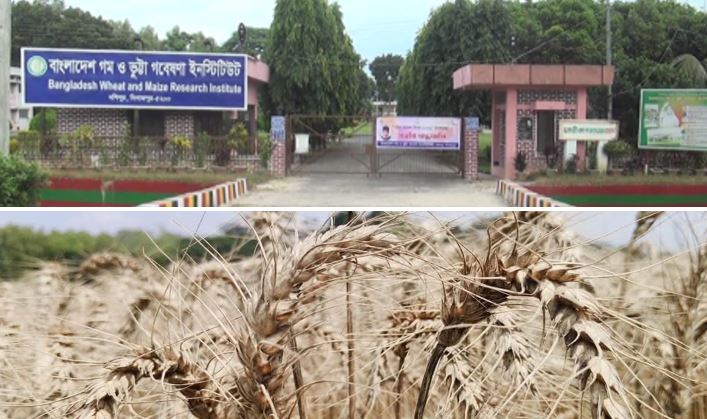
DINAJPUR, May 10, 2026 (BSS)- Bangladesh Wheat and Maize Research Institute (BWMRI) has distributed newly invented five high-yielding wheat varieties among farmers across the country this season.
The new varieties are able to produce across the country in the present weather condition, helping reduce the country’s dependence on import.
Talking to BSS, BWMRI public relations director Abdul Hakim said Bangladesh’s annual wheat demand is around 8 to 8.2 million metric tons against the local production of only 1 to 1.2 million metric tons.
The country imports nearly 7 million metric tons of wheat every year at a cost of approximately Taka US$ 1.45 billion, he said.
Hakim said the newly developed varieties are expected to make the production double and provide significantly higher yields.
The short durable varieties are heat, salinity, and drought tolerant and resistant to blast disease and other pests and bugs, enriched with zinc, he added.
He said if the varieties are widely adopted, wheat imports would decline while production could increase by up to 20 percent.
The institute developed the five high-yielding varieties over the last five years, said the director adding since its establishment, the institute has developed a total of 38 high-yielding wheat varieties.
According to BWMRI data, seeds of the five new varieties were distributed at the beginning of the current wheat season among 5,300 farmers across the country as part of display and incentive programs.
The seeds were distributed at the start of the wheat cultivation season in late March to April.
The newly approved varieties can produce between 5.5 and 6 tons per hectare, nearly double from many existing varieties.
All varieties become mature within a short period, allowing farmers to cultivate three to four crops annually on the same land.
The varieties- BWMRI-1, BWMRI-2, BWMRI-3, BWMRI-4, and BWMRI-5- are heat tolerant, resistant to blast disease, leaf blight, and rust, less susceptible to insect attacks, resistant to lodging, and suitable for cultivation in saline and other challenging environments. They are especially suitable for saline-prone areas.
Farmers said the new wheat varieties require lower production costs. Incidence of diseases and insect attacks is also very low. Seeing good profits and productivity, more farmers are becoming interested in cultivating these varieties and are demanding wider distribution of the seeds.
Farmer Sayed Ali from Nashipur village in Dinajpur Sadar Upazila said wheat cultivation had declined over time due to the expansion of Boro rice and maize farming. However, after cultivating the newly developed wheat varieties, he achieved much higher yields with lower costs and shorter growing periods.
Farmer Mohin Uddin from Sadarpur village in Kaharol Upazila said modern wheat varieties now produce much better yield with fewer diseases.
Earlier, wheat yields were only 5 to 8 maunds per bigha, but now production has increased to 25 to 28 maunds per bigha.
Farmers are highly interested in cultivating the new varieties and believe widespread seed availability would greatly expand wheat farming.
Farmer Moncher Ali from Sujalpur village in Birganj Upazila said he cultivates wheat for personal consumption. He noted that market demand for wheat is now very high.
The new varieties provide better yield and profit because they suffer from fewer diseases and pest attacks, reducing the need for fertilizers and pesticides.
BWMRI director general Dr. Mahfuz Bazzaz said the institute developed five high-yielding and disease resistant wheat varieties over the past five years.
The varieties are short in duration and allow multiple cropping on the same land each year. He said blast disease had long been a major challenge for wheat cultivation, but the new varieties are blast resistant, especially BWMRI-3, which has shown excellent performance.
All five varieties are zinc enriched and suitable for saline regions. They can also be cultivated on fallow land.
Dr. Bazzaz added that the country’s average wheat yield last year was 3.86 metric tons per hectare, whereas the new varieties are producing 5 to 6 metric tons per hectare. This could increase national wheat production by up to 20 percent.
He also noted that water scarcity has become a major concern, but the new wheat varieties require less irrigation.
As a result, wheat cultivation can easily expand in char areas, hilly regions, and the Barind tract. Wheat also requires less fertilizer and pesticide compared to many other crops, making it environment friendly.
He emphasized the need for large-scale seed production and expansion through BADC and DAE.
With the five newly developed varieties, the institute has so far developed 38 wheat varieties since its establishment, he said.