Tuesday
08 September, 2026
News Flash
News Flash
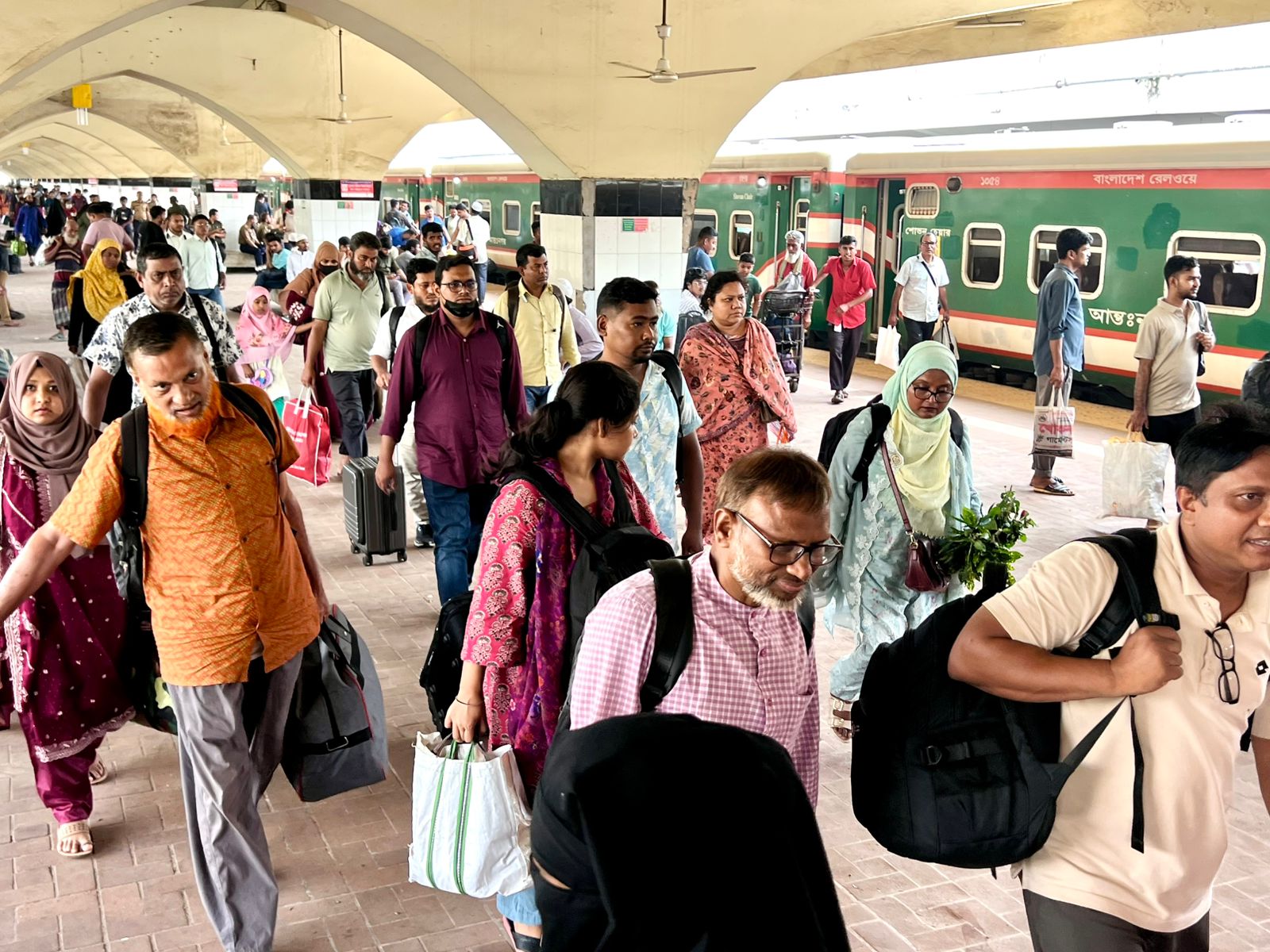
DHAKA, May 25, 2026 (BSS) - Thousands of city dwellers have started leaving the capital ahead of holy Eid-ul-Azha to celebrate the festival with their families in native villages, increasing pressure at major bus terminals and railway stations.
Deputy Commissioner of Mirpur Traffic Division Md Sanowar Hossain said pressure on long-distance bus terminals, particularly Gabtoli, had been rising since this morning.
"Police personnel have been deployed to ensure hassle-free movement of homebound passengers and smooth traffic management," he told BSS today.
He also said the commissioner of Dhaka Metropolitan Police (DMP) was scheduled to visit Gabtoli bus terminal at 11am to oversee Eid travel management and traffic conditions.
A visit to Gabtoli bus terminal found that many passengers chose to begin their journeys early in the morning to avoid rush and suffering later in the day.
Passengers said most long-distance buses were departing on time, although some routes were experiencing delays due to increased passenger pressure.
Many travellers said traffic congestion and ticket shortages usually worsen once the official Eid holidays begin.
Meanwhile, large numbers of homebound passengers were also seen at Mohakhali, Fulbaria, Gulistan and Sayedabad bus terminals from early morning. Many working people had already sent their wives, children and elderly parents to village homes in advance to avoid the last-minute rush.
Acting President of Mohakhali Bus Owners' Association Abul Kalam Azad said all necessary preparations had been completed to ensure a safe and comfortable Eid journey.
Additional members of Rapid Action Battalion (RAB) and police have been deployed to maintain security and monitor Eid travel at terminals and highways.
Trains heading to northern districts were particularly crowded, while eastern routes remained comparatively less congested.
As train travel is considered more comfortable than road transport, railway stations also witnessed heavy crowds of passengers today.
Although several trains departed behind schedule, passengers appeared cheerful and hopeful of reaching their destinations safely.
A committee formed by transport owners is monitoring terminals to prevent excess fare collection and ensure passenger safety inside and outside the terminals.
"Overall, passengers are not facing major hardship during this year's Eid journey," a RAB official said.
Mohakhali Traffic Inspector Omar Faruk said monitoring would continue to prevent extortion, overcharging and traffic congestion on major highways and travel routes.
Many passengers said train delays were common even during normal times, but expressed satisfaction as long as they could reach home safely.
Railway sources said a total of 46 intercity trains and 23 local mail and commuter trains were scheduled to leave Dhaka on Saturday, carrying around 45,000 seated passengers along with an additional 15,000 to 20,000 standing passengers.
During a visit to Kamalapur Railway Station on Saturday, Railway Director General Engineer Md Afzal Hossain said adequate measures had been taken to maintain train schedules.
He said 10 special Eid trains had been introduced to accommodate additional passengers, adding that 100 percent of train tickets had been sold online this year as well.
Meanwhile, Border Guard Bangladesh (BGB) has deployed personnel at congestion-prone areas to ensure smooth Eid travel.
In a press release, BGB said its personnel would remain deployed for three days after Eid as well.
BGB members have been stationed at the Elevated Expressway toll plaza, Mayor Hanif Flyover toll plaza and Padma Bridge toll plaza to help ease traffic congestion and facilitate travel.
At the same time, Bangladesh Road Transport Authority (BRTA) has instructed public transport operators to strictly follow driver working-hour regulations to reduce road accidents during Eid travel.
Earlier, in a notification, BRTA said prolonged driving without adequate rest increases fatigue, drowsiness and the risk of accidents.
Under existing laws, no driver is allowed to operate a vehicle for more than five consecutive hours. After taking at least a 30-minute break, a driver may drive for an additional maximum of three hours, meaning total driving time cannot exceed eight hours a day or 48 hours a week.
BRTA warned that violating these regulations significantly increases the risk of road accidents and said transport owners and drivers failing to comply could face cancellation of driving licences and vehicle registrations.