Tuesday
08 September, 2026
News Flash
News Flash
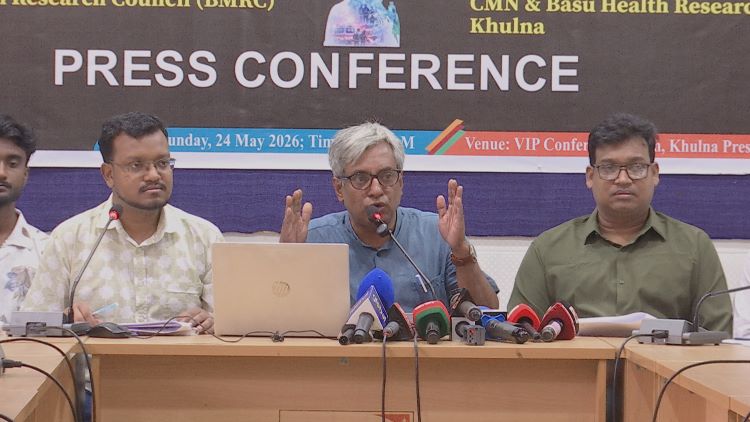
KHULNA, May 24, 2026 (BSS) – A recent study has revealed that around 60 percent of people in Bangladesh do not have any formal knowledge or training on providing first aid to burn victims.
The findings were disclosed today at a press conference held at the Khulna Press Club conference hall.
The study titled “Immediate Response and Overall Management of Mass Burn and Multi-dimensional Trauma Emergencies in Bangladesh” was conducted by a Khulna-based health research centre under the supervision and support of the Bangladesh Medical Research Council (BMRC).
Principal Investigator of the study and Programme Head of the research centre Professor Dr Banga Kamal Basu presented the findings at the press conference.
He said data for the study were collected from high-risk industrial areas including Dhaka and Khulna city corporations, Mongla, Savar and Ashulia.
According to the study, more than 62 percent of people are unaware of how to ensure the safety of burn victims during transportation. The study also found that harmful traditional practices, such as applying toothpaste, oil or ice on burn injuries, still persist among the people.
The research further revealed that most respondents have very limited knowledge about immediate measures to prevent inhalation burns and patient management following internationally recognised ATLS guidelines, significantly increasing the risk of death in emergency situations.
Statistical analysis showed that despite having theoretical preparedness on paper, there are major gaps in community and institutional readiness among the general population.
The study also found that public awareness about the Fire Service emergency hotline number “102” remains almost non-existent due to inadequate publicity, despite government initiatives.
Principal Component Analysis of the study identified the lack of social capacity at the community level as the biggest weakness in disaster response, accounting for 27.2 percent of the overall vulnerability.
The study also identified limitations in private hospitals, accounting for 11.4 percent, and weaknesses in the government healthcare system, accounting for 5.8 percent, as major barriers to providing emergency medical services, indicating a severe shortage of specialised burn and trauma care facilities.
Researchers said lack of coordination among rescue agencies and delays in information exchange are hampering patient transfer and prompt treatment during emergencies.
To address the situation, the researchers strongly recommended the implementation of a Comprehensive Burn-Polytrauma Disaster Preparedness and Emergency Response (CBPDPER) model.
The recommendations include preparing hazard mapping of industrial zones and hospital capacities at the local level, ensuring “green corridors” for uninterrupted movement of fire service vehicles and ambulances, and installing fire hydrants at important locations in cities.
The study also urged the formation a coordination committees at City Corporation and upazila levels, strengthening 24-hour emergency response units in hospitals, introducing standard triage systems, and making regular first aid training and fire drills mandatory in schools, colleges and industrial areas.
Speakers at the press conference said the risks of fire incidents and earthquakes are increasing in the country due to rapid urbanisation and industrialisation, making it imperative to implement the recommendations quickly and bring necessary changes to national policy planning.