Monday
24 August, 2026
News Flash
News Flash
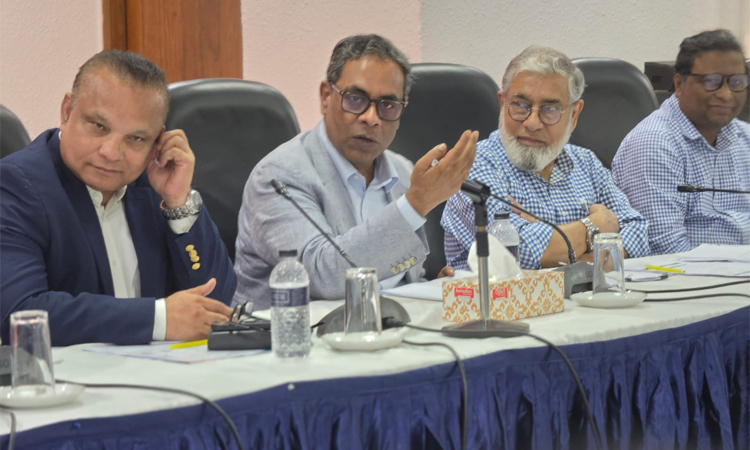
DHAKA, May 07, 2026 (BSS)- State Minister for Health and Family Welfare Dr. M A Muhit has said the government is integrating grassroots healthcare services to reduce duplication and ensure wider service coverage across the country.
“Separate health workers visiting the same household multiple times create duplication, while many remote households remain uncovered. An integrated structure will help eliminate this coverage gap,” he said.
The state minister was addressing a policy dialogue titled “Primary Healthcare and National Family Planning Programme in Bangladesh” at the CIRDAP auditorium in the capital today.
Prime Minister’s Special Assistant on Health Affairs Dr. S M Ziauddin Hyder, Director General of the Directorate General of Family Planning Dr. Ashrafi Ahmed, Managing Director of Social Marketing Company (SMC) Toslim Uddin Khan, Health Adviser to the Swedish Embassy Dr. Mohammad Zahirul Islam and population planning and development expert Dr. Ubaidur Rob, among others, took part in the discussion.
Dr. Muhit said strengthening primary healthcare is the foundation of the government’s health plan. “We want to build a completely reorganised and modern health system. The existing family planning structure is not a burden for us; rather, it is a valuable asset. But the system must evolve to meet current demands,” he added.
Referring to the duplication of work at the field level, the state minister said around 40,000 workers under the health ministry, family planning department and community clinics are currently working in fragmented structures.
He said the government is planning to recruit another 100,000 health workers. Together with the existing workforce, a total of 140,000 workers will be brought under an integrated framework.
“All workers will have a uniform job description and an Essential Service Package to ensure equal quality of healthcare services,” he said.
Dr. Muhit said the government will now focus not only on population control but also on overall health improvement, disease prevention and raising public health awareness.
He said around 50 percent of the country’s people currently purchase contraceptives privately, adding that the rate could rise to 70 percent through proper awareness campaigns.
“This will reduce pressure on the government and allow the state to utilise resources for broader public health development,” he said.
Speaking about healthcare financing, the state minister said inefficiency and failure in timely implementation of the programmes are bigger challenges than lack of funds.
He said the government plans to allocate the highest budgetary priority to the health and education sectors and gradually increase the size of the health budget.
He also stressed the use of modern technology for real-time data collection and local-level planning.