Tuesday
08 September, 2026
News Flash
News Flash
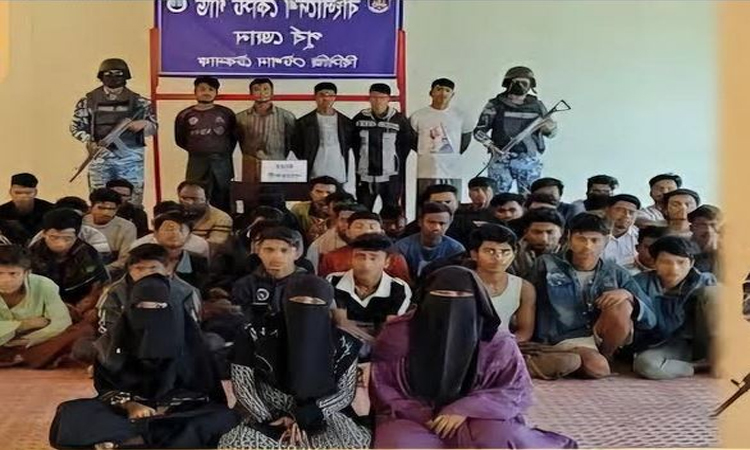
DHAKA, May 02, 2026 (BSS) - The law enforcement agencies have intensified border surveillance and intelligence works to prevent human trafficking.
Simultaneously, vulnerable children aged between one day and seven years—rescued from traffickers net and abandoned without parents are being rehabilitated at “Chhotomoni Nibash” established in Dhaka and other divisions.
Superintendent of Police (SP) Cox’s Bazar Sajedur Rahman told BSS that police are working to prevent human trafficking by strengthening intelligence, increasing patrolling in border areas and raising public awareness under the Human Trafficking Prevention and Suppression Act, 2012.
Officials from various law enforcement agencies said that traffickers lure young men and women of different ages with promises of jobs abroad, then hold them hostage and demand ransom.
The network of organized human traffickers extends across the borders and the victims of trafficking suffer physical, psychological, social and economic losses, leaving their lives devastated.
Traffickers subject victims to inhumane physical abuse, leading to long-term or permanent health problems. Due to lack of food and medical care, victims suffer from malnutrition and infectious diseases.
Those trafficked abroad are often forced into dangerous, low-paid and exploitative labor like slavery.
Victims live in constant fear due to threats from traffickers and often experience long-term mental trauma and depression.
Women who return after being trafficked face discrimination and social stigma, leading to reduced social acceptance and isolation from family and society.
Additionally, lacking legal documentation abroad creates legal complications for them. Many victims lose everything after falling into traffickers’ traps while seeking jobs overseas.
Sajedur Rahman further said that police are working to ensure the safety of victims and provide legal assistance.
He noted that many victims risk their lives travelling by sea in hopes of jobs abroad and fall into danger, urging public awareness.
He added that surveillance on fishing boats has been increased, as traffickers often use them to transport people onto ships for illegal migration.
He also stated that the Teknaf coast and border areas are highly important and sensitive regions and it is not possible for police alone to fully control human trafficking there. However, they are working with maximum sincerity and capability to combat the crime.
Dr. Badiul Alam Majumdar, secretary of Shushashoner Jonno Nagorik (SHUJAN), said that human trafficking is increasing due to lack of adequate employment and extreme poverty. People are trafficked with attractive job offers abroad, he added.
He emphasized the need for stern action and punishment against traffickers, especially strengthening patrols, surveillance and operations along the borders. Increasing manpower of law enforcement agencies at all levels is also necessary.
Law enforcement officials said that searches in suspicious locations, surveillance in border areas and special operations at waterways and airports have been intensified.
Efforts are underway to file cases against accused traffickers, bring criminals to justice through investigation, rescue victims, ensure their safety and free them from traffickers.
The Bangladesh Coast Guard is maintaining maximum vigilance to prevent human trafficking via sea routes, particularly in coastal and river areas in the south-eastern region.
Continuous patrols, use of modern technology, strengthening intelligence surveillance and coordinated operations with other law enforcement agencies are being conducted. Awareness programs are also regularly organized among the local communities to this end.
Bangladesh Coast Guard media officer Lieutenant Commander Sabbir Alam Suzan said that from January 1 to December 2025, Coast Guard operations arrested 15 traffickers and rescued 283 victims. From January to March this year, 26 traffickers were arrested and 284 victims rescued. Cases have been filed against the traffickers under existing laws.
Rezaul Karim Sohag, Chairman of the Criminology Department of Dhaka University said that human trafficking is occurring through sea routes across various borders, involving different criminal networks.
Stern action must be taken against these groups and joint efforts of law enforcement and local communities are essential to stop trafficking, he said.
Deputy Commissioner of Dhaka Metropolitan Police (DMP) Media and Public Relations Division, N M Nasiruddin, said that in 2025, DMP arrested 645 traffickers in various operations and filed 168 cases. From January to March this year, 36 traffickers were arrested and 31 cases filed.
Meanwhile, the rescued victims are being provided healthcare, legal assistance and shelter through centers run by the Ministry of Women and Children Affairs, Ministry of Social Welfare and Ministry of Expatriates’ Welfare and Overseas Employment.
Jubilee Begum Ranu, Deputy Superintendent of a Chhotomoni Nibash at Azimpur said that vulnerable children aged one day to seven years-rescued from traffickers net and abandoned-are being rehabilitated here, in Khulna, Rajshahi, Chattogram, Barishal and Sylhet.
Additionally, children aged 6 to 18 are being rehabilitated in government child care institutions in every district. There are also two such rehabilitation centers at Mirpur and Tejgaon in the capital.