Tuesday
08 September, 2026
News Flash
News Flash
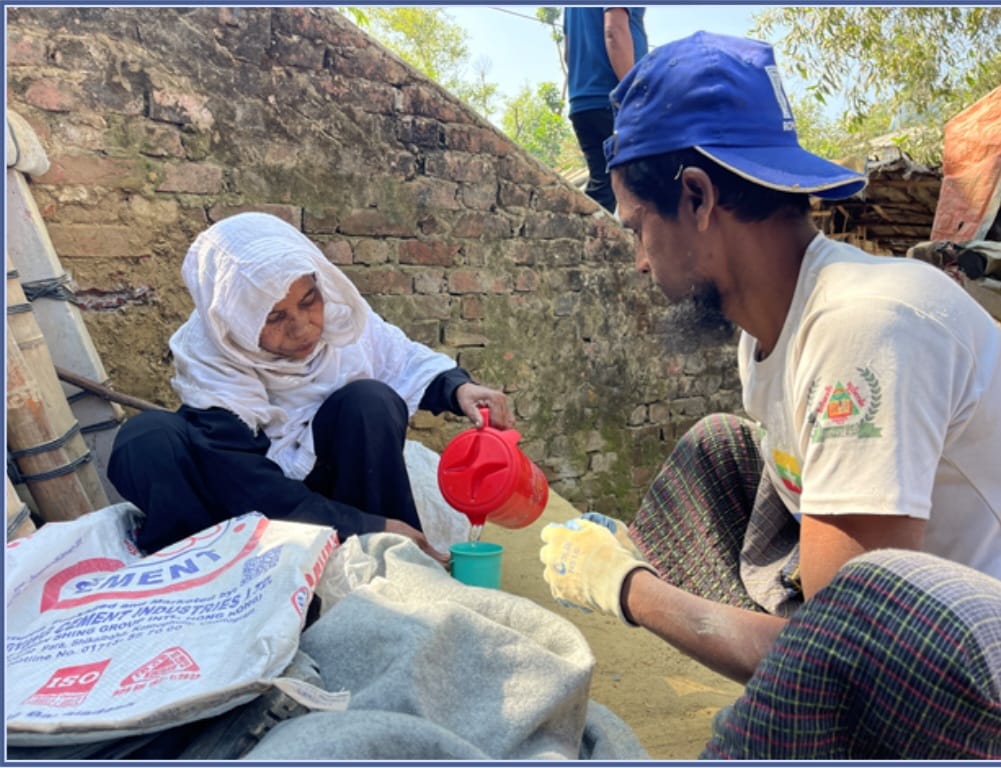
COX’S BAZAR, April 30, 2026 (BSS) - The sun beats down on Camp 10, where tarpaulin shelters cluster along unpaved paths like scattered leaves. Among them sits Block B, home to Ambiya Khatun, a 59-year-old Rohingya woman who never imagined she’d still be working at this age — not in a factory, not in an office, but under the open sky.
She shares a cramped shelter with two family members. Like many elderly Rohingya women, Ambiya and her husband live with chronic illnesses that demand constant medication — medicine that is often impossible to afford without a steady source of income.
Yet something has changed.
Through a Cash-for-Work (CFW) programme tied to a Nature-Based Solutions (NbS) slope stabilisation project, Ambiya has found something rare in the camp: not just money, but dignity, purpose, and a renewed sense of control over her life.
Reaching the Invisible
Ambiya's inclusion was no accident.
In Camp 10, UNDP's implementing partner, the Danish Refugee Council (DRC), operates under its Site Management Support (SMS) role with a structured, transparent vulnerability assessment system. Using standardised scoring tools, the system ensures that elderly people, individuals with chronic illness, and other high-risk households are not pushed out of livelihood opportunities simply because of physical limitations.
When UNDP-supported NbS works required community labour, Ambiya's household was identified through this transparent, needs-based process. After consultation and consent, she was mobilised in line with established CFW procedures — a deliberate effort to embed equity and inclusion into programme design.
Working within her means
Given her age and health condition, Ambiya was not assigned heavy physical labour. Instead, she supported the worksite in ways that matched her capacity — serving drinking water to workers, assisting with light tasks like handling rope bundles, and helping safeguard tools and materials.
Over 16 working days, she earned Taka 5,600 — a modest sum, but a critical one.
Despite physical discomfort, Ambiya arrives at the site each day with quiet determination.
“I am old and my body is weak, but I feel strong when I work here, even with small tasks. With this money, I can buy medicine and sleep without fear for some days," she said.
For Ambiya, Cash-for-Work is not simply about wages. It is about being seen, contributing, and retaining agency in a community where elderly women are often rendered invisible.
Stabilising more than slopes
The work that Ambiya supports addresses a long-standing landslide risk in Camp 10, where a steep, fragile slope threatened 33 households living both above and below it. Years of monsoon rainfall and soil erosion had made the area increasingly dangerous.
Identified through DRC-SMS risk mapping and validated through joint assessments with the Camp-in-Charge office, UNDP technical staff, and site development partners, the intervention involved stabilising a 115-foot slope using vegetation, drainage management, and erosion-control measures.
Beyond reducing immediate risk, the project has unlocked new possibilities. With the slope stabilised, households previously ineligible for shelter upgrading materials due to safety concerns will now be able to strengthen their homes —transforming a high-risk zone into a safer living environment.
Beyond infrastructure: Restoring trust
Ambiya’s story illustrates how linking Nature-Based Solutions with Cash-for-Work can generate layered impacts: reducing disaster risk, strengthening environmental sustainability, and restoring dignity — particularly for older women.
In Camp 10, resilience is not built through structures alone. It is built through inclusive systems that recognise vulnerability, value contribution at every level, and invest in people as much as in protection.
Ambiya may describe herself as old, but through this work, she continues to protect both her community and her own dignity.