Tuesday
25 August, 2026
News Flash
News Flash
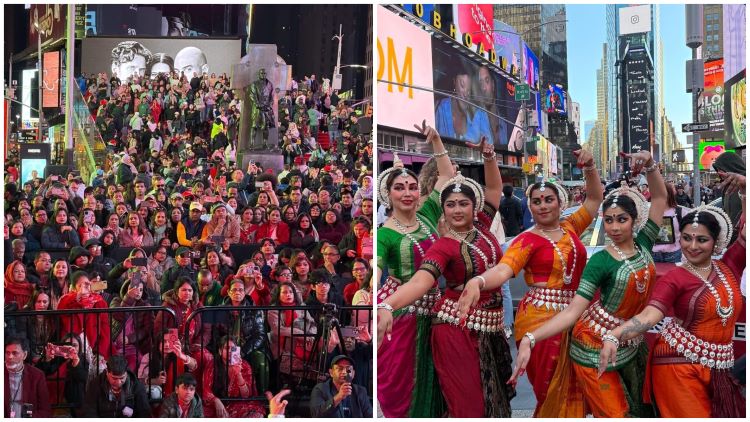
DHAKA, April 12, 2026 (BSS) - Bangla New Year 1433 was celebrated amid grand festivity at Times Square in the heart of New York City yesterday.
The day-long festival brought together thousands of Bangladeshi expatriates, international guests, diplomatic representatives, artistes, writers, and mainstream American political figures.
Pahela Baishakh, the first day of Bangla New Year 1433, will be celebrated in Bangladesh on April 14.
NRB Worldwide, an organization of expatriates, organized the programme under initiative of the New York State Senate, said a press release received here today.
The festival, arranged in 27 vibrant segments from morning to night, elevated the cultural presence of Bengali speaking people in New York to a new height.
The celebrations began with the lighting of the ceremonial lamp by notable figures including Biswajit Saha, Rokeya Haider, Hossain Kabir, and Mohitosh Talukdar Tapas.
Greetings and video messages were displayed on a giant digital screen with messages from democrat leader Brad Hoylman-Sigal, Queens Borough President Donovan Richards Jr., Congresswoman Grace Meng, and New York State Senator John C. Liu filling the audience with excitement.
A heartfelt tribute was then paid on the birth centenary of fiction writer Shamsuddin Abul Kalam.
Presented by Tofazzal Liton, this segment created an emotional opening to the day’s programme, surrounded by the atmosphere of Bengali literature, memory, and cultural heritage.
The venue was later filled with the melodies of Pahela Baishakh through Kartik Chandra’s opening musical performance.
In the first half of the day, performances including Geetanjali music, solo children’s performances, songs by Alvan Chowdhury, Ranjonir dance, and the melodic presentation by Chitra captivated the audience.
Through the performance of “Mymensingh Geetika” by Jiban Chowdhury, Bengali folk traditions were presented in a new light to the international audience. Amid the digital brilliance of Times Square, Bengali songs and folk poetry blended into a unique atmosphere.
The festival gained global dimensions with the participation of artistes from Nepal, Laos, and the Thai community.
Their performances turned the stage into a symbol of South and Southeast Asian multicultural harmony within the celebration of Bangla New Year.
At the same time, the “Six Seasons” performance beautifully depicted Bengal’s nature, time, and philosophy of life, deeply moving the audience.
In the midday segment, an honor ceremony for distinguished guests and cultural personalities was held, attended by foreign guests, cultural representatives, and community leaders.
Presented by Dr. Kallol Basu, this session highlighted Bangla New Year as a powerful platform for cultural diplomacy and recognition of diaspora identity.
Later, a commemorative book was launched in a historic moment led by Rokeya Haider and Biswajit Saha, documenting the cultural journey of the Bangladeshi diaspora.
In the afternoon, the festival continued with a series of performances including the drama “Jyoti Sanghita,” a colorful Shobhajatra, musical tribute to Salil Chowdhury, “Droher Gaan” by Rahman Tito, adda sessions and dance performances by Srishti Academy, folk songs by Shah Mahbub, classical dance by the Orissa Dance Academy, and a special tribute performance honoring legendary actor Uttam Kumar.
Bringing out a procession depicting Bengali culture and heritage, in particular, transformed Times Square into a vibrant reflection of Dhaka’s fine arts tradition.
In the evening, one of the major highlights was “Shatokonthe Barshoboron” (choral New Year celebration) performed by children, followed by a joint performance by senior artistes.
While the voices of children symbolized the future of Bengali culture, the senior artists expressed the deep emotions and memories of diaspora life.
The event concluded at 10 PM with closing songs and acknowledgments by Rituparna Banerjee from Kolkata and Nakul Kumar Biswas from Dhaka.
In the closing remarks, organizers stated that Bangla New Year in Times Square is no longer just a festival—it has become a symbol of global Bengali cultural dignity, diaspora unity, and the visible strength of Bengalis in multicultural New York.
This celebration of Bangla New Year 1433 once again proved that Bengali festivals have become a global cultural force, transcending ethnic boundaries through language, literature, music, history, and diplomatic harmony.