Tuesday
08 September, 2026
News Flash
News Flash
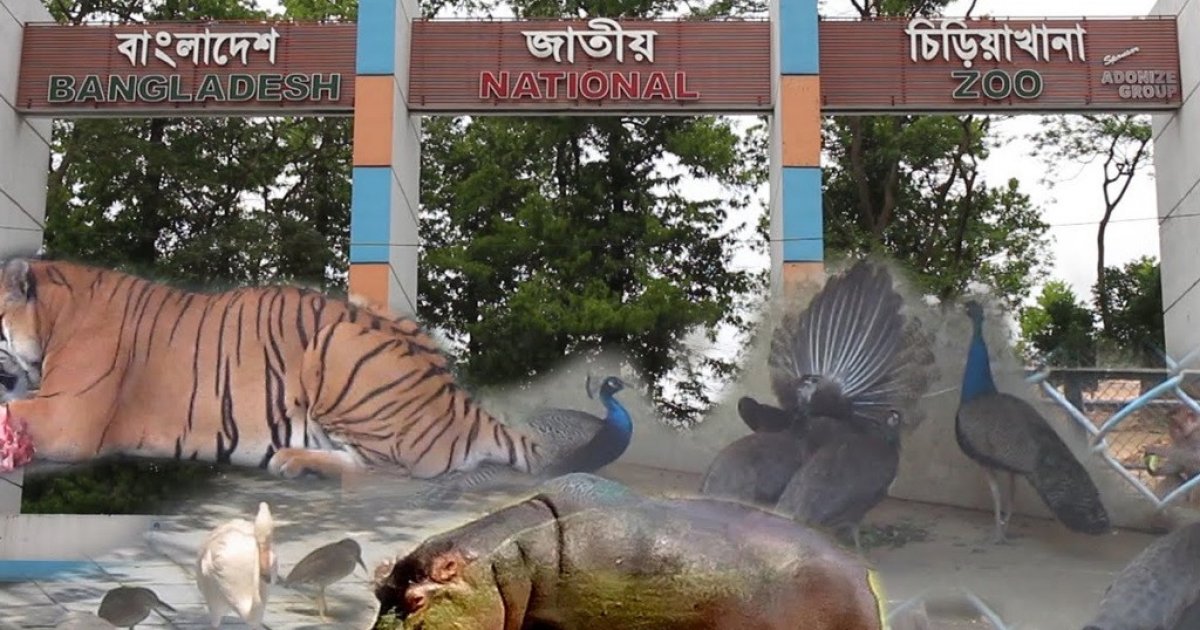
DHAKA, April 12, 2026 (BSS) – In a move set to enhance its biodiversity and enrich visitor experience, the Bangladesh National Zoo in Mirpur, Dhaka, is preparing to welcome three new species within the coming month.
The upcoming additions include a leopard, a wildebeest, and a water bird, with procurement procedures already underway through international work orders, director of the Bangladesh National Zoo Dr. Mohammad Rafiqul Islam Talukder told BSS today.
“The work order has been issued. We are waiting for approval from the Forest Department. We hope to get it soon. We expect the animals to arrive in the country by May,” he said.
According to zoo authorities, there are currently around 3,100 animals from 135 species. Established in 1974 on 186 acres of land, the country’s largest zoo is located in Mirpur, Dhaka.
According to official data, birds make up the largest number of species in the zoo. There are 61 species of birds, including ostriches, emus, and storks.
In addition, there are 19 species of large animals such as Asian elephants, giraffes, African rhinos, and hippopotamuses. There are also nine species of carnivorous animals such as the Royal Bengal tiger, white lion, and Asian black bear.
However, the most numerous animals are night herons, cattle egrets, and spotted deer.
Among them, there are 524 night herons, 385 cattle egrets, and 293 spotted deer.
Officials said that the National Zoo currently has 631 animals belonging to 48 species. Carnivores and herbivores are among the main attractions for visitors. There are 38 carnivorous animals from 9 species, including 16 Royal Bengal tigers.
Recently, a tiger pair named Beli and Togar gave birth to four cubs, three of which are white (albino).
There is also one African white lion, three African lions, six jackals, four Asian black bears, one striped hyena, and two spotted hyenas. Additionally, there are three fishing cats and one leopard cat.
Herbivores consist of 19 species with a total of 387 animals. This includes 5 Asian elephants and 12 hippopotamuses.
Among the major attractions are seven giraffes, one of which was recently born. There are also two critically endangered domestic gaurs.
Various species of monkeys are also present. The most common are rhesus monkeys, totalling 65 individuals. There is one each of hoolock gibbon, langur, and hamadryas baboon.