Wednesday
09 September, 2026
News Flash
News Flash
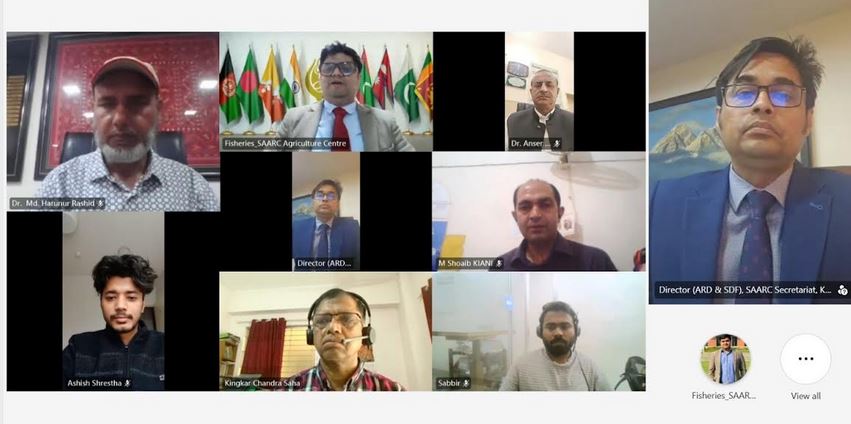
DHAKA, Mar 10, 2026 (BSS) - The SAARC agriculture centre today organised a regional webinar focusing on the challenges faced by marine and freshwater aquaculture due to climate change in South Asia.
Experts participating in the programme stressed the impacts of climate change, adaptation strategies and the importance of sustainable aquaculture management.
The keynote speakers were Prof Dr Sewandi Jayakody, Chair of the Department of Aquaculture and Fisheries at Wayamba University of Sri Lanka, and Dr B.K. Das, Director of the ICAR-Central Inland Fisheries Research Institute in Barrackpore, India.
Dr Das highlighted the impacts of climate change on freshwater aquaculture, including changes in river flow and habitats, and emphasised the need for sustainable management practices.
Dr Jayakody discussed rising temperatures, extreme weather events and risks affecting marine and coastal aquaculture, and stressed the importance of research and regional cooperation.
In his opening remarks, Director of the SAARC Agriculture Centre Dr Md Harunur Rashid said aquaculture and aquatic ecosystems in South Asia are increasingly being affected by climate change. Rising temperatures, floods, droughts and changes in water quality are disrupting fish production and the livelihoods of millions of people.
He underscored the importance of regional cooperation, knowledge sharing and research to develop climate-resilient aquaculture systems.
The webinar was moderated by Senior Programme Specialist (Fisheries) of the SAARC Agriculture Centre Dr Md Shariful Islam. He highlighted major challenges facing aquaculture in South Asia, including increasing salinity, climate change and shifting water flow patterns.
In his closing remarks, Director (ARD and SDF) of the SAARC Secretariat in Kathmandu Tanvir Ahmed Tarafdar emphasised regional cooperation, saying aquaculture is vital for food security, nutrition and livelihoods in South Asia and greater collaboration among member states is necessary.
At the end of the webinar, participants shared their experiences and stressed the need for regional coordination and climate-resilient aquaculture practices to tackle the impacts of climate change.