Wednesday
09 September, 2026
News Flash
News Flash
By Mohiuddin Sumon
TANGAIL, March 8, 2026 (BSS) - Sharee remains the first choice for Bengali
women during festive occasions, with Tangail's hand-woven shares holding a
special appeal.
With Eid-ul-Fitr and Pahela Baishakh approaching, Tangail's traditional
weaving villages are bustling with activity as craftsmen work round the clock
to meet growing demand.
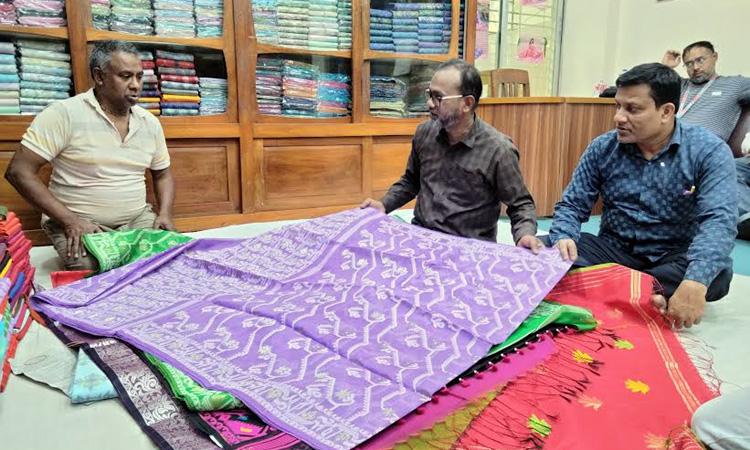
New designs are emerging in Tangail sharees ahead of the festivals, with
traders expecting to sell around 150,000 pieces. The weavers are producing
vibrant cotton, jamdani, soft silk, dhansiri, baluchuri, gold katan, dotari,
soft silk and silk sharees, keeping both design trends and affordability in
mind. Seasonal changes have also influenced color choices and patterns this
year.
In the Pathrail, Delduar, and surrounding areas, the sound of looms resonates
through weaving mills. Here, artisans craft intricate different designs while
simultaneously facing a surge in orders. Tangail saris are highly sought-
after across Bangladesh and internationally, making the weavers' efforts
critical to sustaining the local economy.
Despite the busy season, workers face challenges. It takes approximately two
days to weave a single share, with wages of around Taka 700 per piece. Many
artisans lament that the pay does not match their skill and labor, causing
younger generations to avoid the profession. Several mills have closed due to
a shortage of skilled craftsmen.
Veteran weaver Narayan Chandra, who has been in the industry for 24 years,
emphasized, "To sustain hand-woven sharees, the first priority is ensuring
fair wages for craftsmen. The weaving industry can survive only if the
artisans thrive."
Sari designer and trader Neel Kamal Basak highlighted that Tangail's
traditional weaving recently received recognition from UNESCO, boosting the
focus on hand-woven sharees this Eid. Buyers have responded positively to the
new designs.
Raghunath Basak, president of the Tangail District Sharee Traders
Association, said this year's share sales have surged, with prices set to
match consumer purchasing power. However, he said that the community still
faces issues like capital shortages, limited access to raw materials, and
marketing challenges, calling for government support.
The association remains optimistic that around 1.5 lakh sharees will be sold
during the festive season, reflecting both the enduring popularity of Tangail
sharees and the resilience of the weaving community.